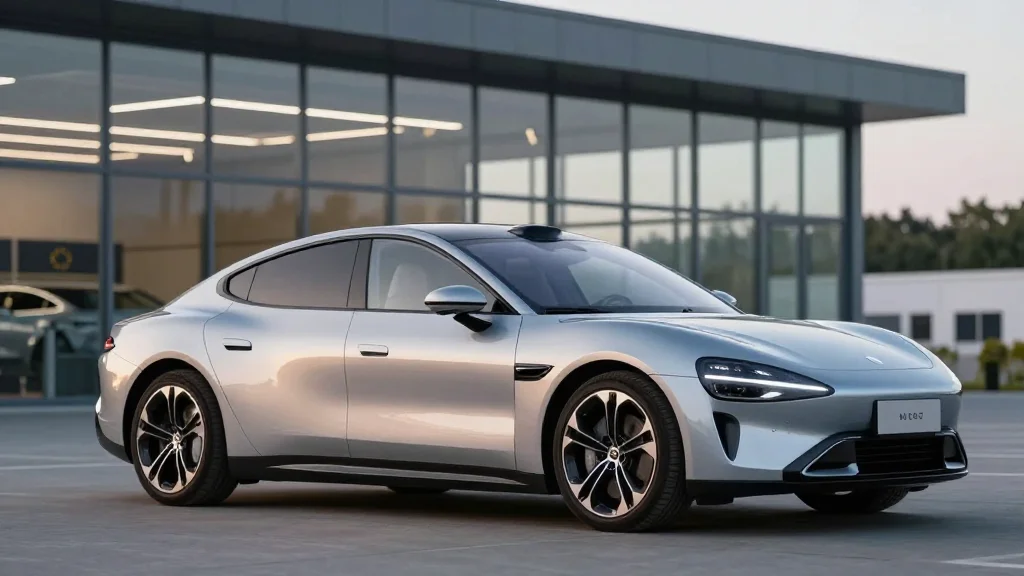
Stellantis Teams with Dongfeng in 51/49 EU JV to Launch Premium EVs

Companies Mentioned
Why It Matters
The Stellantis‑Dongfeng joint venture marks a significant shift in how European automakers source premium EV technology. By localising production in France, the deal reduces reliance on imported components, aligns with EU policy incentives for domestic manufacturing, and could accelerate the rollout of higher‑margin EVs that have so far been dominated by German and Scandinavian players. For investors, the partnership offers a potential earnings catalyst for Stellantis, whose stock has underperformed relative to peers due to concerns over its EV transition. Beyond Stellantis, the move signals to the broader Euro‑stock market that cross‑border collaborations with Chinese manufacturers can be structured to meet regulatory and consumer expectations. If successful, the model may be replicated by other European firms seeking to bridge the technology gap while preserving local jobs and supply chains, thereby reshaping the competitive dynamics of the continent’s automotive sector.
Key Takeaways
- •Stellantis and Dongfeng sign a 51/49 joint venture to sell and produce Voyah premium EVs in Europe.
- •Production will be localised at Stellantis' Rennes plant in France to meet Made‑in‑Europe rules.
- •The partnership targets premium EV market while Stellantis also plans a €15,000 ($17,500) affordable E‑Car for 2028.
- •Deal is subject to definitive agreements, EU competition clearance and other regulatory approvals.
- •Analysts view the JV as a potential earnings catalyst for Stellantis and a template for Euro‑auto collaborations with China.
Pulse Analysis
Stellantis is betting that a hybrid strategy—premium EVs through Dongfeng and ultra‑affordable city cars under its own brands—will close the gap between high‑margin and volume‑driven segments. The premium JV gives Stellantis immediate access to Dongfeng’s Voyah platform, which boasts advanced battery management and fast‑charging capabilities that would otherwise take years to develop in‑house. By anchoring production in Rennes, Stellantis also mitigates the tariff risk and supply‑chain disruptions that have plagued other EU‑China auto projects.
However, the partnership is not without risk. European regulators have grown more skeptical of Chinese equity stakes in strategic industries, and any perceived loss of technological sovereignty could trigger stricter scrutiny. Moreover, the premium EV market is already crowded with Volkswagen’s ID series, Mercedes‑EQ, and Tesla’s Model 3, meaning Stellantis must differentiate the Voyah offering on price, performance or brand perception. The success of the venture will hinge on how quickly Stellantis can adapt its dealer network to a new, relatively unknown Chinese marque and whether the Rennes plant can achieve the economies of scale needed to keep prices competitive.
Looking ahead, the joint venture could set a precedent for other Euro‑listed manufacturers seeking to accelerate their EV roadmaps without massive R&D outlays. If Stellantis demonstrates that a 51/49 structure can deliver both technological depth and local manufacturing benefits, we may see a wave of similar alliances, reshaping the Euro‑stock landscape and potentially lifting the sector’s overall valuation as investors reassess the speed of the continent’s EV transition.
Stellantis Teams with Dongfeng in 51/49 EU JV to Launch Premium EVs
Comments
Want to join the conversation?
Loading comments...