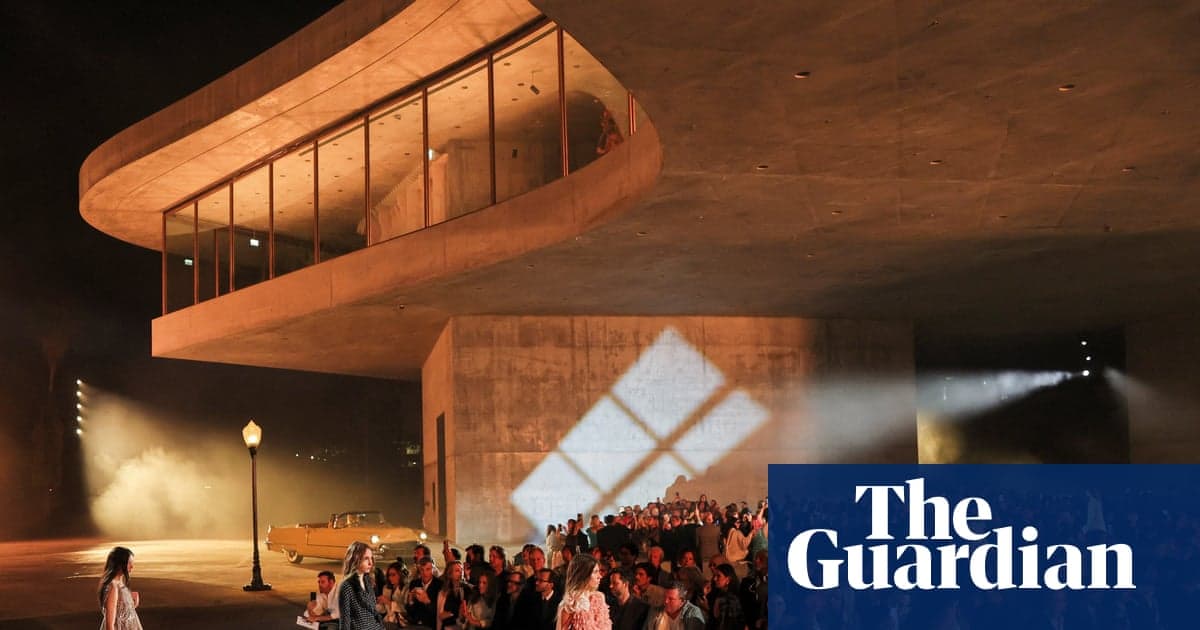
Anderson Juices up the Vibes for Dior with Spotlight on Hollywood

Why It Matters
Dior’s LA showcase signals a strategic pivot toward Hollywood collaborations, aiming to boost brand relevance and capture high‑spending U.S. consumers. It also illustrates how luxury houses are using experiential runway events to stay top‑of‑mind in a shifting global market.
Key Takeaways
- •Dior's LA Cruise show cost $724 million, showcasing Hollywood tie‑ins
- •Bar jacket reimagined as white tuxedo, blending couture and cinema
- •Collaboration with Ed Ruscha adds LA street‑art flair to menswear
- •Strategic shift: Dior using Cruise shows to deepen film industry presence
- •US luxury market outpacing Europe, prompting more American runway locations
Pulse Analysis
Jonathan Anderson’s decision to host Dior’s Cruise collection in Los Angeles marks a deliberate move beyond Parisian runway tradition. By converting the David Geffen Galleries at LACMA—a $724 million, $684 million‑equivalent brutalist landmark—into a Hollywood back‑lot, Dior fused couture with cinema heritage, referencing Hitchcock’s "Stage Fright" and Marlene Dietrich. The show’s visual language—white tuxedo bar jackets, glitter‑threaded denim, and Ed Ruscha‑inspired typography—reinforced a narrative that fashion can serve as costume design, positioning Dior as a future film‑wardrobe partner.
The event also reflects a broader industry shift toward experiential marketing through Cruise shows. Analysts note that these collections, once merely travel‑oriented, now function as cultural touchpoints, keeping luxury brands visible year‑round. With the U.S. market outpacing Europe and China, brands like Gucci, Louis Vuitton and Hermès are staging similar U.S. runway events, leveraging high‑net‑worth consumers who value exclusive invitations. Dior’s LA show, attended by Al Pacino and Anya Taylor‑Joy, underscores the premium placed on celebrity endorsement and media buzz, translating runway spectacle into commercial relevance.
Looking ahead, Anderson’s promise of film collaborations suggests new revenue streams and cross‑industry storytelling opportunities. By positioning Dior as both fashion house and costume studio, the brand can tap into box‑office glamour while reinforcing its luxury cachet. This integration may reshape how luxury houses allocate marketing budgets, favoring immersive experiences that blur the lines between runway, cinema and consumer culture, ultimately driving higher engagement and sales in a market increasingly defined by narrative over seasonality.
Anderson juices up the vibes for Dior with spotlight on Hollywood
Comments
Want to join the conversation?
Loading comments...