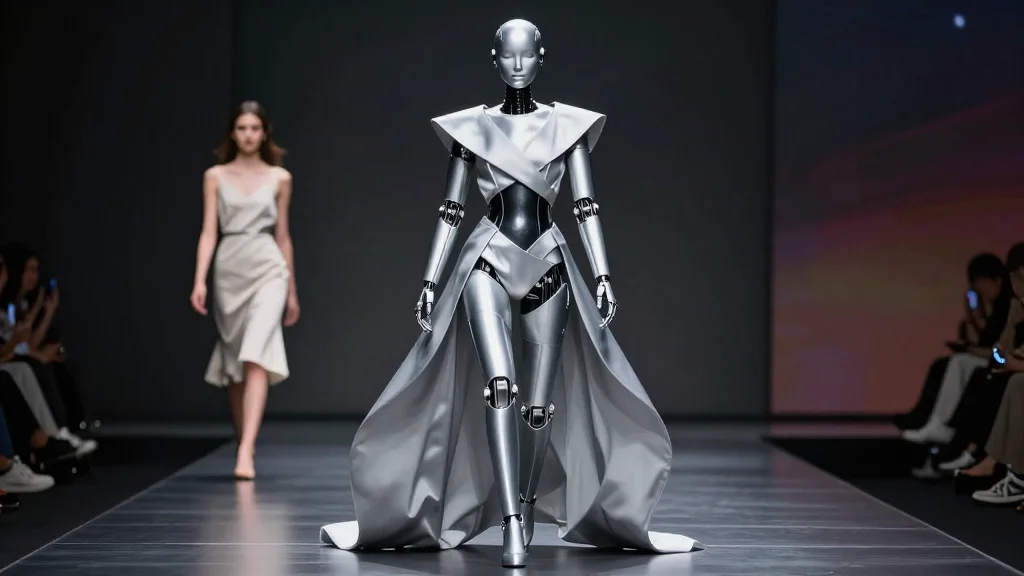
Galaxy Corp's Mach33 Show Pairs Humanoid Robots with Models on Seoul Runway

Companies Mentioned
Why It Matters
The Mach33 runway blurs the line between technology and culture, offering a tangible glimpse of how fashion could evolve alongside increasingly human‑like robots. By showcasing designer clothing on both flesh and metal, the event challenges traditional notions of wearability and opens a dialogue about the future of consumer goods in a world where physical AI is commonplace. For the fashion industry, this could mean new design parameters, supply‑chain considerations, and marketing narratives that incorporate robotics as a lifestyle element rather than a niche novelty. Furthermore, the show reinforces South Korea’s strategic positioning as a leader in both robotics density and cultural export. If the integration of AI into fashion proves commercially viable, it may accelerate global adoption of smart textiles and wearable robotics, reshaping everything from runway production to everyday apparel.
Key Takeaways
- •Galaxy Corporation staged the Mach33: Physical AI Fashion Show at Seoul's Galaxy Robot Park.
- •Humanoid robots walked the runway in designer outfits alongside human models.
- •The event was framed as a "physical AI" showcase to imagine future human‑robot coexistence.
- •South Korea has over 1,000 industrial robots per 10,000 workers, the highest density globally.
- •Galaxy plans further robot‑centered entertainment, including concerts and interactive performances.
Pulse Analysis
Galaxy Corporation’s Mach33 show is less a gimmick than a strategic move to embed robotics into mainstream cultural experiences. Historically, runway shows have been platforms for storytelling; by introducing robots as co‑models, Galaxy is rewriting that narrative to include technology as a protagonist. This aligns with a broader trend where brands leverage immersive experiences—think virtual fashion shows during the pandemic—to differentiate themselves.
From a market perspective, the integration of AI into fashion could unlock new revenue streams. Designers who can produce garments compatible with robotic articulation may secure contracts with tech firms seeking to humanize their products. Conversely, robotics manufacturers gain a glamorous showcase for their platforms, potentially attracting investment beyond industrial applications. The synergy could accelerate the development of soft‑actuated exoskeletons and adaptive fabrics, blurring the line between clothing and equipment.
Looking forward, the success of Mach33 will hinge on consumer acceptance and commercial partnerships. If major fashion houses co‑create collections for robot models, we may see a cascade of AI‑infused apparel entering retail. However, the novelty factor alone may not sustain long‑term demand. The next phase will likely involve data‑driven personalization—robots that adjust fit in real time—and sustainability metrics, as AI can optimize material usage. Galaxy’s upcoming robot concerts and interactive events will serve as live laboratories, testing these concepts at scale. In essence, the Seoul runway could be the first chapter of a new fashion‑tech playbook, where the catwalk becomes a laboratory for the future of wearable AI.
Galaxy Corp's Mach33 Show Pairs Humanoid Robots with Models on Seoul Runway
Comments
Want to join the conversation?
Loading comments...