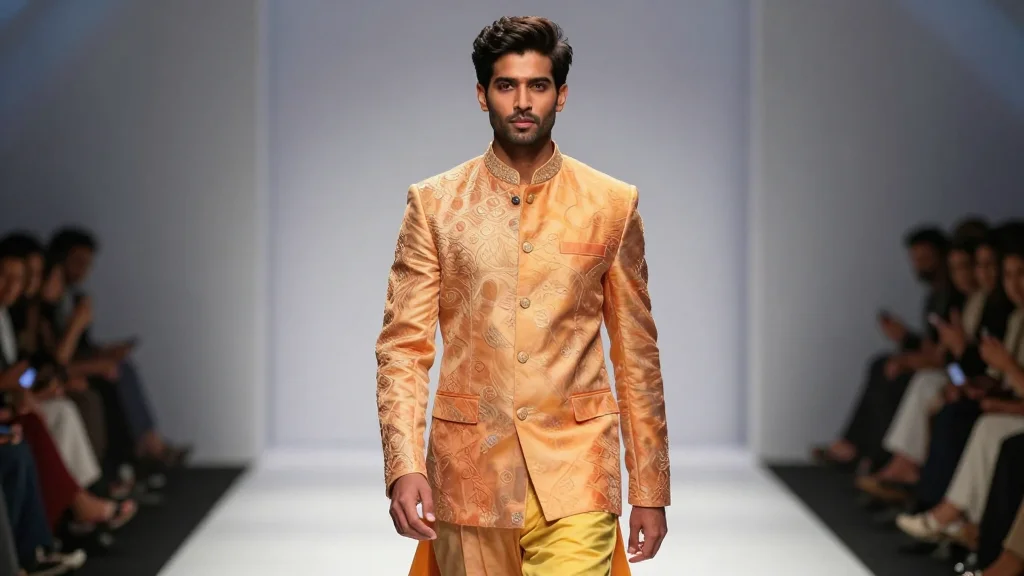
Indian Menswear Takes Center Stage at Lakmé Fashion Week’s ‘The Boy’s Club’

Why It Matters
The surge in Indian menswear reflects a broader cultural awakening: men are investing time and money into personal style, challenging decades‑old norms of minimalist dressing. This shift not only expands the luxury market’s revenue base but also encourages designers to reinterpret regional textiles, preserving cultural heritage while meeting modern tastes. For retailers and e‑commerce platforms, the trend signals a need to diversify product assortments and marketing narratives. As Indian men increasingly seek curated, customizable pieces—evident in Abrol’s matching dog outfit and Karunakaran’s heritage‑infused bomber jackets—brands that can blend authenticity with scalability stand to capture a growing share of the market.
Key Takeaways
- •‘The Boy’s Club’ men‑only showcase debuted at Lakmé Fashion Week’s Fall/Winter edition
- •Selman Fazil highlighted rising style awareness among Indian men
- •Sushant Abrol launched Countrymade to fill a gap in groom‑centric apparel
- •Euromonitor projects India’s men’s luxury apparel market to reach $163.1 million by 2028
- •India hosts ~10 million weddings annually, driving demand for upscale menswear
Pulse Analysis
The Lakmé Fashion Week moment is more than a runway novelty; it marks the crystallisation of a decade‑long undercurrent where Indian men have moved from passive consumers to active participants in fashion discourse. Historically, Indian fashion weeks allocated a sliver of time to menswear, often relegating it to peripheral showcases. By dedicating an entire segment to male designers, LFW acknowledges both commercial potential and cultural relevance.
From a market perspective, the projected 3.4% CAGR suggests steady, if not explosive, growth. The real catalyst, however, is the wedding economy. With 10 million ceremonies each year, designers can monetize high‑margin, occasion‑specific garments while also building year‑round relevance through business‑casual lines. Brands that successfully navigate this duality—offering both ceremonial opulence and everyday sophistication—will likely dominate the next growth wave.
Looking ahead, the challenge will be scaling artisanal craftsmanship without diluting its authenticity. As designers like Karunakaran embed regional motifs into global silhouettes, supply‑chain constraints and price sensitivity could test the elasticity of the market. Yet, the appetite for culturally resonant, customizable menswear appears robust, positioning India as a potential hub for innovative luxury that blends heritage with contemporary design.
Indian Menswear Takes Center Stage at Lakmé Fashion Week’s ‘The Boy’s Club’
Comments
Want to join the conversation?
Loading comments...