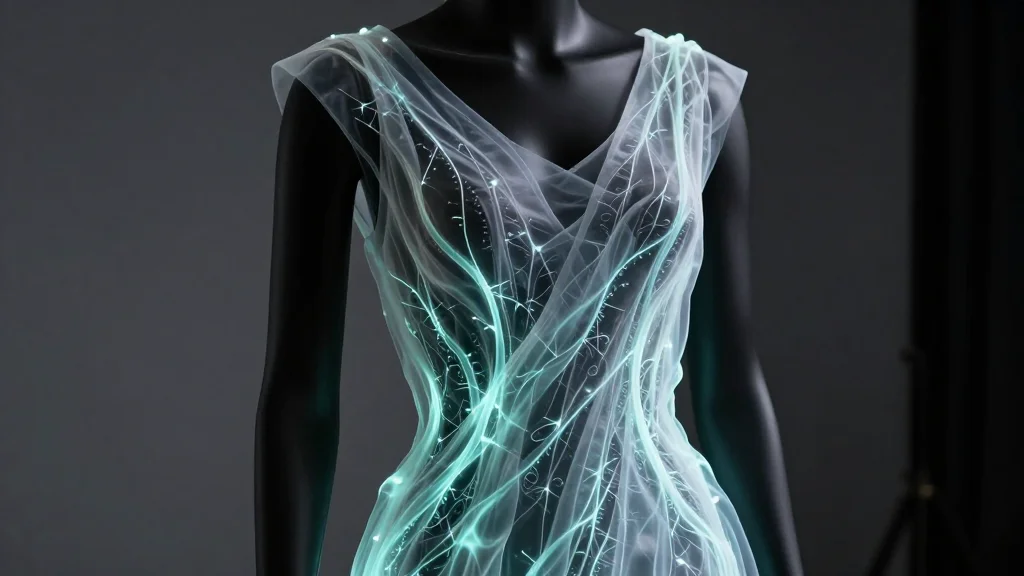
Iris Van Herpen’s ‘Sculpting the Senses’ Opens at Brooklyn Museum

Why It Matters
Iris van Herpen’s retrospective reframes couture as a research platform rather than a purely aesthetic pursuit. By foregrounding living materials and advanced manufacturing, the exhibition challenges the fashion industry to rethink product lifecycles, material sourcing and the role of designers as interdisciplinary innovators. The public exposure of such experimental work may accelerate consumer acceptance of bio‑engineered textiles, influencing everything from runway shows to everyday apparel. Moreover, the show spotlights the cultural relevance of museums as incubators for fashion innovation. As traditional retail models falter, designers are turning to institutional partnerships to showcase concepts that require controlled environments—like bioluminescent algae—thereby reshaping how fashion is presented, critiqued and commercialized.
Key Takeaways
- •Brooklyn Museum opened Iris van Herpen’s retrospective on May 16, 2026.
- •Exhibition features over 140 couture pieces, including a 2025 garment with 125 million bioluminescent algae.
- •Show organized into thematic zones: water, marine biology, morphogenesis, outer space, perception.
- •Highlights include the updated 2026 bubble dress and celebrity‑worn pieces from Beyoncé to Lady Gaga.
- •Exhibit underscores fashion’s shift toward bio‑fabrication, 3D printing and interdisciplinary collaboration.
Pulse Analysis
Van Herpen’s Brooklyn Museum show is less a nostalgic look back than a manifesto for the next decade of fashion. Historically, retrospectives have celebrated a designer’s legacy; this one actively prototypes future production methods. By embedding living algae into a garment, Van Herpen moves beyond the novelty of “smart” fabrics to a truly symbiotic system where the clothing reacts to its environment. This blurs the line between object and organism, a concept that could redefine durability standards and after‑care expectations for luxury items.
From a market perspective, the exhibition arrives as luxury conglomerates pour capital into material‑science ventures. Brands such as LVMH and Kering have announced multi‑year funds for sustainable textile research, and Van Herpen’s public demonstration validates the commercial potential of these investments. The visibility of such high‑profile collaborations may also attract venture capital to niche startups focused on bio‑responsive materials, accelerating the pipeline from lab to runway.
However, the spectacle also surfaces tension between artistic ambition and commercial viability. Maintaining a living garment requires climate‑controlled display cases, specialized staff and ongoing biological upkeep—costs that are untenable for most retailers. The industry will need to solve scalability challenges if the promise of living couture is to move from museum installations to consumer products. In the short term, the retrospective will likely inspire a wave of limited‑edition, experience‑driven pieces that command premium prices, while longer‑term adoption will hinge on breakthroughs that lower production complexity and environmental impact.
Iris van Herpen’s ‘Sculpting the Senses’ Opens at Brooklyn Museum
Comments
Want to join the conversation?
Loading comments...