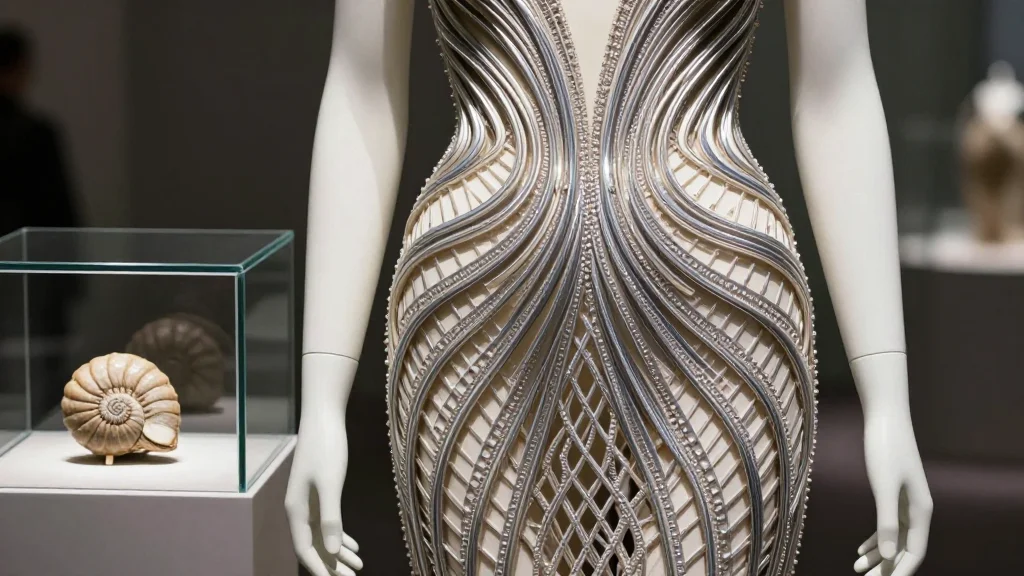
Iris Van Herpen's 'Sculpting the Senses' Opens at Brooklyn Museum with 140+ Couture Pieces

Why It Matters
Iris van Herpen's exhibit signals a shift in how fashion is curated, moving beyond runway spectacles to become a platform for scientific inquiry and environmental advocacy. By presenting couture alongside marine biology samples and astronomical models, the Brooklyn Museum demonstrates that fashion can communicate complex ideas about climate change, biodiversity and technological progress to a broad public. The show also reinforces van Herpen’s role as a catalyst for material innovation. Her use of 3D printing, laser cutting and bio‑derived fibers offers a roadmap for luxury brands seeking sustainable production methods without sacrificing aesthetic ambition. As other houses watch the public response, we may see a surge in collaborations that blend high fashion with research institutions, accelerating the adoption of eco‑friendly technologies across the industry.
Key Takeaways
- •Brooklyn Museum launches Iris van Herpen's "Sculpting the Senses" exhibit, featuring 140+ couture pieces.
- •Exhibit organized into 11 thematic sections that blend fashion, science and natural history.
- •Curated by Matthew Yokobosky, senior curator of fashion and material culture at the museum.
- •Show highlights van Herpen's pioneering use of 3D printing, laser cutting and sugarcane‑based fibers.
- •Exhibit runs through September and may travel to other major museums.
Pulse Analysis
Van Herpen's retrospective arrives at a moment when luxury fashion is under pressure to justify its environmental footprint. By foregrounding the designer's experimental materials—such as sugarcane‑derived fibers and bio‑luminescent algae—the exhibit provides a tangible case study of how high‑end houses can integrate sustainability into their creative DNA. This could embolden competitors to invest in similar research, potentially reshaping supply chains that have long relied on petro‑based textiles.
Moreover, the museum’s decision to frame couture as a scientific narrative challenges traditional museum hierarchies that have historically separated fashion from fine art and natural history. This interdisciplinary approach may inspire other cultural institutions to re‑evaluate their programming, leading to a new genre of exhibitions where designers are positioned as researchers and storytellers. The ripple effect could extend to education, with fashion schools incorporating more STEM curricula to prepare the next generation of designers for this hybrid landscape.
Finally, the public’s reception will be a barometer for the commercial viability of such concepts. If visitor numbers and media coverage remain strong, investors and brand CEOs may view immersive, museum‑scale showcases as a viable marketing channel that transcends seasonal collections. This could accelerate the trend of fashion houses partnering with museums to create narrative‑driven experiences that deepen brand equity while advancing cultural conversations about technology and the environment.
Iris van Herpen's 'Sculpting the Senses' Opens at Brooklyn Museum with 140+ Couture Pieces
Comments
Want to join the conversation?
Loading comments...