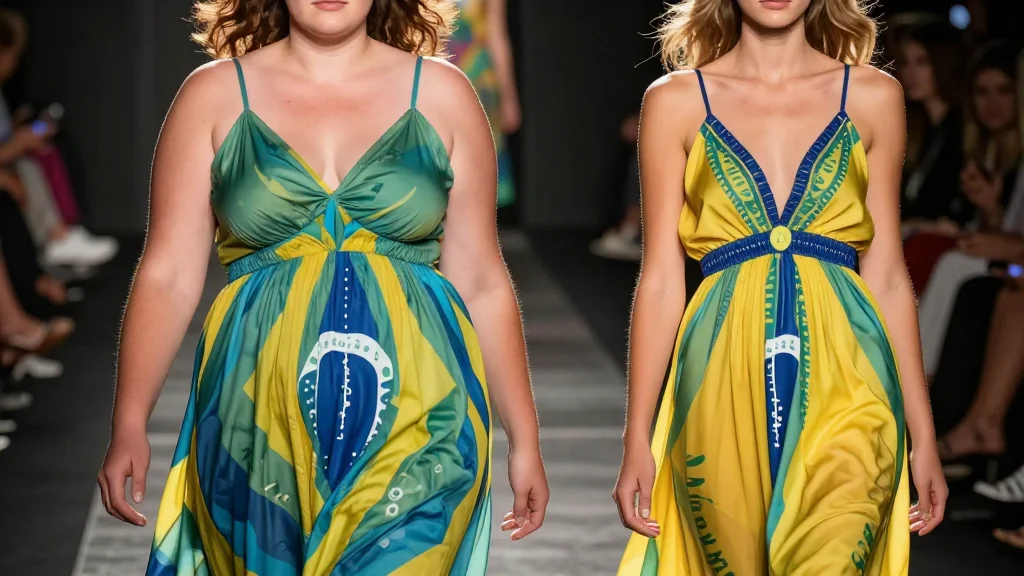
Karoline Vitto Unveils Body‑Positive Collection at Rio Fashion Week

Why It Matters
Karoline Vitto’s Rio debut spotlights a pivotal shift in Brazilian fashion toward genuine body inclusivity, challenging entrenched size norms that have long marginalized larger consumers. By producing the collection locally, Vitto also underscores a growing demand for sustainable, homegrown supply chains, aligning ethical production with inclusive design. If retailers adopt Vitto’s approach, the ripple effect could extend to pricing, marketing, and inventory strategies, prompting a broader industry reevaluation of who is considered a fashion consumer. The move may also inspire emerging designers to prioritize diversity from the outset, accelerating a cultural transformation that values attitude over arbitrary measurements.
Key Takeaways
- •Karoline Vitto debuted her inclusive collection at Rio Fashion Week on April 17, 2026.
- •The line celebrates curves and diverse body shapes, challenging Brazil’s thin‑ideal standards.
- •All garments were produced in Brazil using local fabrics and labor, while design work remains in London.
- •Image consultant Arlindo Grund praised the collection’s focus on comfort, identity, and respect.
- •Vitto plans a ready‑to‑wear launch later in 2026, aiming to bring body‑positive designs to mainstream retail.
Pulse Analysis
Vitto’s runway moment is more than a symbolic gesture; it reflects a convergence of global body‑positive momentum and Brazil’s unique market dynamics. Historically, Brazilian fashion has been dominated by the "bela mulher" archetype—slim, sun‑kissed, and often imported from European aesthetics. Vitto’s decision to produce locally disrupts that narrative, suggesting that inclusivity can coexist with a commitment to domestic industry. This dual focus may appeal to a consumer base that is increasingly conscious of both representation and sustainability.
From a competitive standpoint, Vitto’s entry could pressure established Brazilian brands to broaden their size ranges or risk losing relevance among younger, digitally savvy shoppers who demand authenticity. The presence of international figures like Ashley Graham at the show adds credibility and signals that Brazil is becoming a testing ground for global inclusivity trends. Should Vitto’s ready‑to‑wear line achieve commercial success, it could catalyze a cascade of similar initiatives, prompting retailers to renegotiate contracts with manufacturers to accommodate a wider array of sizes.
Looking ahead, the key question is scalability. Vitto’s meticulous approach—designing in London, producing in Brazil—offers a blueprint for balancing creative control with local manufacturing. If she can maintain quality while expanding distribution, the model could be replicated by other designers seeking to marry inclusivity with sustainability. The next six months will reveal whether the market embraces this paradigm shift or reverts to its traditional size‑centric focus.
Karoline Vitto Unveils Body‑Positive Collection at Rio Fashion Week
Comments
Want to join the conversation?
Loading comments...