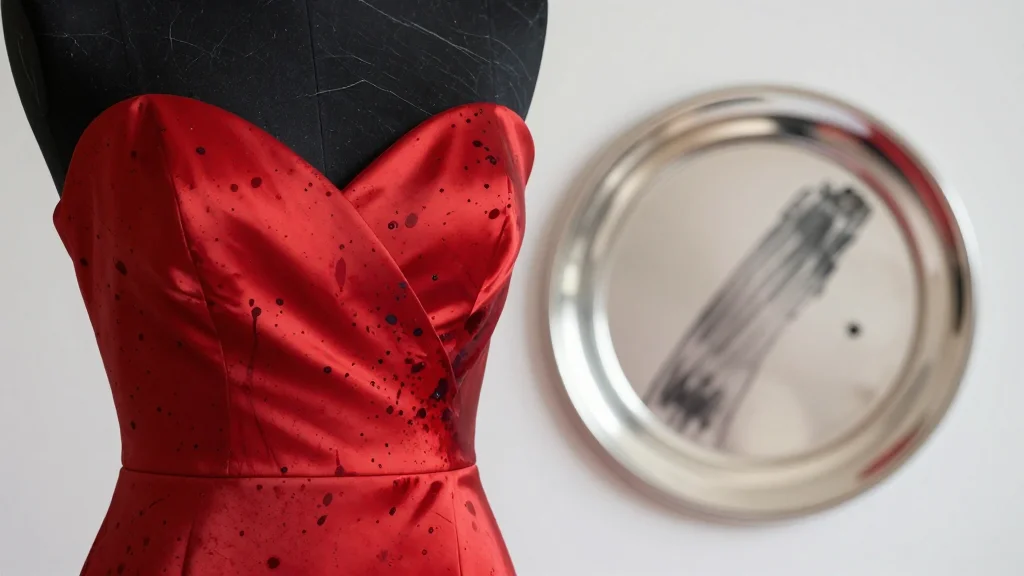
Lena Dunham’s Blood‑Stained Valentino Gown Turns Met Gala Into Art History Lesson

Companies Mentioned
Why It Matters
The Met Gala has long served as a barometer for cultural trends, and Dunham’s choice signals a shift toward overtly narrative-driven couture. By invoking Gentileschi—a painter whose work foregrounds female agency and violence—the look challenges the industry to confront historical subjects rather than merely celebrate visual spectacle. This could encourage designers to partner with museums, historians, and activists, expanding the commercial and critical scope of fashion. Moreover, Dunham’s dual role as host‑committee member and celebrity blurs the line between curatorial authority and personal expression. Her successful integration of personal health recovery narrative with a politically charged visual statement may inspire other high‑profile figures to leverage their platforms for deeper storytelling, potentially reshaping the criteria by which red‑carpet success is measured.
Key Takeaways
- •Lena Dunham returned to the Met Gala after a seven‑year hiatus.
- •She wore a custom Valentino gown designed by Alessandro Michele.
- •The dress’s blood‑splatter motif references Artemisia Gentileschi’s "Judith Slaying Holofernes."
- •Dunham described the collaboration in Vogue, highlighting Michele’s blend of playfulness and technical skill.
- •The look sparked debate about the role of historical trauma in contemporary fashion.
Pulse Analysis
Dunham’s Met Gala appearance illustrates a broader industry pivot toward storytelling that transcends pure aesthetics. Historically, the red carpet has been a showcase for brand logos and trend‑setting silhouettes; today, designers are increasingly mining art history, politics, and personal narratives for inspiration. This evolution mirrors the rise of “concept couture,” where garments function as visual essays. Michele’s decision to distill a complex, violent scene into a single visual element—a blood‑splatter—demonstrates a mastery of abstraction that aligns with contemporary art practices, positioning fashion as a legitimate conduit for cultural commentary.
The commercial implications are significant. Brands that successfully embed narrative depth may capture media attention beyond traditional fashion coverage, attracting audiences from art, academia, and activism. This cross‑sector appeal can translate into higher engagement on digital platforms, increased collaborations with cultural institutions, and potentially new revenue streams through limited‑edition pieces that double as collectible art. However, the approach carries risk: misreading historical contexts or appearing exploitative can trigger backlash, as seen in the mixed reactions to Dunham’s gown. Brands must therefore balance artistic ambition with cultural sensitivity, ensuring that narrative choices are informed and respectful.
Looking ahead, the Met Gala’s “costume art” theme may serve as a catalyst for a new wave of historically informed collections. Designers who can translate complex stories into wearable form—while maintaining commercial viability—are likely to set the tone for the next decade of high fashion. Dunham’s bold gamble, whether ultimately celebrated or critiqued, has already expanded the conversation about what the red carpet can represent, suggesting that future fashion spectacles will be judged as much on their narrative resonance as on their visual impact.
Lena Dunham’s Blood‑Stained Valentino Gown Turns Met Gala Into Art History Lesson
Comments
Want to join the conversation?
Loading comments...