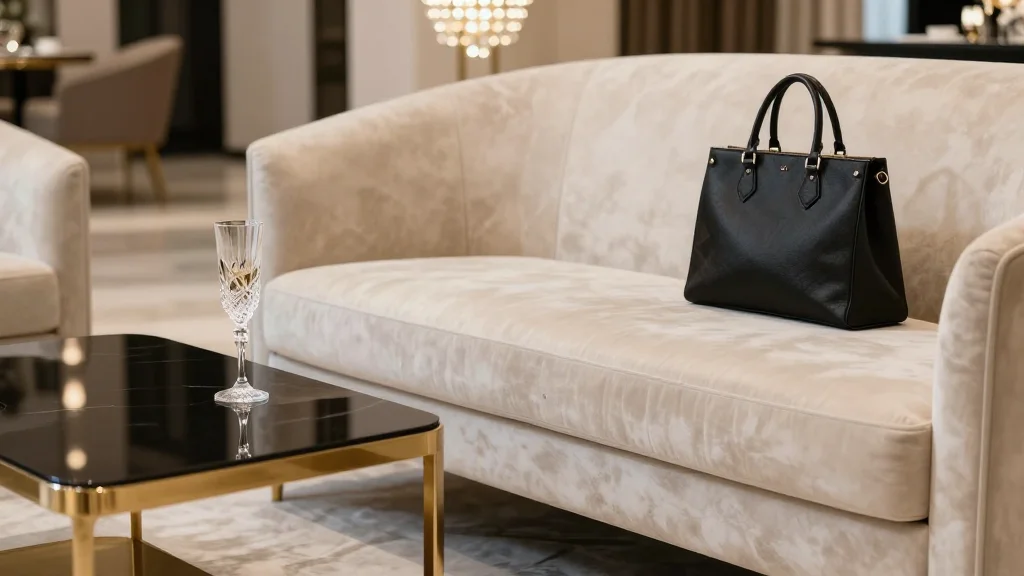
Louis Vuitton Launches Two‑Month Luxury Hotel Pop‑Up in Mayfair to Celebrate 130‑Year Milestone

Companies Mentioned

Louis Vuitton
Why It Matters
Louis Vuitton’s London hotel pop‑up illustrates a decisive shift in luxury strategy: brands are moving beyond product‑centric retail to create immersive environments that embed the brand into consumers’ lifestyles. By turning iconic handbags into rooms and amenities, LV deepens emotional connections, potentially increasing brand loyalty and opening ancillary revenue streams. The activation also signals to competitors that experiential hospitality can be a viable growth avenue, especially in markets where luxury travel and fashion intersect. If the pop‑up proves financially and culturally successful, it could accelerate a wave of similar installations across other fashion capitals, prompting a re‑evaluation of how luxury houses allocate resources between traditional boutiques, e‑commerce, and experiential venues. The outcome may influence real‑estate strategies, marketing spend, and product development, as brands seek to translate heritage into lived experiences.
Key Takeaways
- •Louis Vuitton opened a two‑month luxury hotel pop‑up in Mayfair, London on April 24, 2026.
- •The pop‑up features rooms themed around iconic bags such as the Speedy, Keepall, Alma, Neverfull and Noé.
- •Café Alma offers a Signature Luncheon and British tea service; Bar Noé serves champagne and cocktails with nightly DJs.
- •The activation tests an experiential hospitality model ahead of a permanent Paris hotel slated for later in 2026.
- •Louis Vuitton aims to capture high‑spending tourists and reinforce brand storytelling through immersive design.
Pulse Analysis
Louis Vuitton’s temporary hotel is more than a marketing stunt; it is a strategic experiment in the luxury sector’s evolving business model. Historically, fashion houses have relied on flagship stores and runway shows to convey brand DNA. However, the rise of experiential commerce—accelerated by post‑pandemic travel and the desire for differentiated experiences—has prompted brands to create destination‑level activations. LV’s pop‑up leverages its heritage of travel accessories, turning product icons into spatial narratives that invite guests to inhabit the brand.
From a competitive standpoint, the move puts pressure on rivals such as Gucci, Dior and Burberry, which have also dabbled in pop‑up experiences but have not yet committed to full‑scale hospitality. By integrating a gym, café, and bar, LV offers a holistic lifestyle proposition that can command higher per‑guest spend than a conventional boutique. The limited‑time format also creates scarcity, a powerful driver of luxury demand, while providing a controlled environment for data collection on guest behavior.
Looking ahead, the success metrics from this pop‑up will likely inform LV’s broader rollout plan. If occupancy and ancillary revenue meet expectations, we can anticipate a cascade of similar installations in cities like New York, Tokyo and Shanghai, each tailored to local luxury travel patterns. Moreover, the data harvested—ranging from design preferences to spend profiles—could feed back into product development, influencing future bag designs that are already conceived as experiential spaces. In sum, Louis Vuitton’s London hotel pop‑up may herald a new era where fashion houses become curators of lived luxury, blurring the boundaries between apparel, hospitality and cultural experience.
Louis Vuitton Launches Two‑Month Luxury Hotel Pop‑Up in Mayfair to Celebrate 130‑Year Milestone
Comments
Want to join the conversation?
Loading comments...