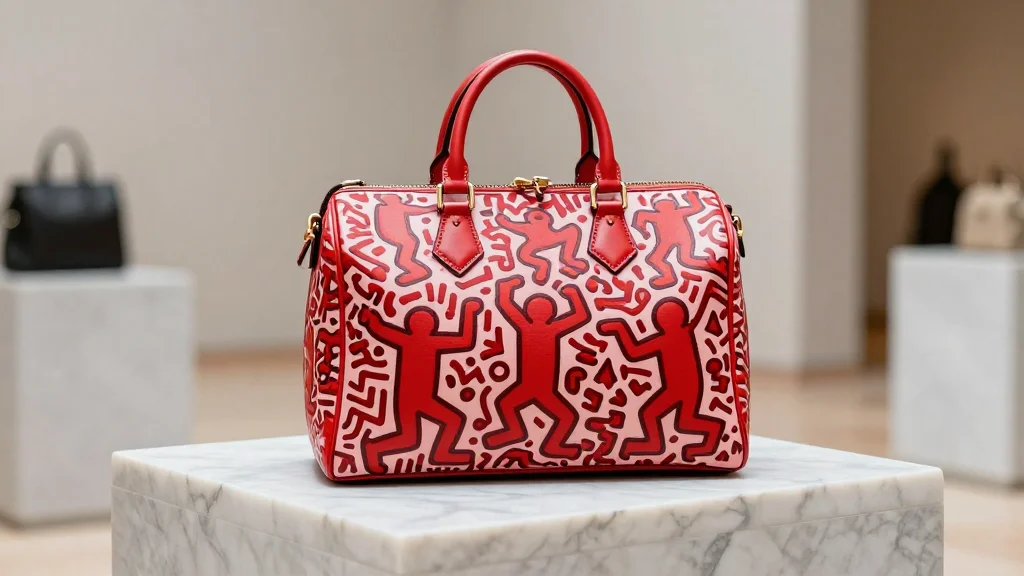
Louis Vuitton Revives Keith Haring Collaboration at Frick Collection Show

Companies Mentioned

Louis Vuitton
Why It Matters
The revival of the Keith Haring partnership illustrates how luxury fashion is increasingly leveraging art collaborations to refresh heritage narratives and attract younger consumers. By merging street‑art iconography with iconic luxury products, Louis Vuitton demonstrates a formula that can rejuvenate brand relevance without alienating its core clientele. The move also signals a broader industry shift toward museum‑based showcases, where cultural legitimacy becomes a competitive advantage. For the fashion ecosystem, the collaboration sets a benchmark for how legacy brands can reinterpret past artistic alliances to meet contemporary cultural expectations. It may prompt rivals to pursue similar high‑profile museum events or revisit dormant artist partnerships, intensifying competition for cultural relevance and market share.
Key Takeaways
- •Louis Vuitton relaunched its Keith Haring collaboration at the Frick Collection in Manhattan.
- •Nicolas Ghesquière integrated Haring’s stick figures into the Speedy bag and ready‑to‑wear line.
- •The show juxtaposed high‑art museum settings with street‑art motifs, highlighting a cultural duality.
- •Luxury houses are increasingly using museum venues to deepen cultural credibility.
- •Analysts expect the limited‑edition collection to boost sales and brand perception globally.
Pulse Analysis
Louis Vuitton’s decision to resurrect the Keith Haring partnership is more than a nostalgic nod; it is a calculated maneuver to harness the cultural capital of street art within a luxury framework. Historically, the brand’s artist collaborations have acted as inflection points, each generating spikes in both media coverage and consumer demand. The Haring revival follows a pattern where the label selects artists whose visual language resonates with contemporary social narratives—unity, liberation, and urban vibrancy—thereby aligning the brand with values that matter to Gen Z and Millennials.
The Frick Collection venue adds another layer of strategic depth. By situating the runway amid canonical artworks, Louis Vuitton positions itself not merely as a fashion label but as a patron of the arts. This dual positioning satisfies two market forces: the desire for exclusivity among affluent shoppers and the craving for authenticity among younger buyers who seek brands that champion cultural dialogue. The partnership also serves as a hedge against the volatility of fast‑fashion trends, anchoring the brand in timeless artistic relevance.
Looking forward, the success of this collaboration could reshape how luxury houses approach heritage revitalization. Rather than relying solely on new product innovation, brands may increasingly mine their archives for dormant artistic alliances, re‑contextualizing them for modern audiences. This approach offers a low‑risk pathway to generate buzz, drive limited‑edition sales, and reinforce brand storytelling. Competitors will likely monitor Louis Vuitton’s sales data and consumer sentiment closely, potentially sparking a wave of museum‑based, artist‑driven launches across the sector.
Louis Vuitton Revives Keith Haring Collaboration at Frick Collection Show
Comments
Want to join the conversation?
Loading comments...