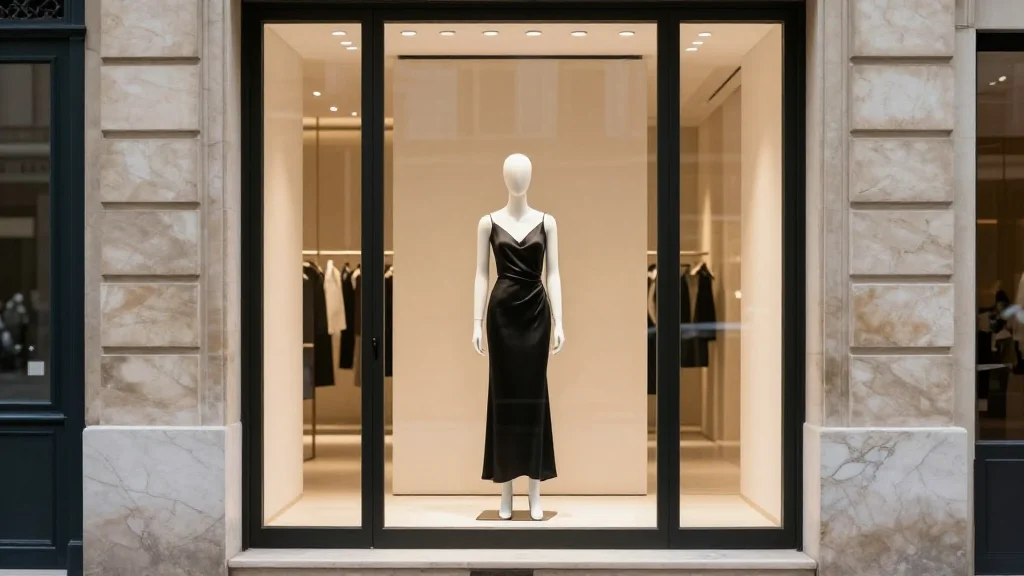
Max Mara Revamps 8,100‑sq‑ft Paris Flagship on Avenue Montaigne

Companies Mentioned

Louis Vuitton
Chanel
Why It Matters
The launch of Max Mara’s revamped Paris flagship illustrates a broader shift among luxury houses toward reinvesting in flagship locations as experiential hubs, counterbalancing the rise of online sales. By committing significant capital to a high‑visibility address, Max Mara signals confidence in the enduring relevance of physical retail for brand storytelling and customer loyalty. The design’s blend of heritage cues and bold modern elements may set a template for other legacy brands seeking to refresh their retail DNA without abandoning their core identity. Moreover, the project highlights the strategic importance of Avenue Montaigne as a barometer of luxury health. Success here often ripples across the sector, influencing rent benchmarks, supplier negotiations and the competitive calculus for new entrants. Max Mara’s move could encourage peers to reconsider dormant or underperforming flagship stores, potentially sparking a wave of high‑profile retail renovations in key fashion capitals.
Key Takeaways
- •Max Mara opened an 8,100‑sq‑ft flagship on Avenue Montaigne, designed by Sophie Hicks.
- •The renovation celebrates the brand’s 75th anniversary and emphasizes its product‑led strategy.
- •Maria Giulia Prezioso Maramotti highlighted the store’s symbolic importance for the family‑owned label.
- •The flagship’s orange double‑helix staircase contrasts with a minimalist concrete interior.
- •The investment reflects confidence in physical retail amid a broader luxury market recovery.
Pulse Analysis
Max Mara’s decision to pour resources into a flagship on one of the world’s most coveted retail streets is both a brand‑building exercise and a calculated financial gamble. Historically, luxury houses have used flagship stores as cultural beacons—think Chanel’s Rue Cambon or Dior’s Avenue Montaigne—where architecture and design become extensions of the brand narrative. By enlisting Sophie Hicks, whose work is known for marrying heritage with contemporary flair, Max Mara is attempting to rewrite its own narrative, positioning itself as a modern custodian of classic tailoring.
The timing is noteworthy. While many competitors have trimmed physical footprints post‑COVID, Max Mara is expanding, suggesting a belief that high‑touch experiences can command premium margins that offset rising real‑estate costs. This bet may pay off if the store successfully integrates digital touchpoints—such as AR‑enabled fitting rooms or exclusive online‑offline product releases—thereby creating a seamless omnichannel ecosystem that appeals to both traditional shoppers and digitally native consumers.
If the Paris flagship drives foot traffic and media buzz, it could catalyze a ripple effect across Max Mara’s global network, prompting similar upgrades in emerging luxury markets like Shanghai and Dubai. Conversely, if the concept fails to attract sufficient spend, the brand may face pressure to reassess its capital allocation, potentially slowing its expansion plans. In any case, the store serves as a litmus test for the viability of flagship‑centric growth strategies in an era where e‑commerce continues to erode the share of in‑store sales.
Max Mara Revamps 8,100‑sq‑ft Paris Flagship on Avenue Montaigne
Comments
Want to join the conversation?
Loading comments...