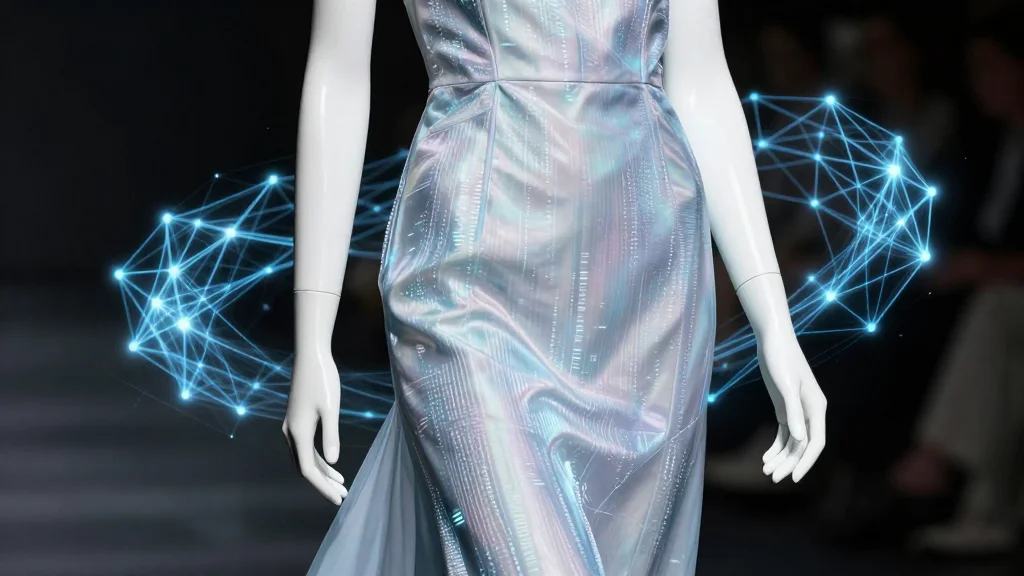
Melbourne Designers Showcase AI-Driven Collections Amid Mixed Industry Reaction

Why It Matters
The experiment at Melbourne Fashion Festival illustrates how AI is moving from administrative support to front‑line creative processes in fashion. If designers can reliably harness AI for concept generation, trend analysis, and rapid prototyping, the industry could see shorter design cycles, lower development costs, and more data‑driven collections. Conversely, the highlighted shortcomings—mis‑rendered imagery and the fear of job loss—signal that adoption will be uneven until tools improve accuracy and ethical frameworks are established. The outcome will influence supply‑chain dynamics, talent development, and the very aesthetic language of future fashion. Moreover, the public debate sparked by Špetić’s and Lebon’s experiences may shape regulatory scrutiny. Governments and fashion councils worldwide are beginning to consider guidelines for AI‑generated designs, especially concerning copyright and the authenticity of creative labor. How quickly these standards emerge could determine whether AI becomes a competitive advantage for early adopters or a liability that hampers brand reputation.
Key Takeaways
- •Designer Karla Špetić used generative AI for slogan prompts and concept sketches at Melbourne Fashion Festival
- •Footwear designer Vince Lebon presented a full AI‑generated collection using a custom tool that turns sketches into photorealistic images
- •Špetić reported mixed results, citing inaccurate hand renderings and the need for precise prompts
- •Lebon claimed the AI tool cut sampling costs and accelerated design approval, but acknowledged industry fear of job displacement
- •Both designers highlighted AI’s strength in trend forecasting and rapid visualization, while noting cultural resistance
Pulse Analysis
AI’s incursion into fashion design reflects a broader digital transformation that began with supply‑chain optimization and has now reached the creative core. Historically, technology in fashion—CAD, 3D printing, digital pattern making—has been adopted gradually, often after proving ROI in cost savings. AI, however, promises to compress the ideation phase itself, turning a weeks‑long mood‑board process into minutes of prompt engineering. This speed advantage could democratize design, allowing smaller labels to compete with luxury houses that traditionally rely on extensive creative teams.
Yet the technology’s current limitations—erroneous anatomy, lack of nuanced aesthetic judgment—reinforce the argument that AI is an augmentative, not autonomous, tool. Designers like Špetić who treat AI as a “virtual assistant” are likely to extract the most value, using it to surface ideas that are then refined by human intuition. In contrast, firms that over‑rely on AI risk homogenization, as generative models tend to reproduce patterns present in their training data. The industry’s challenge will be to balance efficiency with originality, preserving the handcrafted narrative that underpins brand equity.
Looking ahead, the next inflection point will be the integration of AI with physical prototyping technologies such as virtual try‑on and on‑demand manufacturing. If AI can reliably predict fit and consumer preference, the entire product lifecycle could become data‑driven, reducing waste and accelerating time‑to‑market. However, regulatory and ethical considerations—particularly around copyright of AI‑generated designs—will shape the speed of adoption. Companies that establish transparent AI governance and invest in upskilling their creative staff will likely emerge as leaders in the new AI‑enhanced fashion ecosystem.
Melbourne Designers Showcase AI-Driven Collections Amid Mixed Industry Reaction
Comments
Want to join the conversation?
Loading comments...