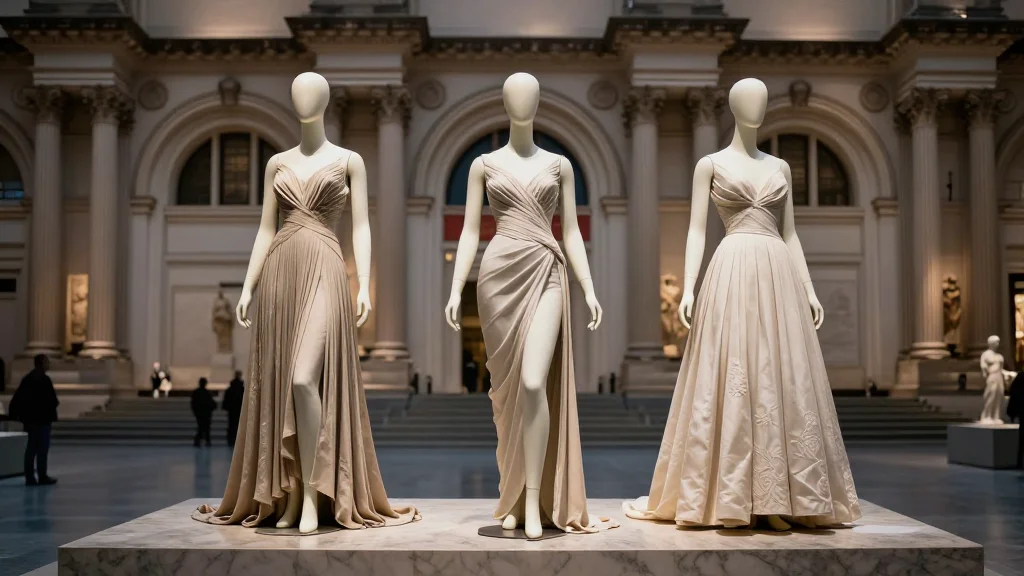
Met Gala 2026 Unveils 'Costume Art' Theme and Body‑Positive Exhibition

Companies Mentioned
Why It Matters
The "Costume Art" theme marks a watershed moment for the fashion‑art dialogue, positioning clothing as a vehicle for cultural critique rather than mere spectacle. By foregrounding diverse bodies, the exhibition challenges entrenched industry standards and could spur broader adoption of inclusive sizing across luxury and ready‑to‑wear lines. The record‑breaking $31 million fundraiser demonstrates the Met’s growing financial clout, enabling permanent gallery space that will host future fashion exhibitions and extend the museum’s influence on consumer tastes. Beyond the museum walls, the gala’s high‑profile co‑chairs signal a convergence of entertainment, sport and fashion, reinforcing the Met’s role as a cultural barometer. Brands that align with the exhibition’s inclusive narrative may gain credibility with younger, socially conscious shoppers, while designers who ignore the shift risk appearing out‑of‑step with evolving consumer values.
Key Takeaways
- •Met Gala 2026 adopts "Costume Art" theme, co‑chaired by Beyoncé, Nicole Kidman and Venus Williams.
- •New eight‑month exhibition in the Conde Nast galleries showcases mannequins representing corpulent, disabled, pregnant and aging bodies.
- •Curator Andrew Bolton says the show aims to "reclaim the body" and positions the dressed form as the museum’s connective thread.
- •2025 Met Gala fundraiser set a record $31 million, funding the new permanent galleries and extended exhibition run.
- •Industry insiders predict the theme will push designers toward more inclusive sizing and narrative‑driven collections.
Pulse Analysis
The Met’s decision to center the 2026 gala around "Costume Art" reflects a broader industry pivot toward storytelling that transcends surface aesthetics. Historically, the gala has been a showcase for opulent, often homogeneous silhouettes; this year’s emphasis on body diversity aligns with a decade‑long consumer push for representation, as seen in the rise of plus‑size and adaptive fashion lines. By embedding these narratives within a museum context, the Costume Institute legitimizes inclusivity as high culture, potentially accelerating its diffusion into mainstream retail.
Financially, the $31 million haul underscores the gala’s dual role as a fundraising engine and a brand amplifier. The infusion of capital into permanent gallery space not only secures the Institute’s future programming but also creates a stable platform for designers to experiment without the pressure of a one‑night showcase. This could lead to longer‑term collaborations between luxury houses and the museum, similar to past partnerships like "Manus x Machina," fostering a pipeline where runway concepts evolve into museum pieces and vice versa.
Finally, the convergence of entertainment powerhouses—Beyoncé’s musical gravitas, Kidman’s cinematic cachet, and Williams’ athletic prestige—signals a strategic broadening of the gala’s audience. As brands vie for cultural relevance, aligning with the Met’s narrative of art‑fashion synthesis offers a shortcut to credibility. Designers who successfully translate the "Costume Art" brief into wearable statements will likely set the tone for the next season, while those who cling to traditional, exclusive aesthetics may find themselves sidelined in an industry that increasingly rewards authenticity and inclusivity.
Met Gala 2026 Unveils 'Costume Art' Theme and Body‑Positive Exhibition
Comments
Want to join the conversation?
Loading comments...