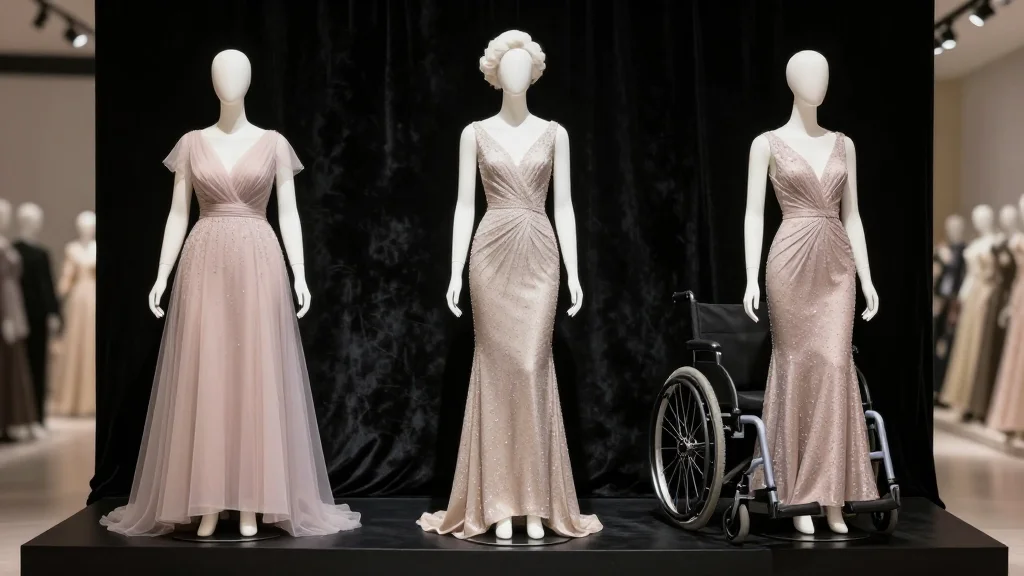
Met Gala Exhibit Debuts 25 Real-Body Mannequins for Greater Diversity

Companies Mentioned
Why It Matters
The introduction of real‑body mannequins at the Met Gala confronts a long‑standing visual bias that has privileged a narrow, often unattainable body ideal. By showcasing corpulent, disabled and ageing bodies alongside traditional figures, the exhibit challenges both cultural perceptions and commercial practices that marginalise large segments of the consumer base. This shift could accelerate demand for more inclusive sizing, influence runway casting, and inspire other cultural institutions to prioritize representation. Beyond aesthetics, the move signals a strategic alignment between high fashion and social advocacy. As brands grapple with calls for diversity, the museum’s high‑profile endorsement provides a powerful validation that inclusivity is not merely a marketing trend but a substantive re‑definition of fashion heritage. The ripple effect may compel designers to reconsider sample production, marketing narratives, and retail strategies, potentially reshaping revenue models that have long relied on a limited size spectrum.
Key Takeaways
- •25 new mannequins introduced for the Met Gala’s Costume Institute exhibit
- •18 mannequins are based on nine real‑life models, including disabled and corpulent bodies
- •Curator Andrew Bolton frames the project as a challenge to the size‑2 mannequin norm
- •Artist Michaela Stark described the photogrammetry process as "nerve‑wracking" but liberating
- •The mannequins will remain on display through the gala and are not for sale
Pulse Analysis
The Met Gala’s decision to replace the iconic size‑2 mannequin with a suite of real‑body figures is more than a curatorial tweak; it is a strategic signal to an industry that has long equated thinness with desirability. Historically, fashion museums have reinforced elite aesthetics, reinforcing a feedback loop that filters back into runway casting and retail sizing. By disrupting that visual language at one of the most watched fashion events, the Costume Institute forces designers, buyers, and consumers to confront the gap between artistic representation and everyday reality.
From a market perspective, the move could accelerate a shift that retailers have already begun to feel: the need to expand size ranges to capture a broader customer base. Brands that ignore this visual cue risk appearing out‑of‑step with a growing demographic that values authenticity over aspiration. Conversely, early adopters who integrate diverse body types into their campaigns may capture both media attention and loyalty from under‑served shoppers. The mannequins also serve as a low‑cost, high‑visibility testing ground for how audiences react to inclusive imagery without requiring a full‑scale redesign of product lines.
Looking ahead, the true test will be whether the momentum generated by the gala translates into sustained change. If the exhibit drives measurable spikes in social engagement and prompts designers to feature similar mannequins in their own shows, it could herald a new era where museum curation and commercial fashion co‑evolve toward inclusivity. If, however, the initiative remains an isolated spectacle, its impact will be limited to a momentary headline. The industry’s next steps—whether through expanded casting calls, diversified sample production, or broader size offerings—will determine if the Met Gala’s real‑body mannequins become a catalyst for systemic transformation or a well‑intentioned footnote.
Met Gala Exhibit Debuts 25 Real-Body Mannequins for Greater Diversity
Comments
Want to join the conversation?
Loading comments...