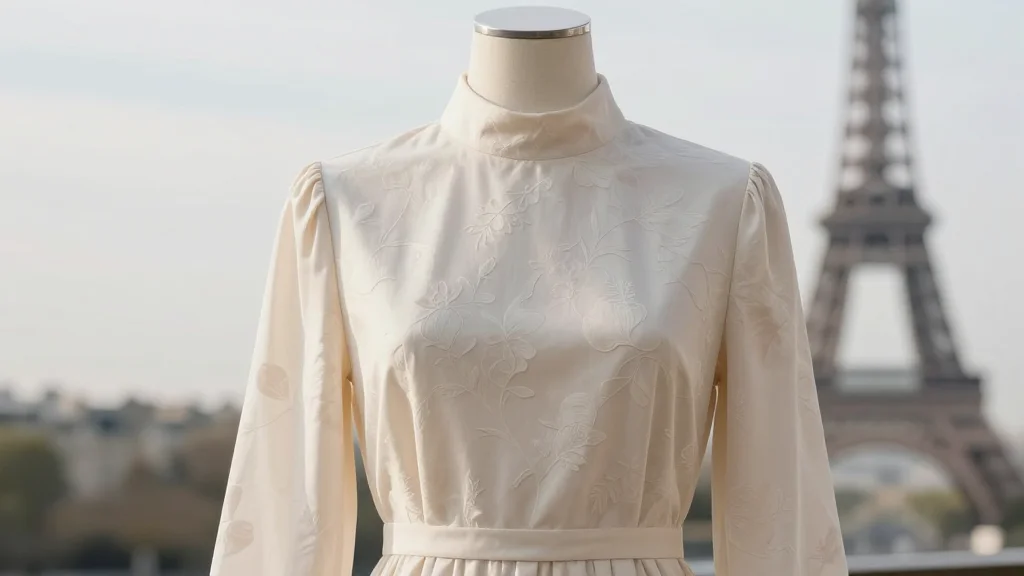
Paris Modest Fashion Week Debuts with 30 Designers Showcasing Modest Streetwear and Dresses

Why It Matters
The launch of Paris Modest Fashion Week underscores the rapid mainstreaming of a market once confined to niche religious communities. By situating the event in a global fashion capital, designers gain unprecedented visibility, attracting luxury buyers and tech partners eager to tap into a $400 bn consumer base. The platform also challenges France’s secular policies, suggesting a broader societal shift toward accepting diverse expressions of faith and identity within public spaces. For the industry, the week provides a blueprint for how modest fashion can intersect with sustainability, digital innovation and luxury branding. As brands experiment with AI‑driven design and inclusive storytelling, the sector is poised to influence broader fashion trends, from fabric choices to marketing narratives, reshaping how the industry approaches cultural sensitivity and consumer demand.
Key Takeaways
- •Nearly 30 designers presented collections at Paris Modest Fashion Week’s inaugural edition
- •Global modest fashion market projected to exceed $400 bn by 2027
- •Quotes from Fatou Doucouré, Rukaiya Kamba and Özlem Şahin highlighted cultural significance
- •Panels addressed AI, digital creators and scaling strategies for modest brands
- •Event positioned Paris as a new hub for modest fashion despite France’s secular clothing bans
Pulse Analysis
Paris Modest Fashion Week arrives at a pivotal moment when modest apparel is transitioning from a peripheral market to a central driver of global fashion revenue. Historically, modest fashion was fragmented, serving primarily Muslim consumers in regional markets. The convergence of three forces—demographic growth, digital amplification, and luxury houses embracing modest silhouettes—has accelerated its integration into mainstream retail. By hosting the inaugural week in Paris, the industry signals confidence that the city’s cachet can legitimize modest design on par with haute couture, attracting investment and media attention previously reserved for traditional fashion weeks.
The event’s emphasis on technology, particularly AI‑assisted pattern generation and data‑driven trend forecasting, reflects a broader industry pivot toward efficiency and personalization. Designers like Mayovera are leveraging AI to balance modesty requirements with performance fabrics, a move that could lower production costs and open new product categories such as modest activewear. Simultaneously, the presence of established sportswear brands illustrates a strategic partnership model where legacy players supply technical expertise while modest designers inject cultural relevance.
Looking ahead, the true test will be whether the momentum generated in Paris translates into sustained commercial pathways for emerging designers. The announced digital marketplace and mentorship initiatives could democratize access to global buyers, but success will depend on navigating France’s complex secular regulations and ensuring that inclusivity is more than symbolic. If the industry can align cultural advocacy with scalable business models, modest fashion may not only retain its $400 bn trajectory but also reshape luxury narratives around modesty, sustainability and identity.
Paris Modest Fashion Week Debuts with 30 Designers Showcasing Modest Streetwear and Dresses
Comments
Want to join the conversation?
Loading comments...