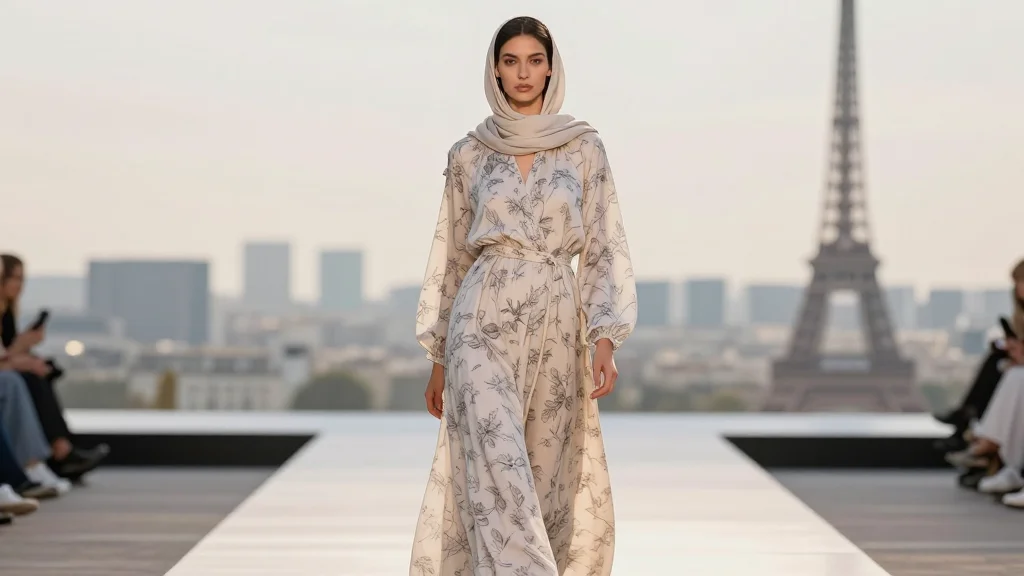
Paris Modest Fashion Week Showcases Floral Dresses and Streetwear, Spotlighting Muslim Designers

Why It Matters
The event signals that modest fashion is transitioning from a niche market to a mainstream driver of design and revenue, with a projected $400 bn global spend. By positioning Paris—a city synonymous with haute couture—as a hub for modest designers, the industry challenges France’s strict secularism and signals broader cultural acceptance. This shift could prompt luxury brands to integrate modest aesthetics, diversify product lines, and tap into a rapidly expanding consumer base across religious and secular demographics. Furthermore, the convergence of romantic florals and streetwear demonstrates how modest fashion is innovating beyond traditional silhouettes, attracting Gen‑Z shoppers and influencing global trends. As regulators grapple with the visibility of religious attire, the fashion sector may become a catalyst for policy discussions around inclusion and freedom of expression in public spaces.
Key Takeaways
- •Paris Modest Fashion Week featured nearly 30 designers showcasing floral dresses and boxy streetwear.
- •Fatou Doucouré said the show proved Muslim women could "take on any role in society."
- •Rukaiya Kamba described her decision to present in Paris as coming from a "very intentional place."
- •Global modest‑fashion spending is projected to exceed $400 bn by next year, per DinarStandard.
- •Brands blended modest silhouettes with Gen‑Z streetwear, echoing Nike and Adidas aesthetics.
Pulse Analysis
Modest fashion’s ascent in Paris reflects a broader redefinition of luxury, where cultural inclusivity becomes a competitive advantage. Historically, high fashion has been dominated by Western aesthetics; the infusion of modest designs—rooted in religious observance yet styled with contemporary streetwear—represents a strategic pivot toward untapped demographics. This pivot is evident in the $400 bn market forecast, which dwarfs the niche revenues of early modest‑fashion pioneers.
The Paris event also illustrates how regulatory environments can shape market dynamics. France’s laïcité framework has traditionally limited public displays of religious symbols, yet the runway’s celebration of headscarves and burkinis suggests a softening of cultural resistance, at least within the fashion sphere. If designers continue to receive institutional support and media visibility, policymakers may be compelled to reconcile secular statutes with evolving consumer expectations, potentially easing restrictions on religious attire in public domains.
Looking forward, luxury conglomerates are likely to scout modest designers for collaborations, leveraging their expertise to diversify product lines and capture a share of the burgeoning market. The blend of romantic florals with streetwear not only broadens aesthetic appeal but also aligns with sustainability trends, as modest garments often emphasize durability and timelessness. Brands that can authentically integrate modest values while delivering cutting‑edge design will position themselves at the forefront of a new fashion frontier.
Paris Modest Fashion Week showcases floral dresses and streetwear, spotlighting Muslim designers
Comments
Want to join the conversation?
Loading comments...