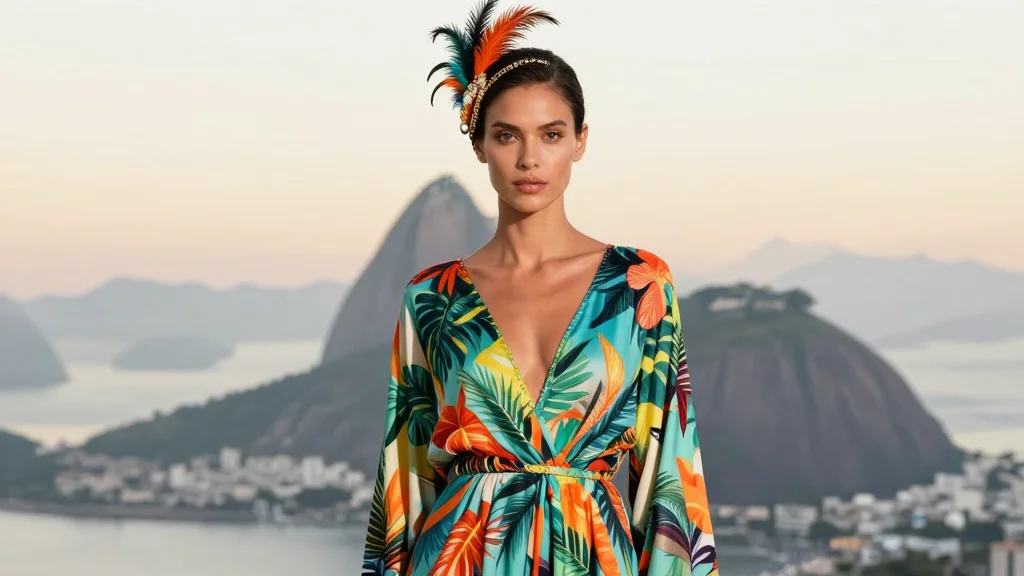
Rio Fashion Week Relaunches 2026, Spotlight on Brazil’s Emerging Luxury

Why It Matters
Rio Fashion Week’s revival signals a shift in the global fashion calendar, offering a new platform for Latin American designers to showcase culturally resonant work on an international stage. By marrying carnival heritage with contemporary design, the event challenges the dominance of Euro‑American aesthetics and introduces fresh narratives that could reshape consumer expectations worldwide. The economic stakes are equally significant. Brazil’s luxury sector, long dependent on imported materials and overseas production, now has a domestic showcase to attract investment, foster supply‑chain development, and stimulate job creation. If the momentum sustains, Rio could become a pivotal gateway for brands seeking to tap into South America’s growing middle‑class consumer base.
Key Takeaways
- •Rio Fashion Week returned in 2026 after a 12‑year hiatus, held at Pier Mauá.
- •MISCI’s Airon Martin framed his show around the question, “what would happen if Carnival never ended?”
- •Designer Lucas Leão emphasized slow, ritual‑based fashion as a counterpoint to digital speed.
- •Karloline Vitto highlighted body inclusivity and shifted production toward Brazil‑based manufacturing.
- •Organisers announced a bi‑annual schedule, aiming for a 2027 edition with expanded international collaborations.
Pulse Analysis
Rio’s 2026 relaunch arrives at a moment when the fashion industry is grappling with sustainability, digital acceleration and a hunger for authentic cultural narratives. By foregrounding carnival motifs and local craftsmanship, Rio Fashion Week differentiates itself from the homogenized aesthetics of many Western weeks, offering brands a unique storytelling canvas that resonates with younger, experience‑driven consumers.
Historically, Brazil’s fashion influence has been fragmented—regional events, limited export infrastructure, and political volatility have hampered consistent global presence. The new format, which couples runway shows with business forums, suggests a strategic pivot toward building a full‑stack ecosystem: design, production, and market access. If the city can address logistical bottlenecks—such as port capacity and textile sourcing—it could evolve into a regional hub that rivals Buenos Aires and Mexico City.
Looking forward, the real test will be whether Rio can translate cultural cachet into commercial viability. Success will depend on sustained investment, the ability to attract marquee international buyers, and the development of scalable, eco‑friendly manufacturing. Should these elements align, Rio Fashion Week could catalyze a broader renaissance for South American fashion, reshaping supply chains and consumer tastes across the hemisphere.
Rio Fashion Week Relaunches 2026, Spotlight on Brazil’s Emerging Luxury
Comments
Want to join the conversation?
Loading comments...