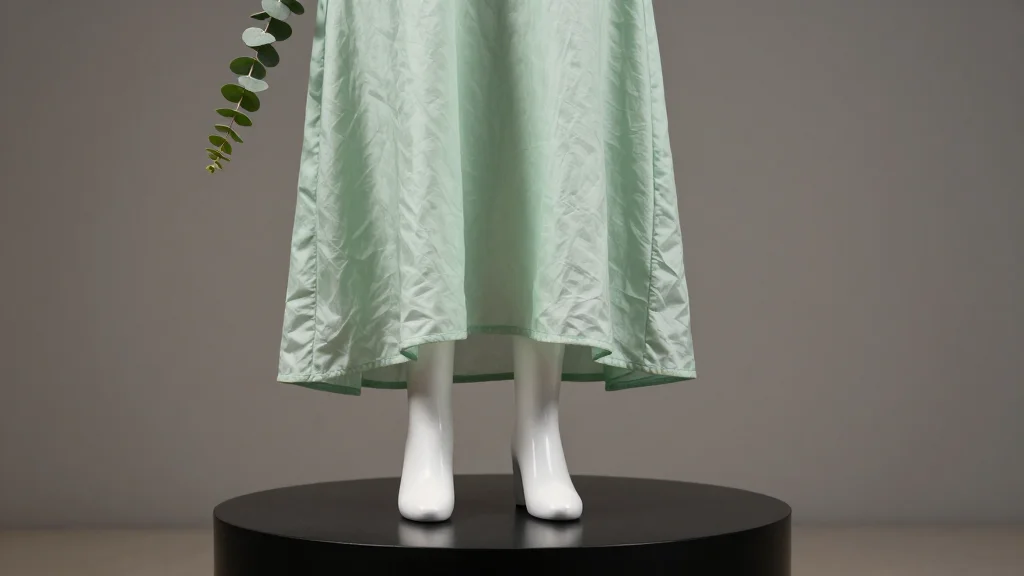
Stella McCartney Teams with H&M for Second Collaboration Launch in Chelsea

Companies Mentioned
Why It Matters
The second Stella McCartney‑H&M partnership underscores a growing appetite for repeat high‑low collaborations that go beyond novelty to embed sustainability into mass‑market offerings. By foregrounding recycled and organic materials, the collection challenges the perception that fast fashion must sacrifice environmental standards. For the broader fashion ecosystem, the launch serves as a litmus test for whether repeated designer‑retailer alliances can sustain consumer interest and drive meaningful change in supply‑chain practices. Success could encourage more legacy designers to re‑engage with mass retailers, potentially accelerating the diffusion of greener fabrics across the industry.
Key Takeaways
- •Stella McCartney and H&M unveiled their second joint collection at a Chelsea launch event.
- •The collection features recycled glass beads, vegetable‑oil‑derived fabrics, and Regenerative Organic Certified cotton.
- •Ann‑Sofie Johansson highlighted the collaboration’s creative and forward‑thinking spirit.
- •Stella McCartney emphasized the sustainability progress and ongoing challenges.
- •The line will reach H&M stores worldwide in early June, with a limited online release the week after.
Pulse Analysis
The repeat partnership between Stella McCartney and H&M reflects a maturation of the high‑low collaboration model that first emerged in the early 2000s. While the original McCartney‑H&M capsule was celebrated for democratizing designer aesthetics, this second iteration is anchored in a sustainability narrative that aligns with shifting consumer expectations. The emphasis on recycled glass, vegetable‑oil‑based textiles, and Regenerative Organic Certified cotton signals that eco‑innovation is no longer a peripheral add‑on but a core selling point.
Historically, repeat collaborations have been rare because designers risk overexposure and brand dilution. McCartney’s willingness to re‑engage suggests confidence that the partnership can evolve without eroding her luxury cachet. For H&M, the alliance offers a credible sustainability story that can differentiate it in a crowded fast‑fashion market increasingly scrutinized for its environmental impact. If the collection achieves strong sell‑through, it could validate a business case where repeated designer tie‑ins serve as a conduit for scaling sustainable materials.
Looking ahead, the success of this launch may prompt other luxury houses to revisit past mass‑market partners, using each new capsule to showcase incremental advances in circular design. The key challenge will be translating runway buzz into sustained consumer demand, especially as shoppers become more savvy about greenwashing. The industry will be watching the post‑launch data closely, as it could set a benchmark for how repeat collaborations can drive both commercial performance and genuine progress on sustainability goals.
Stella McCartney Teams with H&M for Second Collaboration Launch in Chelsea
Comments
Want to join the conversation?
Loading comments...