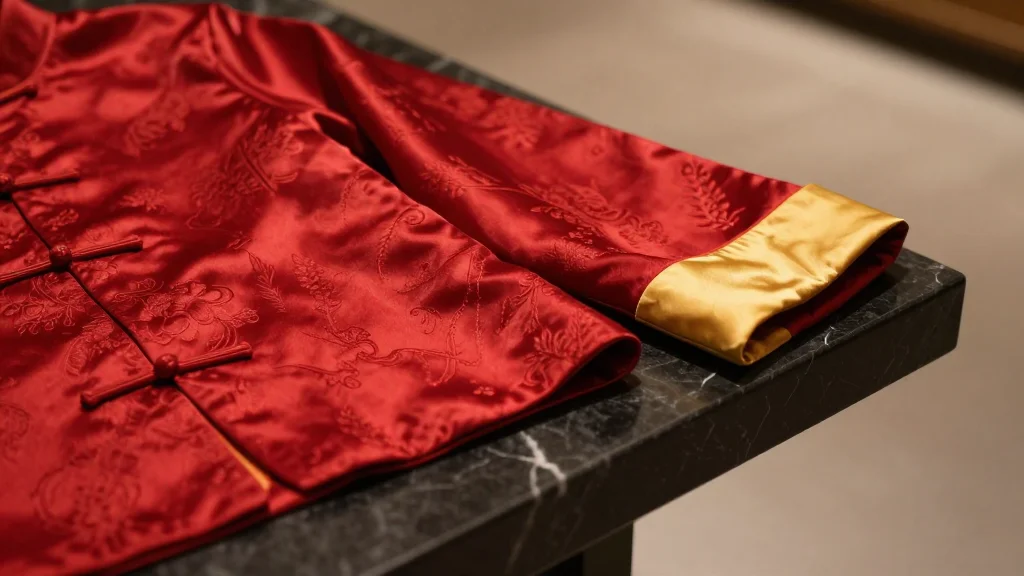
Tang Jacket Becomes 2026’s Must‑Have Outerwear, From Shanghai Runways to Global Streets

Companies Mentioned
Why It Matters
The Tang jacket’s rise illustrates how heritage fashion can become a commercial engine when reimagined for modern consumers. Its crossover appeal bridges luxury runway credibility and mass‑market accessibility, prompting brands to reconsider the value of culturally rooted designs. Moreover, the trend signals a shift away from overtly loud patterns toward understated, architectural silhouettes, influencing future collections across categories. By foregrounding a garment rooted in Chinese tradition, the trend also spotlights the growing influence of Asian markets on global style narratives. Brands that successfully navigate cultural authenticity while delivering contemporary relevance stand to capture both market share and cultural capital in an increasingly diversified consumer landscape.
Key Takeaways
- •Adidas Originals' Chinese New Year jacket launched at Shanghai Fashion Week sparked the Tang jacket trend.
- •Ralph Lauren and Yohji Yamamoto showcased Tang‑inspired pieces on 2026 runways.
- •Designers emphasize clean lines, mandarin collar, frog closures, and muted colour palettes.
- •Luxury houses and fast‑fashion retailers are both scaling production to meet demand.
- •The trend reflects a broader consumer shift toward heritage‑inspired, minimalist outerwear.
Pulse Analysis
The Tang jacket’s meteoric rise is less a fleeting fad than a strategic convergence of cultural storytelling and minimalist aesthetics. Historically, fashion cycles have borrowed from traditional dress—think the 1990s grunge reinterpretation of workwear—but the current wave is distinguished by its speed and breadth, driven by digital amplification and a consumer base hungry for authenticity. Brands that can authentically embed cultural motifs without veering into tokenism are likely to reap loyalty dividends, while those that merely copy risk backlash.
From a market perspective, the jacket’s dual appeal to luxury and mass markets creates a rare arbitrage opportunity. Luxury houses can command premium margins by emphasizing craftsmanship and heritage narratives, whereas fast‑fashion players can capture volume by offering affordable, on‑trend versions. This bifurcation may pressure supply chains to become more agile, prompting investments in flexible manufacturing and sustainable fabric sourcing to meet both high‑end and high‑volume demands.
Looking ahead, the Tang jacket could serve as a template for other heritage garments—such as the Japanese kimono or Indian kurta—to enter the global mainstream. The key will be balancing cultural respect with commercial ambition, a tightrope that will define the next wave of cross‑cultural fashion innovation.
Tang Jacket Becomes 2026’s Must‑Have Outerwear, From Shanghai Runways to Global Streets
Comments
Want to join the conversation?
Loading comments...