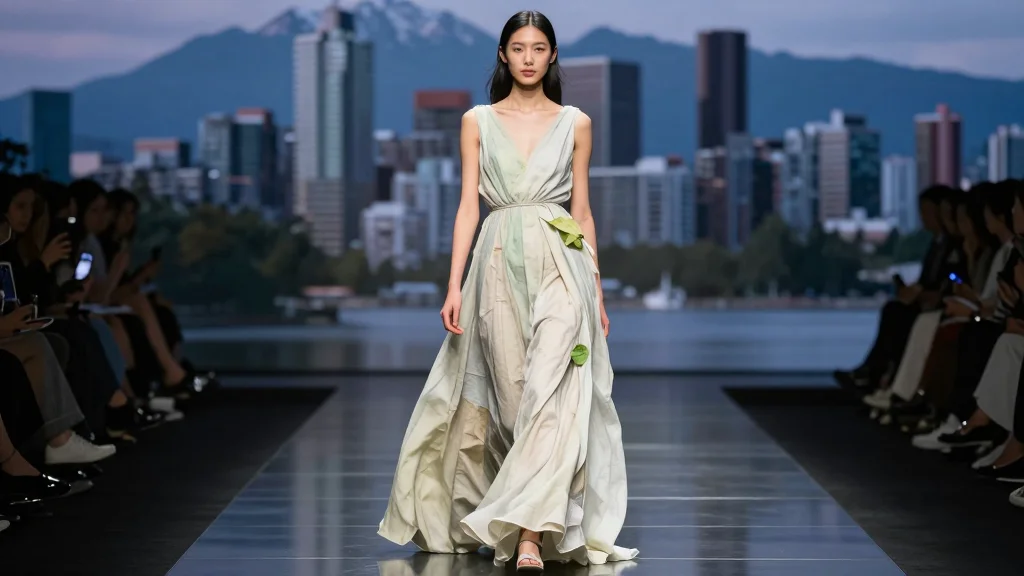
Vancouver Fashion Week F/W 2026 Marries Heritage, Tech and Sustainability

Why It Matters
Vancouver Fashion Week’s 2026 showcase illustrates how regional fashion events can influence global industry standards. By foregrounding Indigenous design, the show adds credibility to calls for greater representation and equitable profit sharing within fashion supply chains. The material experiments presented by Hypnotique Sense and Richard Wei provide tangible examples of how designers can reduce environmental footprints without sacrificing creativity, offering a blueprint for larger houses seeking to meet stricter ESG expectations. The convergence of cultural storytelling and technological innovation also signals a shift in consumer expectations. Shoppers increasingly demand transparency and purpose, and events like this demonstrate that runway relevance now hinges on aligning aesthetics with ethical narratives. As other fashion weeks observe Vancouver’s model, we may see a ripple effect that reshapes how collections are curated, funded and marketed worldwide.
Key Takeaways
- •Vancouver Fashion Week Fall/Winter 2026 opened at David Lam Hall with three headline collections.
- •Richard Wei’s “City Lights” used reflective tailoring to evoke urban nightlife.
- •Hypnotique Sense’s “ruinphilia” employed rust‑dyed fabrics and botanical pigments to explore decay.
- •Ay Lelum presented Coast Salish heritage garments made from locally sourced, eco‑friendly materials.
- •Event partners Goldwell, Modo Car Coop and Bosa Foods underscored corporate alignment with sustainability.
Pulse Analysis
Vancouver Fashion Week’s 2026 edition marks a strategic pivot for mid‑size fashion capitals seeking relevance in a market dominated by Paris, Milan, New York and London. By curating a program that intertwines cultural heritage with material innovation, the organizers have crafted a narrative that differentiates the event from traditional runway spectacles. This differentiation is crucial for attracting sponsors who are increasingly allocating budgets toward purpose‑driven initiatives.
Historically, regional weeks have struggled to retain top talent and media attention. Vancouver’s decision to spotlight Indigenous designers and experimental textile treatments creates a unique value proposition: a platform where authenticity and sustainability are not ancillary but central. This approach aligns with the growing investor appetite for ESG‑compliant fashion brands, suggesting that future funding rounds for participating designers could be more favorable.
Looking ahead, the integration of digital streaming and research collaborations could amplify the week’s impact. Virtual access expands the audience beyond the local elite, while partnerships with textile institutes may accelerate the commercialization of low‑impact fibers. If these initiatives succeed, Vancouver could become a case study for how smaller fashion ecosystems leverage cultural capital and innovation to punch above their weight, potentially reshaping the global calendar’s power dynamics.
Vancouver Fashion Week F/W 2026 Marries Heritage, Tech and Sustainability
Comments
Want to join the conversation?
Loading comments...