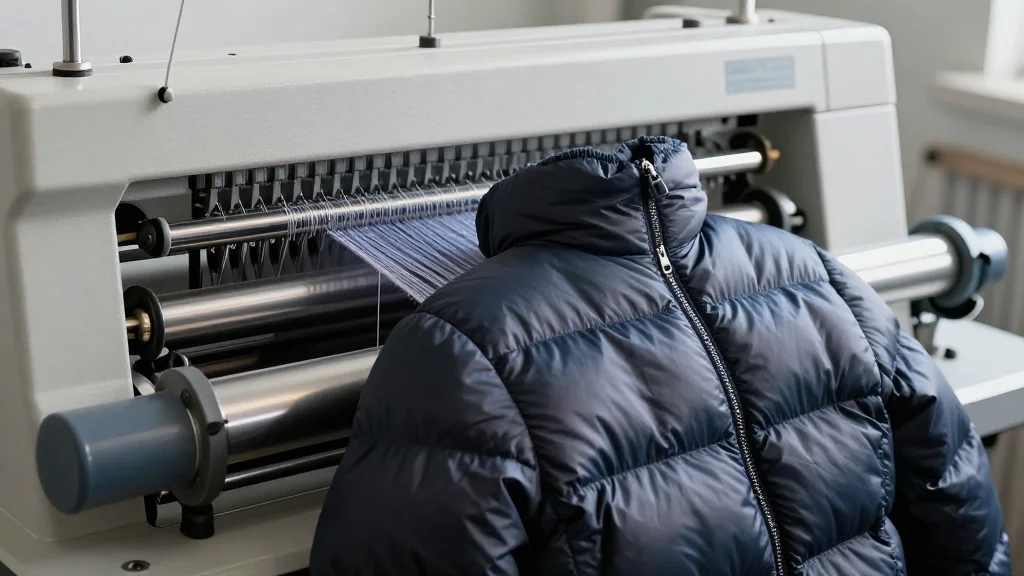
World’s First Machine‑Knitted Puffer Debuts at Australian Fashion Week

Companies Mentioned
Why It Matters
The knitted puffer represents a tangible step toward zero‑waste garment production, a priority for an industry under pressure to cut its environmental impact. By integrating filling and outer fabric in a single knitting operation, the technology eliminates the off‑cuts that generate landfill waste and consume resources. Moreover, the project underscores the strategic importance of high‑tech manufacturing assets in reviving Australia’s domestic fashion sector, which has long relied on offshore production. If scaled, such innovations could reduce supply‑chain emissions, create skilled manufacturing jobs, and diversify the country’s export portfolio. Beyond sustainability, the debut challenges entrenched perceptions of Australian fashion as purely functional and risk‑averse. Bucciarelli’s success may inspire other emerging designers to experiment with advanced textile technologies, prompting a cultural shift toward more daring, technically sophisticated collections. This could, in turn, attract global attention, positioning Australia as a hub for cutting‑edge, eco‑conscious apparel innovation.
Key Takeaways
- •Alberta Bucciarelli unveiled a machine‑knitted puffer jacket at Australian Fashion Week.
- •The garment was produced on a $330,000 Shima Seiki industrial knitting machine.
- •Knitting and filling take about 20 hours and would cost roughly $6,000 per jacket at current scale.
- •97 % of Australia’s $28 billion fashion output is manufactured overseas.
- •UTS acquired the only Shima Seiki machine in the southern hemisphere in 2023.
Pulse Analysis
The debut of a fully knitted, pre‑filled puffer jacket is more than a runway gimmick; it signals a potential inflection point for the fashion industry’s material paradigm. Historically, outerwear has relied on separate assembly lines—fabric cut, sewn, and then stuffed—creating a cascade of waste at each stage. By collapsing these steps into a single knitting operation, designers can dramatically reduce material loss, lower labor complexity, and open new design possibilities such as seamless insulation gradients.
From a competitive standpoint, the technology gives early adopters a differentiation edge in a market saturated with conventional puffers. While the current $6,000 production cost precludes mass‑market pricing, economies of scale, advances in yarn technology, and potential government subsidies could compress costs over the next five years. Countries like Italy and Japan have already invested heavily in high‑tech knitting, but Australia’s singular machine positions it as a niche innovator that could attract foreign design collaborations and research funding.
Policy will be decisive. The Australian Fashion Council’s push for local manufacturing incentives could lower the barrier to entry for other designers, fostering a cluster of high‑tech textile firms. If successful, this could reverse decades of offshoring, create skilled jobs, and enhance the country’s sustainability credentials. Conversely, without coordinated support, the high capital outlay may keep such innovations confined to academic labs and boutique labels, limiting broader industry impact. The next few seasons will reveal whether the knitted puffer remains a novelty or becomes the blueprint for a new, greener era of fashion production.
World’s First Machine‑Knitted Puffer Debuts at Australian Fashion Week
Comments
Want to join the conversation?
Loading comments...