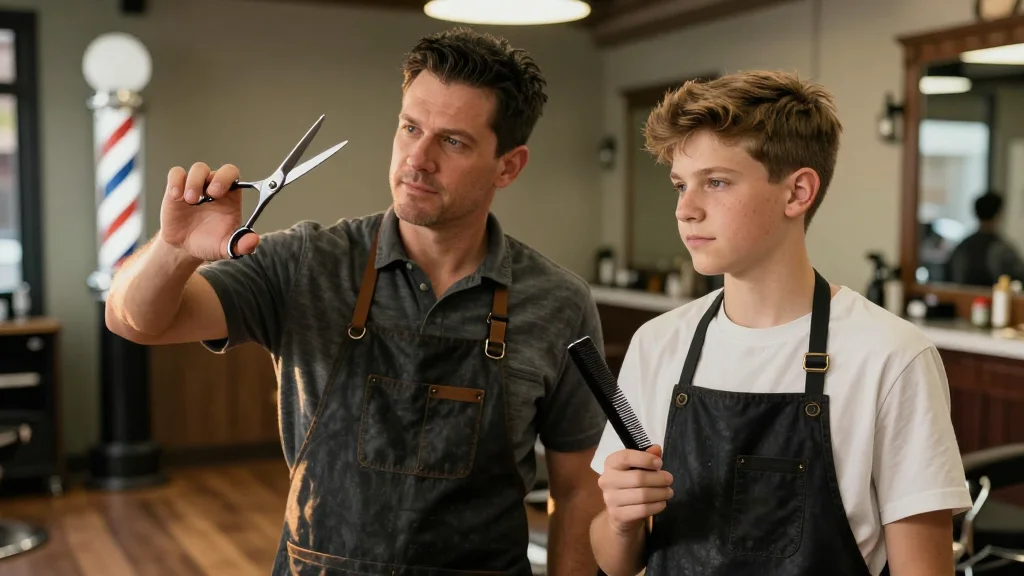
Father‑Son Duo Revives Barbershop Tradition at Tupelo’s The Hair Co.

Companies Mentioned
Why It Matters
The McBunch story illustrates how everyday professional settings can serve as fertile ground for father‑son mentorship, challenging the narrative that meaningful bonding requires special events or expensive experiences. By embedding fatherhood into the rhythm of work, families can cultivate resilience, work ethic, and emotional intelligence in a natural, low‑cost environment. Moreover, the visibility of such partnerships can shift cultural expectations around male caregiving. When local media spotlight fathers actively teaching skills, it normalizes hands‑on involvement and may encourage other dads to seek similar opportunities, ultimately strengthening community cohesion and intergenerational continuity.
Key Takeaways
- •Mike McBunch opened The Hair Co. in downtown Tupelo in 1991 and now works alongside his son.
- •John Michael transitioned from night‑shift work to full‑time barbering three years ago.
- •The father‑son team offers “haircutting razoring,” a sculpted cut that takes years to master.
- •Long‑time client Elton Whitley praised the continuity and fresh perspective brought by John Michael.
- •The story highlights a growing trend of fathers using daily work routines for mentorship.
Pulse Analysis
The McBunchs’ collaboration arrives at a moment when the fatherhood narrative is expanding beyond traditional weekend outings. Data from the Pew Research Center shows a 12% rise over the past five years in fathers who report working side‑by‑side with their children in family‑run businesses. This shift reflects broader societal changes: flexible work arrangements, a resurgence of small‑scale entrepreneurship, and a cultural push toward authentic parenting.
Historically, trades like barbering have served as apprenticeship pathways, but they were often male‑only and rarely highlighted in mainstream media. By foregrounding a modern, emotionally open father‑son dynamic, the *Djournal* piece helps reframe these apprenticeships as not just skill transfers but also as relational anchors. The narrative could inspire similar stories in other sectors—auto mechanics, culinary kitchens, or farm operations—where the tactile nature of the work naturally fosters mentorship.
Looking ahead, the visibility of such partnerships may influence policy and community programs. Municipalities could incentivize family‑run businesses with tax credits, while vocational schools might develop curricula that explicitly incorporate family mentorship components. If the trend gains traction, we could see a measurable uptick in small‑business longevity, as the next generation inherits both the trade and the customer relationships that sustain it. The McBunches exemplify how a simple haircut can become a conduit for lasting familial and economic impact.
Father‑Son Duo Revives Barbershop Tradition at Tupelo’s The Hair Co.
Comments
Want to join the conversation?
Loading comments...