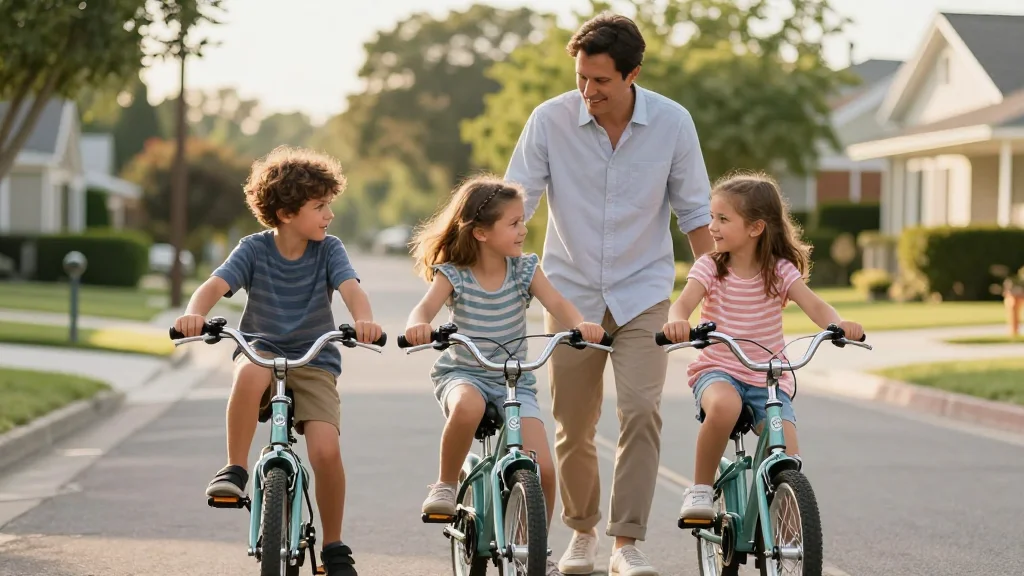
I Started Letting My Son Bike with His Friends when He Was 8. It Gives Me Anxiety, but I See the Value in Having Independence.
Why It Matters
The story illustrates how controlled, community‑based outdoor play can counter rising childhood anxiety and foster essential life skills, offering a practical model for parents navigating safety versus independence. It also highlights a growing demand for low‑tech safety tools that reassure caregivers without restricting freedom.
Key Takeaways
- •Neighborhood bike groups give kids structured independence
- •GPS trackers let parents monitor children’s location in real time
- •Riding in numbers reduces risk of accidents and stranger danger
- •Independent biking correlates with lower anxiety and higher confidence
- •Parents’ gradual boundary expansion builds trust and responsibility
Pulse Analysis
Parents today wrestle with a paradox: the desire to let children explore versus the fear of traffic, strangers, and injury. The author’s gradual approach—starting with a single‑block ride, insisting on group travel, and using simple tech like GPS watches—demonstrates a scalable method for easing that tension. By framing outdoor biking as a communal activity, she leverages peer supervision, which research shows cuts accident rates and eases parental worry. This model reflects a broader shift toward “managed independence,” where caregivers provide tools and boundaries rather than outright restriction.
Safety measures are only part of the equation; the psychological payoff is substantial. Independent play has declined sharply over the past few decades, a trend linked to rising rates of anxiety and depression among school‑age children. The author notes her son’s newfound confidence, reduced anxiety, and the sibling bond forged through shared rides. These outcomes align with studies indicating that unstructured outdoor activity promotes resilience, problem‑solving, and social skills—qualities that screen‑time‑heavy routines often fail to nurture.
The implications extend beyond a single family. Communities that encourage safe, group‑based biking can rebuild neighborhood cohesion, reduce traffic congestion, and create informal support networks for parents. As more families adopt low‑cost monitoring devices and set clear distance limits, the collective perception of risk may shift, opening the door for broader policy initiatives such as bike‑friendly streets and youth‑focused traffic calming measures. In short, the article offers a replicable blueprint: combine modest technology, clear rules, and community participation to restore the benefits of independent outdoor play while keeping safety front‑and‑center.
I started letting my son bike with his friends when he was 8. It gives me anxiety, but I see the value in having independence.
Comments
Want to join the conversation?
Loading comments...