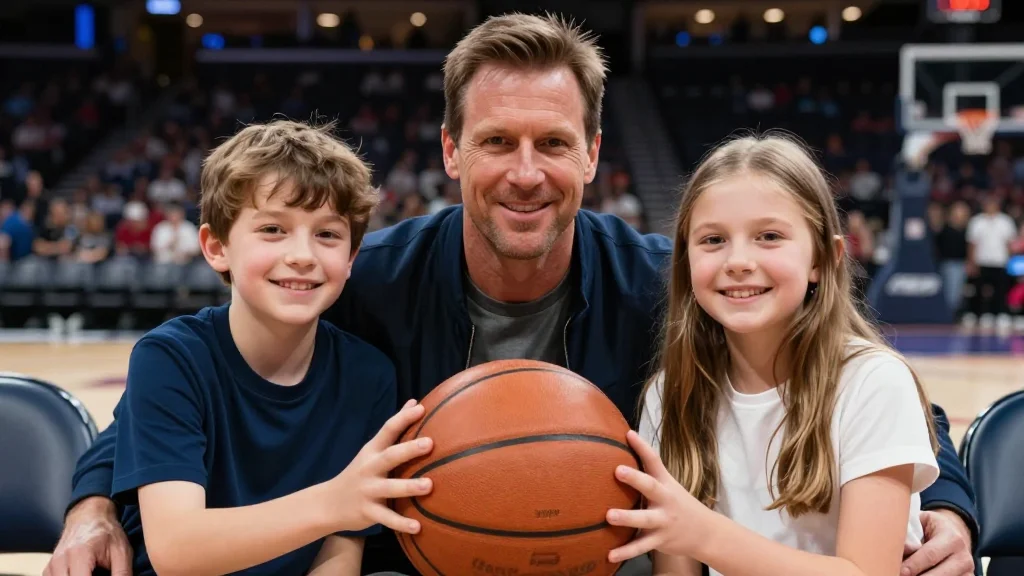
Jason Sudeikis Courtside with Kids at WNBA Game Highlights Modern Dad Outings

Companies Mentioned

Crypto.com
Why It Matters
The visibility of Jason Sudeikis taking his children to a professional women's basketball game underscores a broader cultural shift: fathers are increasingly embracing public, shared experiences as a core component of parenting. This challenges outdated stereotypes that confine male parental involvement to the private sphere and signals to advertisers, sports leagues, and media producers that family‑friendly narratives can drive engagement. Moreover, the endorsement of women's sports by a high‑profile dad adds a layer of gender‑equity advocacy, suggesting that modern fatherhood can intersect with broader social causes. For the fatherhood space, the story serves as a case study in how celebrity actions can normalize new parenting norms. When a beloved figure like Sudeikis openly celebrates co‑parenting, sports outings, and emotional vulnerability, it creates a template for everyday dads seeking to balance work, personal interests, and family life. The ripple effect may influence everything from product marketing aimed at fathers to policy discussions about parental leave and flexible scheduling, reinforcing the idea that active, visible fatherhood benefits both families and society at large.
Key Takeaways
- •Jason Sudeikis attended a WNBA game on May 13, watching the Indiana Fever beat the LA Sparks 87-78.
- •His children, Otis (12) and Daisy (9), joined him courtside at Crypto.com Arena.
- •Sudeikis cited fatherhood as essential to his portrayal of Ted Lasso, quoting Entertainment Tonight.
- •Olivia Wilde described their co‑parenting arrangement as "better parents as friends" in a Vanity Fair interview.
- •The outing highlights a trend of fathers using public sports events for bonding and supporting women's athletics.
Pulse Analysis
Jason Sudeikis' courtside appearance is more than a celebrity anecdote; it reflects a measurable shift in how fatherhood is performed and perceived in the public eye. Historically, male parenting moments were either hidden behind the curtain of private life or framed in traditional, often sport‑centric, but solitary contexts (e.g., a dad watching a game alone). Sudeikis flips that script by integrating his children into the spectacle, thereby normalizing shared, high‑visibility experiences.
From a market perspective, this behavior aligns with a growing demand for family‑inclusive branding. Sports leagues, especially those in women's athletics, have struggled with attendance and media coverage. When a mainstream male star publicly supports a women's game, it creates a dual narrative: a celebration of the sport and a redefinition of paternal involvement. Brands that align with this narrative—think family‑oriented apparel, kid‑friendly concessions, or parenting apps—stand to gain credibility and reach.
Looking forward, the ripple effect could manifest in several ways. First, other high‑profile fathers may emulate the model, leading to a cascade of family‑focused media coverage that normalizes co‑parenting and shared outings. Second, leagues may tailor more family‑friendly seating and programming, recognizing that dads are a valuable demographic. Finally, the conversation around gender equity in sports could benefit from this crossover, as fathers become inadvertent allies. In sum, Sudeikis' outing is a micro‑indicator of a macro trend: modern fatherhood is moving from the backyard to the arena, reshaping cultural expectations and commercial opportunities alike.
Jason Sudeikis Courtside with Kids at WNBA Game Highlights Modern Dad Outings
Comments
Want to join the conversation?
Loading comments...