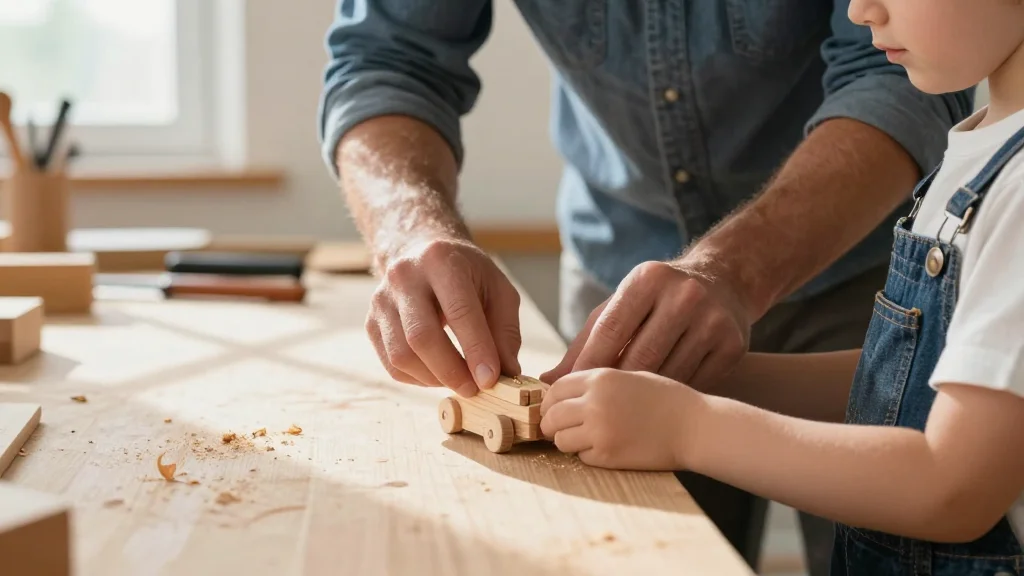
Langford Dad Revives 150‑Year‑Old Woodworking Pedagogy for Kids

Why It Matters
The resurgence of Sloyd woodworking in Langford illustrates a tangible response to growing concerns about children’s screen time and the desire for experiential learning. By integrating a historic pedagogical method into modern parenting, Warnberg demonstrates how fathers can play a direct role in developing cognitive and motor skills, reinforcing the value of hands‑on mentorship in child development. If replicated, this model could influence educational policy, encouraging schools to incorporate maker‑based curricula and prompting community centers to allocate resources for similar workshops. The ripple effect may redefine fatherhood narratives, positioning dads as facilitators of practical skill‑building rather than solely providers of digital entertainment.
Key Takeaways
- •Dylan Warnberg founded Sloyd Experience Canada to teach children woodworking
- •Program uses a 150‑year‑old Swedish Sloyd curriculum
- •Kids begin using tools within 10‑15 minutes of each session
- •Workshops run at Warnberg’s Langford home and Makespace North Park
- •Summer program launching July aims to serve 24 children
- •Warnberg says the method boosts literacy, math and problem‑solving
Pulse Analysis
Warnberg’s Sloyd workshops arrive at a moment when parental anxiety over screen addiction is at a peak. Traditional hands‑on crafts offer a counterbalance, and the Sloyd framework provides a structured, research‑backed approach that many modern maker‑spaces lack. By anchoring the program in a proven pedagogical model, Warnberg differentiates his offering from ad‑hoc DIY clubs, giving it credibility with educators and funders.
Historically, Sloyd flourished in Scandinavia as a means to develop industrious citizens, but it never gained widespread traction in North America. Warnberg’s adaptation leverages contemporary maker‑culture infrastructure—shared spaces, social media outreach, and community‑driven funding—to revive the method for a new generation. This hybridization could spark a niche market for Sloyd‑focused curricula, prompting existing educational publishers to develop supplemental materials or licensing agreements.
Looking ahead, the scalability of the model hinges on two factors: the ability to train additional facilitators and the acquisition of sustainable financing. If Warnberg secures nonprofit status and partners with school districts, the program could transition from a localized pilot to a regional network. Conversely, without broader institutional support, the effort may remain a passionate but limited community project. The coming summer program will be a litmus test for demand, and its enrollment numbers will likely dictate whether Sloyd Experience Canada can influence the larger conversation about father‑led, experiential education.
Langford Dad Revives 150‑Year‑Old Woodworking Pedagogy for Kids
Comments
Want to join the conversation?
Loading comments...