Key Takeaways
- •Case farm 2025 net income $53,221, 6.9% profit margin.
- •Capital‑debt‑repayment margin $35,789 shows debt coverage capacity.
- •Replacement margin negative unless high‑price scenario achieved.
- •High‑price scenario yields $55,366 operating cash, $44k higher ending cash.
- •Tight cash flow forces delaying machinery purchases or drawing down liquidity.
Pulse Analysis
Contingency planning has become a cornerstone of modern farm finance as input costs and commodity prices swing more dramatically than in past decades. By constructing a detailed sources‑and‑uses‑of‑funds statement, producers can isolate cash generated from operations, investing, and financing activities, then stress‑test those streams against multiple price outcomes. This approach transforms a static budget into a dynamic decision‑making tool, allowing owners to anticipate shortfalls before they materialize and to prioritize funding sources such as operating cash, asset sales, or additional borrowing.
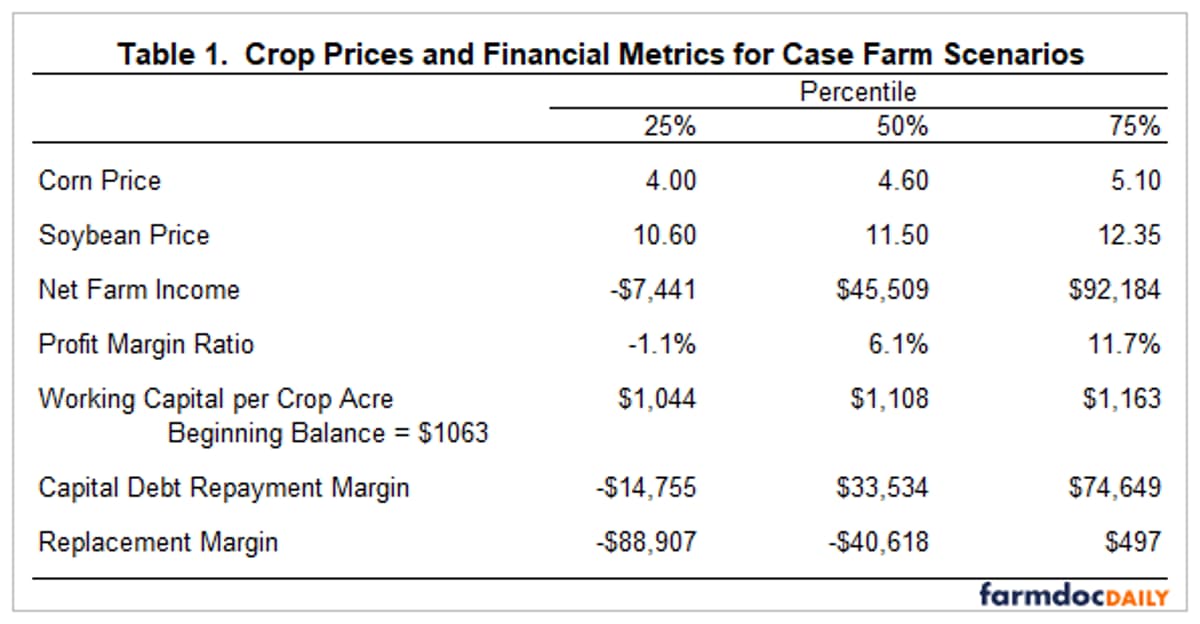
The Indiana case farm illustrates the practical impact of this methodology. With 2025 net farm income of $53,221 and an operating margin of 6.9%, the operation maintained a solid capital‑debt‑repayment margin of $35,789, indicating sufficient cash to meet loan principal and owner withdrawals. However, its replacement margin—cash needed to replenish depreciated equipment—remained negative unless the high‑price scenario materialized, which would boost operating cash to $55,366 and lift ending cash balances by roughly $44,000. These figures highlight how a modest uplift in corn and soybean prices can shift a farm from a cash‑constrained posture to one capable of funding capital upgrades.
For the broader agribusiness community, the lesson is clear: regular scenario analysis and cash‑flow forecasting are essential to safeguard liquidity and sustain growth. Tools like the iFarm Price Distribution Model and pro‑forma spreadsheets enable producers to model best‑, base‑, and worst‑case outcomes, informing both internal budgeting and external financing discussions. By updating projections each season, farms can time equipment purchases, negotiate more favorable loan terms, and avoid the costly practice of “living off” depreciation, thereby enhancing long‑term resilience in a volatile market.
Contingency Planning with Cash Flow Shortages
Comments
Want to join the conversation?