U.S. Treasury Rates Weekly Update for February 6, 2026
Key Takeaways
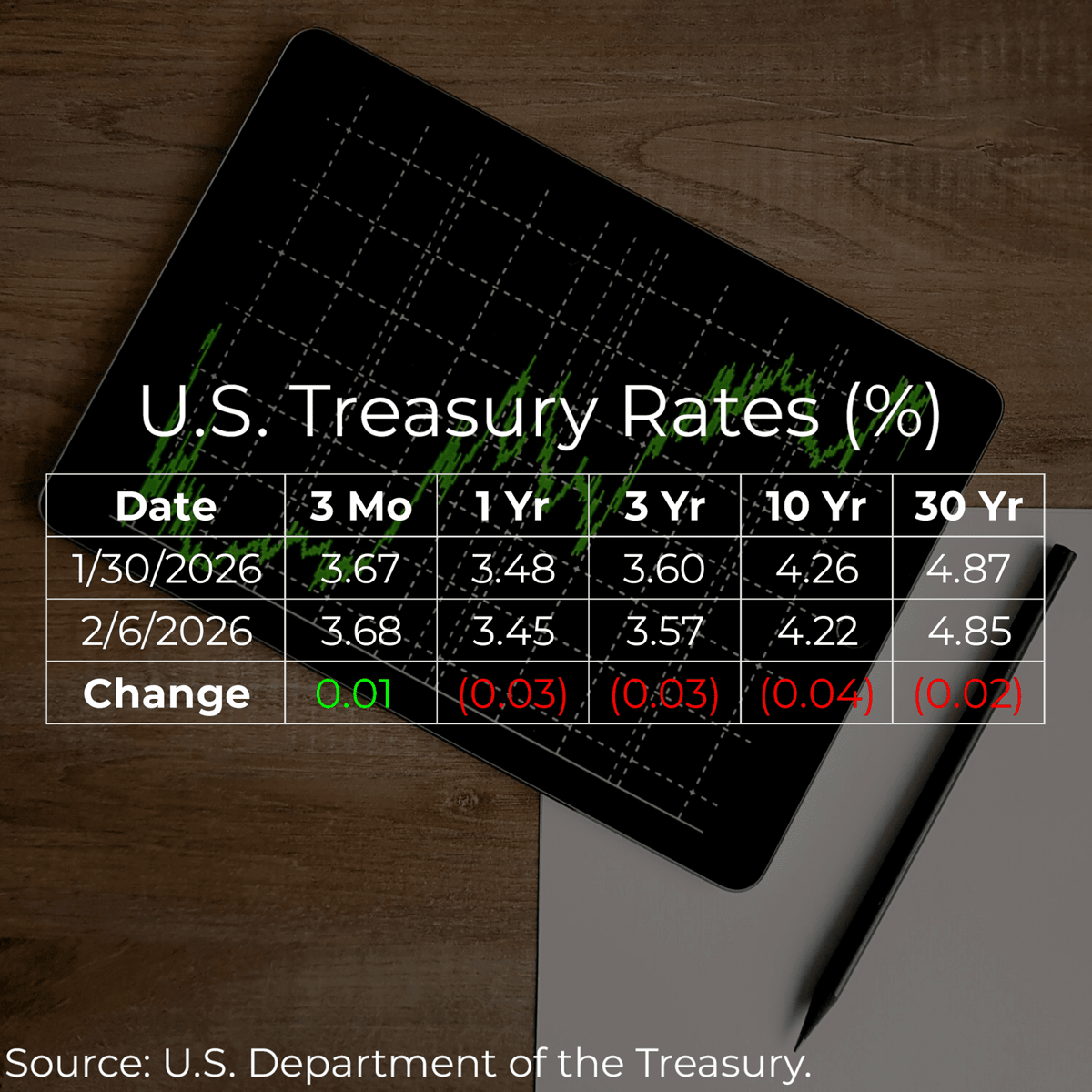
- •30‑year Treasury yield slipped 0.02% this week
- •10‑year yield fell 0.04% to 4.22%
- •3‑year Treasury rate stands at 3.57%
- •Majority of Treasury yields moved lower this week
- •Rate declines may ease financing costs for borrowers
Pulse Analysis
The recent dip in U.S. Treasury yields arrives amid a backdrop of mixed economic data and a cautious Federal Reserve stance. While inflation pressures have eased, the central bank has maintained a steady policy rate, allowing market participants to price in modestly lower long‑term expectations. This environment nudges the 10‑year benchmark down to 4.22 %, a level that still reflects a relatively tight credit market but offers a slight reprieve for borrowers seeking fixed‑rate financing.
Investors interpret the downward tick as a signal that risk‑off sentiment is gaining traction, prompting a rotation into safer assets. A flatter yield curve, highlighted by the 3‑year rate at 3.57 %, can compress spreads for corporate bonds, potentially tightening funding conditions for issuers with lower credit ratings. Meanwhile, mortgage lenders benefit from the marginally lower long‑term rates, which can stimulate housing demand and support home‑builder earnings in the coming quarters.
Looking ahead, Treasury yields will likely track the trajectory of Fed policy guidance and upcoming economic releases. Should inflation remain subdued, the market may anticipate a pause or even a modest rate cut, further pressuring yields downward. Conversely, any surprise in employment or consumer spending could reignite expectations of tighter monetary policy, pushing yields back up. Stakeholders—from portfolio managers to corporate treasurers—should monitor these dynamics closely to adjust duration exposure and financing strategies accordingly.
U.S. Treasury Rates Weekly Update for February 6, 2026


Comments
Want to join the conversation?