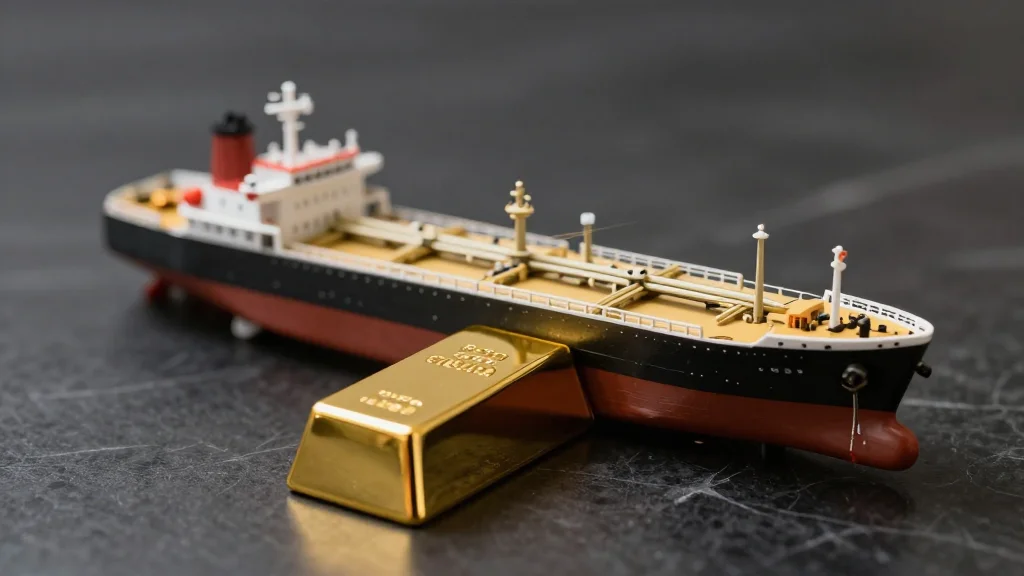
A Card, a Club, a Quiver: International Seaways’ Jeff Pribor Gives a Lesson in ATM 101
Why It Matters
An ATM issuance would give International Seaways a low‑cost, flexible financing route, reinforcing its competitive position in a capital‑intensive tanker market. It signals to investors that the company is proactively managing balance‑sheet health amid volatile freight rates.
Key Takeaways
- •International Seaways evaluating an at‑the‑market equity offering
- •CFO Jeff Pribor emphasizes liquidity as strategic advantage
- •ATM could provide flexible capital without diluting shareholders
- •Market conditions favor high‑yield tanker sector for new equity
- •Potential issuance may fund fleet modernization and debt reduction
Pulse Analysis
At‑the‑market (ATM) offerings have become a favored financing mechanism for asset‑heavy industries, and International Seaways is no exception. By allowing shares to be sold directly into the public market, an ATM bypasses the traditional underwritten offering process, reducing fees and granting the issuer the ability to raise capital incrementally. For a tanker operator, where vessel acquisition and refurbishment demand sizable cash outlays, this flexibility can be a decisive advantage, especially when freight markets swing between peaks and troughs.
Liquidity is a recurring theme among publicly listed tanker owners. Scorpio Tankers’ president Robert Bugbee famously argued that “there’s no such thing as too much liquidity,” a sentiment echoed by Jeff Pribor. Maintaining a robust cash buffer not only cushions against sudden downturns in oil transport rates but also positions the company to seize opportunistic purchases of high‑spec vessels at discount. An ATM issuance would augment that buffer without the timing constraints of a fixed‑price offering, allowing International Seaways to align capital raises with market windows of favorable pricing.
The broader implications extend to investors seeking exposure to the energy logistics chain. An ATM can dilute existing shareholders less aggressively than a large, one‑off public offering, preserving earnings per share while still delivering fresh capital for growth initiatives. Moreover, the move signals confidence in the tanker sector’s earnings outlook, potentially attracting new institutional money. As the global economy rebounds and demand for crude transport resurges, International Seaways’ strategic use of an ATM could set a benchmark for liquidity‑focused financing in the maritime industry.
A card, a club, a quiver: International Seaways’ Jeff Pribor gives a lesson in ATM 101
Comments
Want to join the conversation?
Loading comments...