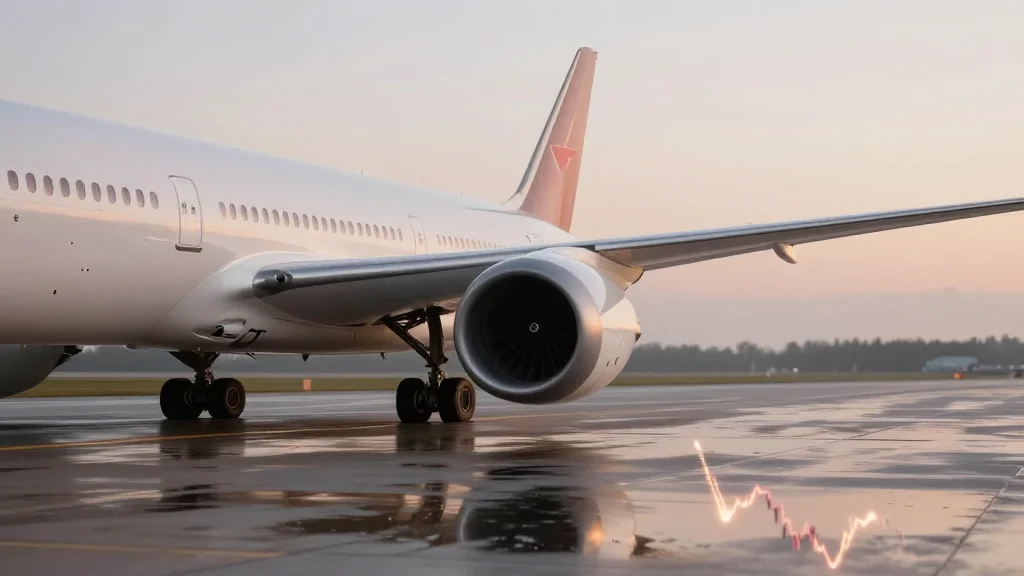
Air India Asks Tata, Singapore Air for Funds After $2.4 Billion Loss
Companies Mentioned
Why It Matters
The loss threatens Air India’s ability to achieve operational breakeven and could force the carrier to seek external financing, testing Tata Group’s commitment and reshaping India’s aviation landscape.
Key Takeaways
- •Air India posted ₹220 bn (~$2.4 bn) FY loss.
- •Tata Group and Singapore Airlines discuss cash injection.
- •Loss driven by Dreamliner crash, Pakistan airspace closure, Middle‑East war.
- •CEO Campbell Wilson to step down; safety audit ranked airline worst.
- •Funding gap may force Air India to seek external financing.
Pulse Analysis
Air India’s $2.4 billion loss underscores how external shocks can quickly erode an airline’s balance sheet. The fatal Boeing 787 crash, coupled with geopolitical disruptions that closed Pakistani airspace and grounded Middle‑East routes, forced the carrier onto longer, fuel‑hungry paths at a time when jet‑fuel prices were soaring. Those operational setbacks, combined with a punitive tariff environment and tighter U.S. visa rules, turned an early‑year profit into a record deficit, highlighting the fragility of legacy carriers in a volatile market.
The financing dilemma places Tata Group and Singapore Airlines at the center of a high‑stakes negotiation. Tata, which acquired Air India in 2022, faces pressure to demonstrate stewardship of a national flag carrier while balancing its broader conglomerate interests. Singapore Airlines, holding a 25.1 % stake after the Vistara merger, also feels the strain on its earnings. Both parties are weighing a cash injection that may fall short of the airline’s capital needs, prompting Air India to explore alternative funding such as debt markets or asset sales. The outcome will signal how aggressively Indian conglomerates will support strategic assets during crises.
For the wider Indian aviation sector, Air India’s predicament could reshape competitive dynamics. A weakened flag carrier may open market share for low‑cost rivals and foreign entrants, especially on lucrative US‑Europe corridors. Conversely, a successful recapitalization could restore confidence in the country’s ability to sustain a global airline, encouraging further foreign investment. Stakeholders—from suppliers to passengers—will watch closely as the funding talks progress, knowing that the airline’s financial health directly impacts route availability, fare structures, and the overall perception of India’s air travel ecosystem.
Air India asks Tata, Singapore Air for funds after $2.4 billion loss
Comments
Want to join the conversation?
Loading comments...