Banks Need to Rethink How They Train Staff to Fight Financial Crime
•February 27, 2026
0
Why It Matters
Financial‑crime exposure has risen to a board‑level, reputational and geopolitical risk, and outdated training directly fuels costly breaches. Aligning learning with real‑time threats is essential for institutional resilience.
Key Takeaways
- •Training cycles remain annual, outpaced by threat evolution.
- •No clear academic pipeline for financial‑crime professionals.
- •Fraud, sanctions, AML now intersect, requiring unified training.
- •Boards must receive real‑time risk updates, not post‑mortems.
- •Dynamic, intelligence‑driven learning infrastructure is essential.
Pulse Analysis
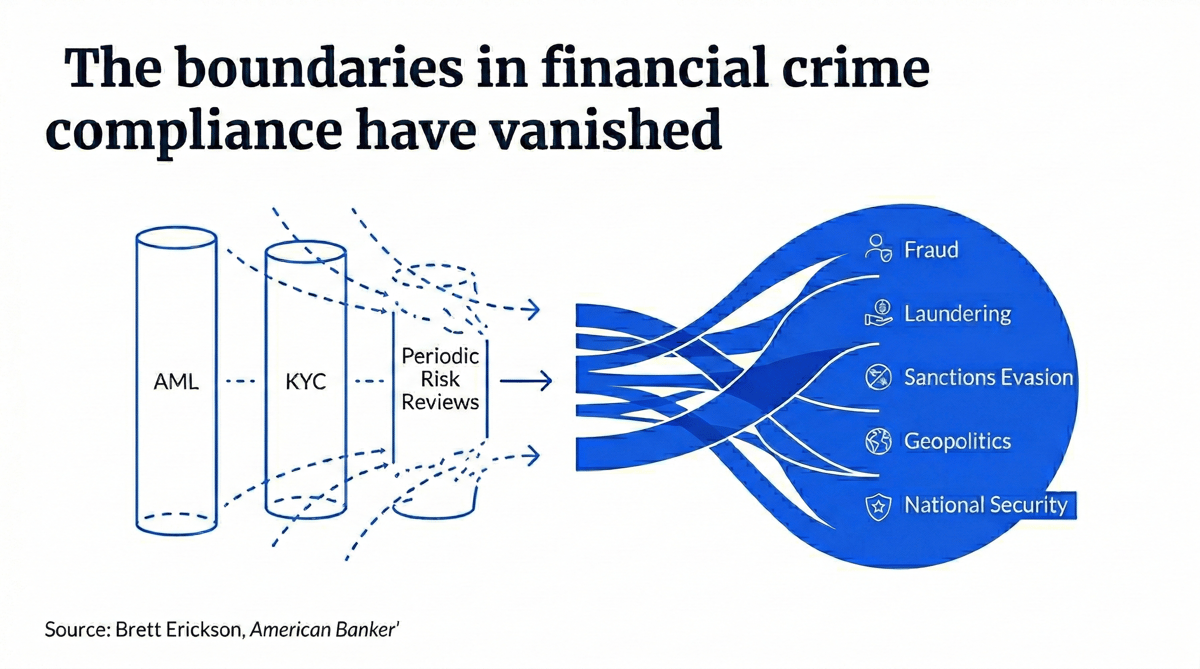
The modern financial‑crime landscape no longer fits the traditional AML or KYC boxes. Fraud rings, sanctions evasion, crypto‑based laundering and state‑driven geopolitical pressures now converge on a single risk surface, shifting tactics in weeks rather than years. This acceleration forces banks to move beyond periodic compliance checklists and adopt a threat‑centric mindset that treats every transaction as a potential vector for a rapidly mutating attack.
Compounding the problem is a talent vacuum. Unlike investment banking or risk management, financial‑crime compliance lacks a defined academic pipeline or early‑career recruiting ecosystem. Most practitioners arrive mid‑career from audit, law enforcement or lateral moves, leaving a thin bench of specialists. Consequently, institutions rely on ad‑hoc training that cannot keep up with the speed of new typologies, creating blind spots that regulators and competitors quickly exploit.
The remedy lies inside the organization: a continuous, intelligence‑driven learning platform that integrates fraud, sanctions, AML and geopolitical insights into a single curriculum. Real‑time threat feeds should trigger micro‑learning modules, while senior executives and board members receive quarterly risk briefings instead of annual retrospectives. Embedding such dynamic education not only sharpens detection but also demonstrates governance maturity, turning compliance from a reactive checkbox into a proactive memory that remembers the latest threat landscape.
Banks need to rethink how they train staff to fight financial crime
0
Comments
Want to join the conversation?
Loading comments...