Finance News and Headlines
  • All Technology
  • AI
  • Autonomy
  • B2B Growth
  • Big Data
  • BioTech
  • ClimateTech
  • Consumer Tech
  • Crypto
  • Cybersecurity
  • DevOps
  • Digital Marketing
  • Ecommerce
  • EdTech
  • Enterprise
  • FinTech
  • GovTech
  • Hardware
  • HealthTech
  • HRTech
  • LegalTech
  • Nanotech
  • PropTech
  • Quantum
  • Robotics
  • SaaS
  • SpaceTech
AllNewsDealsSocialBlogsVideosPodcastsDigests

Finance Pulse

EMAIL DIGESTS

Daily

Every morning

Weekly

Sunday recap

NewsDealsSocialBlogsVideosPodcasts
FinanceNewsCarney’s Mic-Drop Speech At Davos
Carney’s Mic-Drop Speech At Davos
Finance

Carney’s Mic-Drop Speech At Davos

•February 3, 2026
0
Global Finance Magazine
Global Finance Magazine•Feb 3, 2026

Why It Matters

The speech signals a strategic pivot for Canada toward broader trade partnerships, while exposing the risk of heightened U.S. protectionism and weakened multilateral frameworks.

Key Takeaways

  • •Canada seeks $50B trade boost with India by 2030
  • •US threatens 100% tariffs if Canada signs China deal
  • •Canada dropped tariffs on Chinese EVs to open new markets
  • •Multilateral institutions like WTO, UN face erosion from great powers
  • •Carney’s Davos remarks signal shift toward diversified trade partners

Pulse Analysis

At the World Economic Forum in Davos, Canadian Finance Minister Mark Carney delivered a stark warning about the erosion of the post‑war rules‑based order. He described a ‘rupture’ in global governance, noting that great powers now weaponize economic integration, tariffs, financial infrastructure and supply‑chain vulnerabilities. By invoking the WTO, UN and COP, Carney highlighted how these institutions, once pillars for middle‑power cooperation, are being undermined. The speech resonated with an audience of policymakers and billionaires, underscoring a shift from collaborative diplomacy to unilateral coercion.

Carney’s remarks dovetail with Ottawa’s broader push to diversify trade away from its traditional U.S. anchor. In the weeks before Davos, the prime minister held talks in Qatar and China, and Canada recently eliminated the 100 % tariff on Chinese electric vehicles to unlock new markets for canola and other exports. A planned March visit to India targets a $50 billion increase in bilateral trade by 2030, signaling a strategic tilt toward emerging economies. These moves aim to reduce dependence on a single corridor while preserving the USMCA framework.

The United States has already signaled retaliation, with President Trump warning of a 100 % tariff on Canadian goods should Ottawa seal a free‑trade pact with Beijing. While Carney insists any China deal will respect the USMCA, the threat underscores the fragility of North‑American supply chains and the political cost of diversification. More broadly, the speech highlights a turning point for middle powers that must navigate a landscape where economic tools double as geopolitical weapons, forcing a reassessment of reliance on multilateral bodies and traditional allies.

Carney’s Mic-Drop Speech At Davos

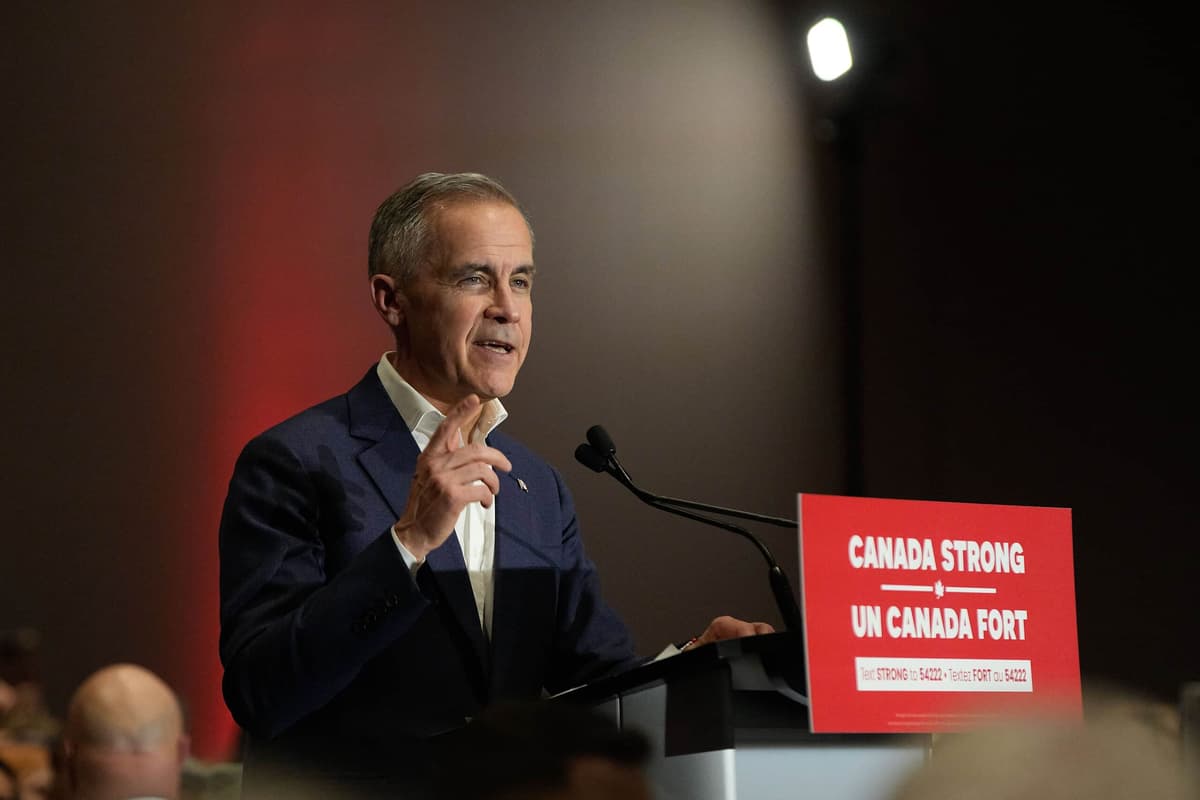
Amid US demands—since walked back—for sovereignty over Greenland, Carney delivered not-so-thinly-veiled comments on “the rupture in the world order, the end of a nice story, and the beginning of a brutal reality where geopolitics among the great powers is not subject to any constraints.”

Carney mentioned no country or world leader by name, but global leaders and billionaires—and others not attending his speech in person—knew to whom his words were directed. He mourned the death of a rules-based world order that, he allowed, was enforced asymmetrically and yet provided orderly methods for international trade and dispute resolution.

“Great powers have begun using economic integration as weapons,” he charged. “Tariffs as leverage. Financial infrastructure as coercion. Supply chains as vulnerabilities to be exploited…. The multilateral institutions on which middle powers have relied—the WTO, the UN, the COP—the very architecture of collective problem solving, are under threat.”

Carney was already looking to diversify Canada’s trading relationships away from the US, long its dominant partner. Just prior to his trip to Davos, the prime minister stopped for trade talks in Qatar and China. Carney is expected to go to India in March with the aim of increasing bilateral trade by about $50 billion by 2030, according to reports. In a break with Washington, Canada agreed to drop its 100% tariffs on Chinese electric vehicles to secure new markets for Canadian canola products, among others.

Prior to Davos, the mercurial Trump had encouraged Carney to pursue trade negotiations with China, saying, “If you can get a deal with China, you should do that.”

After Carney’s speech, the president’s tone changed.

“I watched your prime minister,” he said. “He wasn’t so grateful. They should be grateful to us, Canada. Canada lives because of the United States.” He later declared he will impose a 100% tariff on all Canadian goods if Canada concludes a free-trade deal with the Chinese, referring to the prime minister as “Governor Carney.”

Carney hastened to say that Canada does not intend to sign a deal with Beijing that would compromise the USMCA free-trade pact, and that the new US tariffs, if they come, will not affect his agenda.

“The impact of American tariffs will be on American affordability, not Canadian affordability,” he said.

The post Carney’s Mic-Drop Speech At Davos appeared first on Global Finance Magazine.

Read Original Article
0

Comments

Want to join the conversation?

Loading comments...