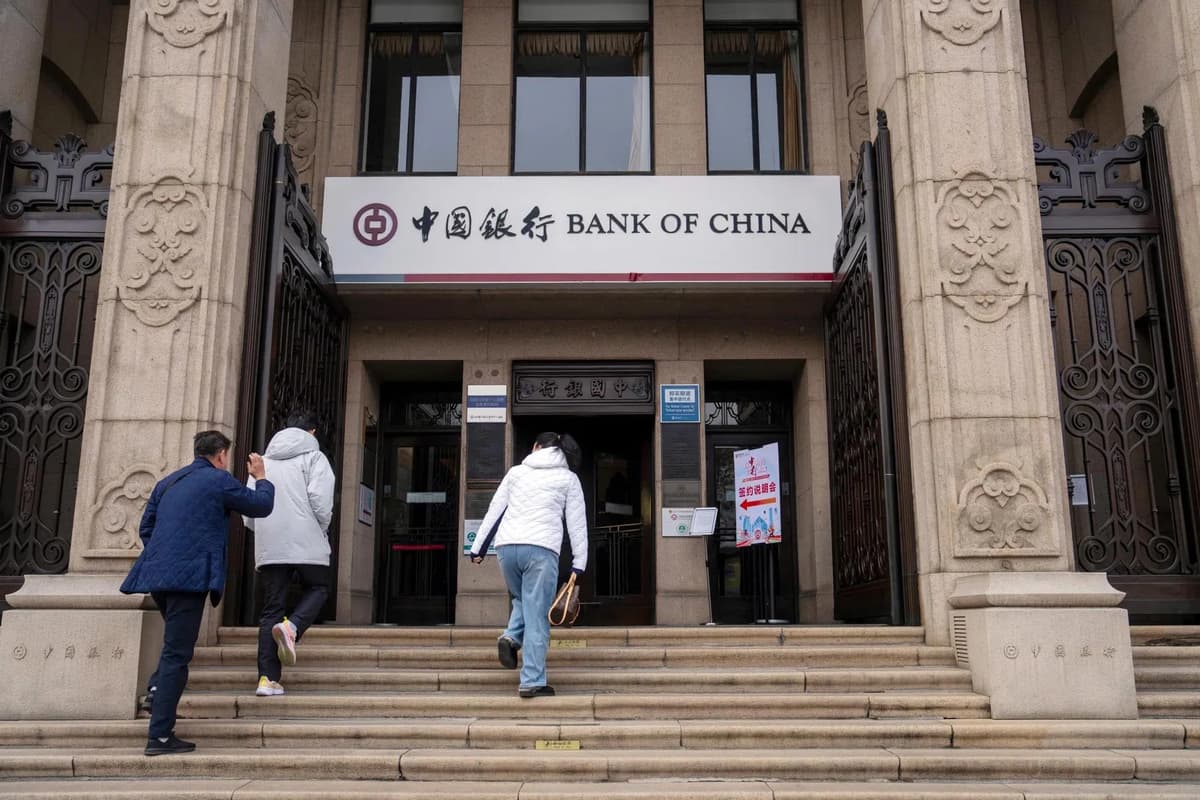
China Flags Top State Financial Firms for Tax Evasion, Improper Loans
Companies Mentioned
Why It Matters
The findings expose systemic governance gaps in China’s biggest banks, raising concerns over fiscal leakage and financial stability, and signal a more aggressive regulatory stance that could reshape capital allocation in the country’s banking sector.
Key Takeaways
- •Bank of China avoided ~$332 million in taxes via fake public funds.
- •Agricultural Bank misallocated ¥11.07 bn to non‑farmland projects.
- •Everbright Group lacked oversight over majority‑owned subsidiaries.
- •Auditor’s report signals tighter Beijing scrutiny of state‑bank risks.
- •Banks pledged compliance upgrades amid China’s financial stability drive.
Pulse Analysis
The National Audit Office’s annual report has put a spotlight on China’s state‑owned banking giants, revealing that Bank of China sidestepped roughly $332 million in corporate tax by routing private funds through public‑fund‑exempt channels. This maneuver, involving nominal employee investors and affiliated entities, underscores how tax‑preference schemes can be weaponized to mask profit‑draining activities. For investors and policymakers, the case illustrates the thin line between legitimate fiscal incentives and illicit tax avoidance within China’s tightly regulated financial system.
Beyond tax issues, the audit uncovered that Agricultural Bank of China disbursed about $1.55 billion to projects that did not meet the high‑standard farmland criteria, with portions of the capital later funneled into wealth‑management products and debt repayment. Such misallocation amplifies credit risk and erodes the bank’s asset quality, feeding into broader concerns about shadow‑banking activities and the opacity of loan underwriting standards. The findings arrive as Beijing intensifies its campaign to curb systemic risk, especially amid trade tensions and a technology rivalry with the United States, prompting banks to reinforce compliance frameworks and risk‑assessment protocols.
The broader market impact is twofold. First, heightened regulatory scrutiny may tighten credit supply, influencing corporate financing costs and slowing growth in sectors reliant on state‑bank funding. Second, the public exposure of governance failures at Everbright Group and the other banks could trigger a reassessment of Chinese financial institutions by global investors, potentially affecting capital inflows and valuation multiples. As China seeks to balance economic revitalisation with financial stability, the audit serves as a warning that lax oversight will no longer be tolerated, and that robust internal controls will become a prerequisite for continued market participation.
China flags top state financial firms for tax evasion, improper loans
Comments
Want to join the conversation?
Loading comments...