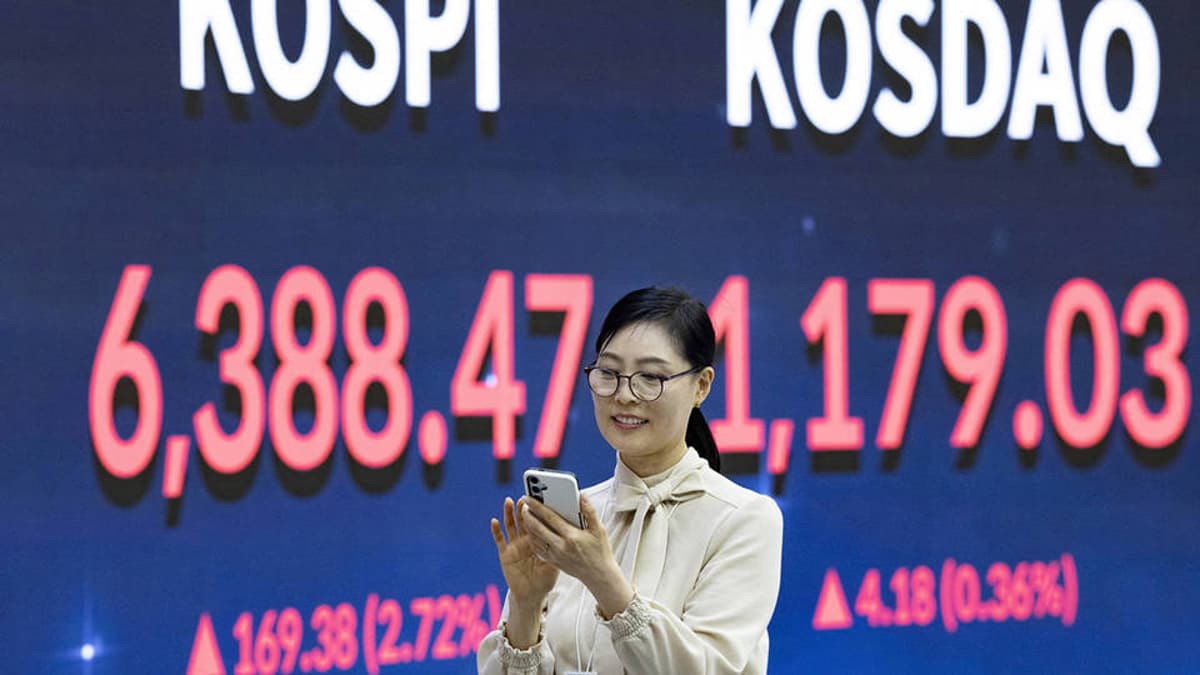
Decoupling and South Korea’s New Capitalism
Why It Matters
The divergence signals that South Korea’s stock market can generate outsized returns despite modest growth, attracting global investors and reshaping capital flows in the region.
Key Takeaways
- •Korean equities rose 75% in 2025, outpacing S&P 500
- •Retail investors now hold a sizable share of market activity
- •Firms prioritize short‑term shareholder payouts over reinvestment
- •Economic growth lagged at 1% versus US 2%
- •Decoupling may draw foreign capital to Korea
Pulse Analysis
South Korea’s market surge illustrates a rare case of financial decoupling, where equity performance diverges sharply from macroeconomic fundamentals. While the nation’s GDP expanded a modest 1% in 2025—roughly half the United States’ pace and well below the 3.3% global average—its main stock index climbed 75%, dwarfing the S&P 500’s 18% rise and eclipsing regional peers like Japan and Taiwan. This gap underscores how investor sentiment and policy can drive market momentum independent of underlying growth, positioning Korea as a standout outlier in the post‑pandemic recovery.
A key catalyst behind the rally is the Korean government’s proactive stance, combining fiscal incentives, regulatory reforms, and support for technology sectors. Simultaneously, a burgeoning class of retail investors—empowered by digital platforms and low‑cost brokerage—has injected fresh liquidity and heightened trading activity. Companies are responding by shifting capital allocation toward short‑term shareholder returns, such as higher dividends and share buybacks, rather than long‑term reinvestment. This strategy not only boosts immediate stock valuations but also aims to keep capital within the country, countering capital flight concerns.
The implications are twofold. For global investors, Korea presents a high‑return opportunity that may outweigh its slower economic growth, prompting a re‑evaluation of portfolio exposure to Asian markets. However, the emphasis on short‑term payouts could expose firms to sustainability risks if earnings falter or if the retail investor boom wanes. Policymakers will need to balance short‑term market enthusiasm with long‑term productivity investments to ensure the rally translates into broader economic resilience. As the decoupling narrative evolves, monitoring capital flow patterns and corporate payout policies will be essential for assessing the durability of Korea’s stock market outperformance.
Decoupling and South Korea’s New Capitalism
Comments
Want to join the conversation?
Loading comments...