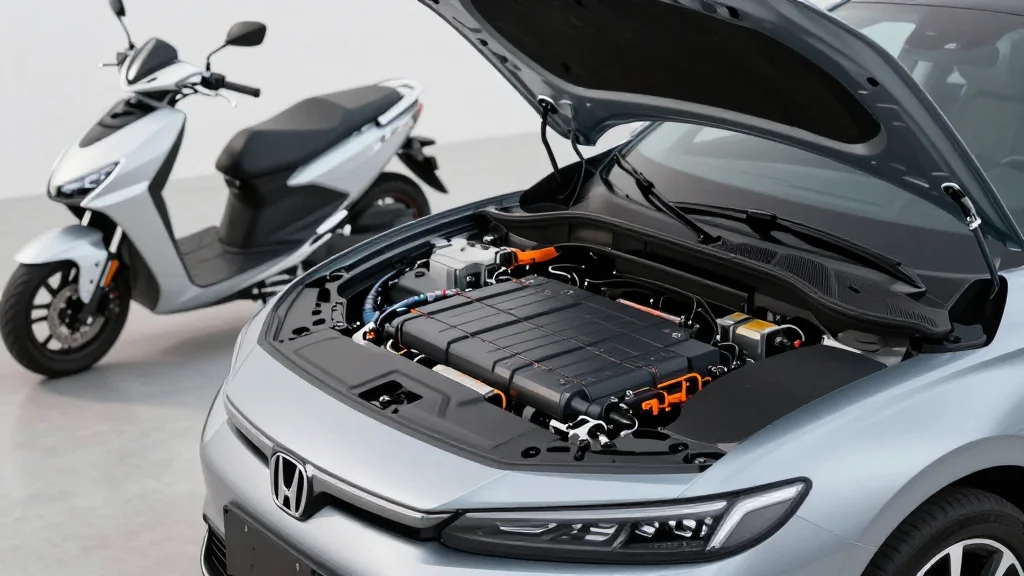
Honda Posts First Annual Loss in 70 Years as $10 B EV Write‑offs Hit Bottom Line

Companies Mentioned
Why It Matters
Honda’s loss underscores the financial risk legacy automakers face when accelerating EV programs in an environment of volatile policy and uneven consumer demand. The write‑offs highlight how quickly large capital commitments can erode profitability, especially when subsidies disappear and tariffs rise. Honda’s pivot back to hybrids and its reliance on a profitable motorcycle business illustrate a broader industry trend: manufacturers are hedging bets between near‑term cash‑generating products and long‑term electrification goals. The episode also sends a cautionary signal to investors about the importance of flexible product strategies and the need for realistic market assessments before committing billions to new technology platforms. As other OEMs evaluate their own EV roadmaps, Honda’s experience may prompt more measured rollouts, deeper focus on regional demand, and greater emphasis on cost‑control mechanisms.
Key Takeaways
- •Honda posted a 423.9 bn yen ($2.7 bn) loss for FY 2026, its first annual deficit since 1957.
- •EV write‑offs totalled roughly ¥1.58 trn ($10 bn), with total EV‑related losses of ¥2.5 trn ($16 bn).
- •The company will reallocate ¥4.4 trn ($31 bn) to gasoline and hybrid development over three years.
- •Honda pledged ¥800 bn ($5.1 m) in shareholder returns and kept its dividend at 70 yen per share.
- •CEO Toshihiro Mibe promised a “Triple Half” cost‑cutting plan and a return to profit of ¥260 bn ($1.7 bn) in FY 2027.
Pulse Analysis
Honda’s abrupt swing from record profit to a multi‑billion‑dollar loss is a textbook case of strategic overreach in a rapidly shifting regulatory landscape. The company’s $10 billion EV write‑off reflects not only mis‑timing of product launches but also a reliance on policy incentives that proved fickle under the Trump administration. By contrast, rivals such as Toyota have taken a more incremental approach, expanding hybrid lines while cautiously scaling EV output, thereby preserving cash flow.
The pivot to hybrids is pragmatic: hybrids offer a bridge technology that leverages existing internal‑combustion expertise while delivering incremental emissions benefits. Honda’s strong motorcycle franchise provides a steady cash engine, allowing it to fund the costly transition without jeopardizing shareholder returns. However, the firm must guard against complacency; the hybrid market is also becoming crowded, and margins are under pressure from rising material costs and competition from plug‑in hybrids.
Looking ahead, Honda’s success will hinge on execution. The “Triple Half” initiative promises faster, cheaper development cycles, but delivering 15 new hybrid models by 2030 will test the company’s engineering capacity and supply‑chain agility. Moreover, the lingering uncertainty around U.S. EV policy and global chip shortages could delay any future EV comeback. Investors should monitor quarterly updates on the hybrid rollout, the progress of the Ontario project suspension, and any shifts in U.S. tariff or incentive regimes, as these factors will determine whether Honda can convert its current setback into a sustainable, diversified growth trajectory.
Honda Posts First Annual Loss in 70 Years as $10 B EV Write‑offs Hit Bottom Line
Comments
Want to join the conversation?
Loading comments...