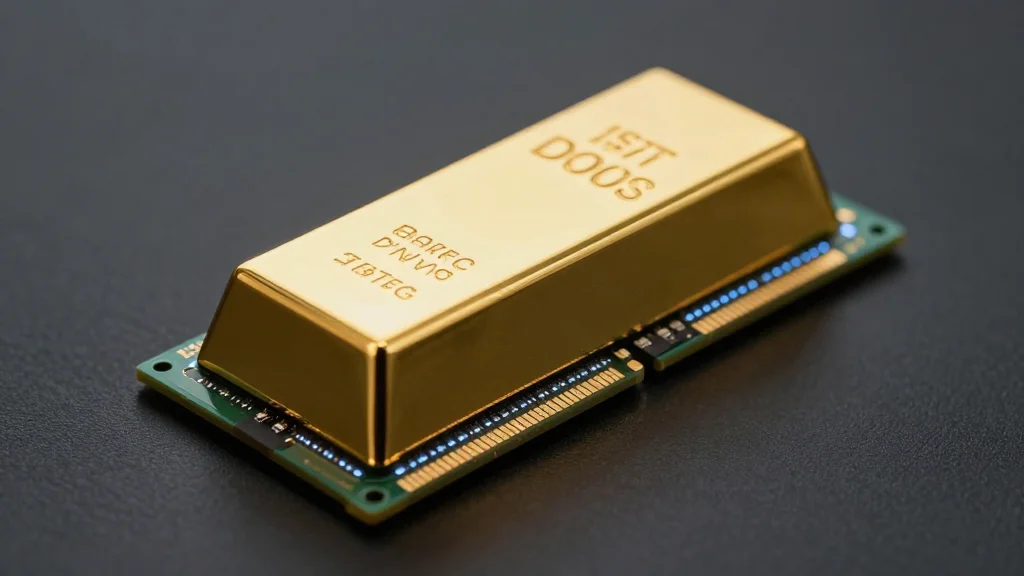
Micron Technology Shares Surge 19%, Market Cap Tops $1 Trillion on AI‑Driven Memory Rally

Companies Mentioned
Why It Matters
Micron’s breach of the $1 trillion market‑cap mark signals a broader re‑pricing of semiconductor assets tied to artificial intelligence. The upgrade reflects investors’ belief that AI‑driven demand for high‑bandwidth memory will remain robust, potentially redefining the traditional cyclical nature of the memory market. If the trend holds, it could lift valuations for peers such as SK Hynix and Samsung, and influence capital allocation decisions across the tech sector. The rally also highlights the growing importance of supply‑side dynamics. Tight memory supply through 2027, as analysts project, may force manufacturers to invest heavily in new fab capacity, reshaping the competitive landscape and potentially accelerating consolidation in the industry.
Key Takeaways
- •Micron shares jumped 19% on May 29, pushing market value above $1 trillion.
- •Susquehanna raised Micron’s price target to $1,750 from $600.
- •DRAM prices up 50%‑60% QoQ; NAND prices up 75%‑100% QoQ.
- •Analyst cites tight supply through 2027 as a key driver of elevated margins.
- •AI server demand is reallocating memory bits to high‑bandwidth applications.
Pulse Analysis
Micron’s breakout above the $1 trillion mark is less a surprise than a logical outcome of the AI‑centric reallocation of capital across the semiconductor ecosystem. Historically, memory makers have been punished by oversupply cycles that erode margins. This time, the confluence of exploding AI workloads and a constrained supply pipeline has inverted that dynamic, allowing Micron to command premium pricing and justify a valuation that was previously reserved for pure‑play AI chipmakers like Nvidia.
The upgrade also underscores a shift in analyst methodology. Rather than relying solely on historical cyclicality, firms are now modeling forward‑looking AI demand curves, which are less volatile and more growth‑oriented. This has led to a cascade of price‑target hikes, compressing the spread between memory stocks and high‑growth AI hardware names. As a result, investors may begin to view memory as a core growth engine rather than a defensive play.
Looking ahead, Micron’s ability to sustain this momentum will hinge on its execution of next‑generation HBM and NAND technologies, as well as its capacity to navigate geopolitical risks that could affect supply chains. If the company can deliver on its roadmap and maintain the tight supply environment, the $1 trillion valuation could become a new baseline, reshaping the market’s perception of what a memory company is worth in an AI‑first world.
Micron Technology Shares Surge 19%, Market Cap Tops $1 Trillion on AI‑Driven Memory Rally
Comments
Want to join the conversation?
Loading comments...