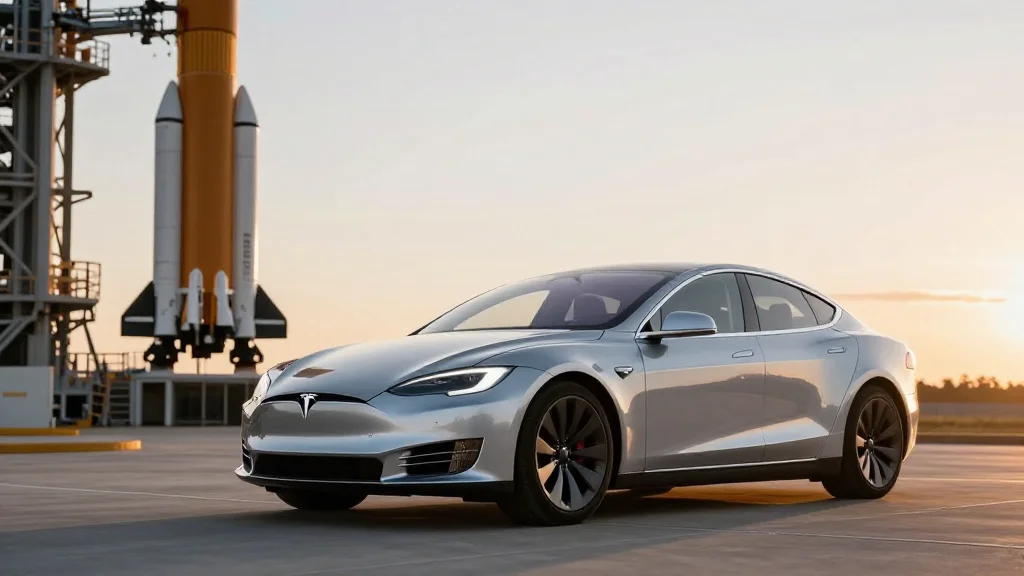
Musk Hints at SpaceX‑Tesla Merger, a $3.5 Trillion Combo that Could Reshape Markets

Why It Matters
A merger would create the first truly integrated mega‑conglomerate that spans space launch, satellite broadband, electric mobility and AI, reshaping competitive dynamics across multiple high‑growth sectors. Such a structure could leverage Tesla’s manufacturing scale to lower SpaceX launch costs, while SpaceX’s satellite network could accelerate Tesla’s autonomous‑driving data collection, potentially redefining the economics of both industries. Regulatory scrutiny will be intense. The dual‑class share model gives Musk near‑absolute voting power, raising corporate‑governance concerns for shareholders accustomed to more balanced oversight. Antitrust agencies will examine whether the combined entity could stifle competition in AI cloud services, satellite internet and electric‑vehicle supply chains. The outcome will set precedents for future mega‑mergers in the tech‑hardware space.
Key Takeaways
- •Musk discussed merging SpaceX (private valuation $1.25 T) and Tesla ($1.6 T) to form a $3.35‑$3.6 T conglomerate.
- •SpaceX’s S‑1 targets a $1.75‑$2 T IPO valuation; Tesla’s market cap is $1.6 T.
- •Cross‑company spending includes $697 M in Tesla Megapacks and $131 M in Cybertrucks for SpaceX.
- •Musk holds 85% voting control of SpaceX, effectively eliminating board resistance.
- •Analyst Dan Ives estimates an 80‑90% chance the merger will close by 2027, pending SEC review.
Pulse Analysis
The Musk‑driven merger talk arrives at a moment when both SpaceX and Tesla are at strategic inflection points. SpaceX’s upcoming IPO will bring a traditionally private aerospace firm into the public arena, exposing it to the same market pressures that have shaped Tesla’s valuation swings. By uniting under a single corporate umbrella, Musk could streamline capital allocation, allowing the $55 billion first phase of the Terafab chip plant to be funded jointly, potentially accelerating AI compute capabilities that are critical for both autonomous driving and satellite data processing.
However, the financial engineering required is non‑trivial. A share‑swap that respects the relative market caps while preserving minority shareholder rights will demand a sophisticated valuation model, especially given the divergent revenue profiles—SpaceX’s launch services are still loss‑making, whereas Tesla’s automotive and energy businesses generate steady cash flow. The dual‑class structure, which gives Musk 85% voting power, may deter institutional investors who fear governance opacity, echoing concerns raised during past high‑profile tech mergers.
From a macro perspective, a combined entity could wield unprecedented influence over three of the world’s most regulated sectors: aerospace, automotive and telecommunications. This concentration could attract heightened scrutiny from the FTC and the European Commission, especially as the U.S. and EU grapple with AI and data‑privacy regulations. If approved, the merger would not only reshape the competitive landscape but also set a benchmark for future cross‑industry consolidations, signaling that scale and vertical integration remain the dominant strategic play in the era of AI‑driven growth.
Musk hints at SpaceX‑Tesla merger, a $3.5 trillion combo that could reshape markets
Comments
Want to join the conversation?
Loading comments...