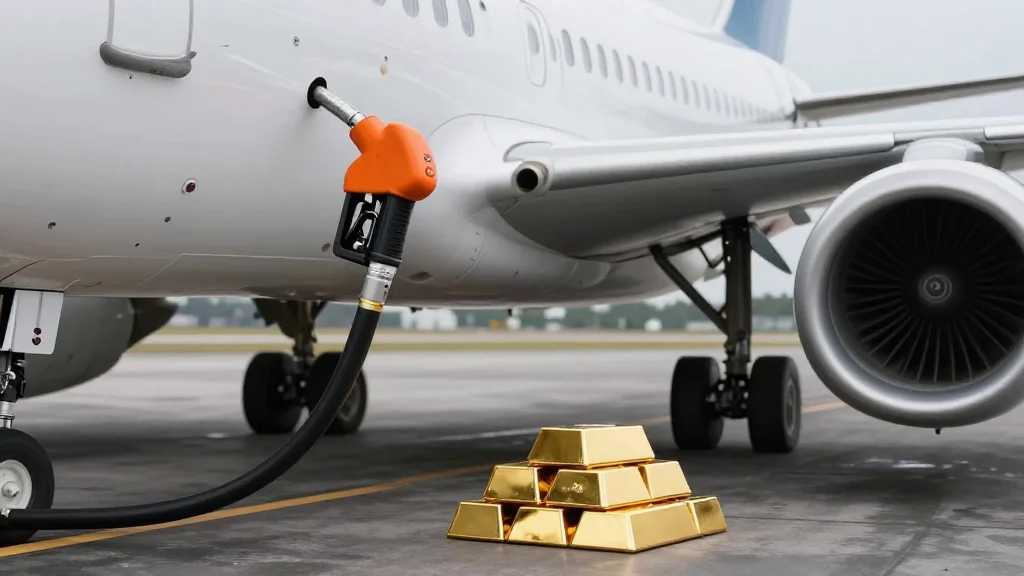
Spirit Airlines Requests Hundreds of Millions in Bailout as Jet Fuel Prices Surge 95%

Companies Mentioned
Why It Matters
The Spirit bailout request illustrates how quickly a geopolitical event—here, the Iran‑driven closure of the Strait of Hormuz—can cascade into a financial crisis for a carrier already weakened by pandemic‑era debt and restructuring. The airline’s struggle underscores the vulnerability of ultra‑low‑cost business models to fuel price volatility, raising the stakes for investors, regulators and policymakers who must balance market discipline with the systemic risk of a major carrier’s failure. A federal loan would set a precedent for direct government support to private airlines in a market‑driven crisis, potentially reshaping the framework for future crisis financing in the aviation sector. Beyond Spirit, the situation could reverberate through the broader travel ecosystem. Higher fuel costs are already prompting airlines worldwide to reassess route economics, and a high‑profile bailout could influence how other carriers negotiate with lenders, hedge fuel exposure, and lobby for policy relief. For consumers, the uncertainty threatens travel plans and could accelerate a shift toward alternative modes of transportation or higher‑priced legacy carriers, altering the competitive landscape for years to come.
Key Takeaways
- •Spirit Airlines asked the Trump administration for "hundreds of millions" in emergency funding amid a 95% jump in jet fuel prices.
- •Jet fuel reached $4.88 per gallon in major U.S. hubs, up roughly 95% since the Iran conflict began.
- •JPMorgan estimates Spirit faces $360 million in additional fuel costs, exceeding its $337 million cash balance.
- •Operating margin could slide from –7% to –20% if fuel stays near $4.60 per gallon for 2026.
- •A meeting with Transportation Secretary Sean Duffy and other budget carriers is scheduled for next week.
Pulse Analysis
Spirit’s plea for a bailout is a textbook case of crisis financing triggered by an exogenous shock. The airline’s ultra‑low‑cost model, which relies on fuel accounting for roughly 30% of operating expenses, left it with little headroom to absorb a near‑doubling of jet‑fuel costs. Unlike legacy carriers that can pass price hikes onto customers or leverage more robust balance sheets, Spirit’s cash‑starved position forced it into the arms of the federal government—a move that could redefine the boundary between private risk and public rescue.
Historically, airline bailouts have been tied to systemic risk—think the 2008 airline bailouts that aimed to preserve connectivity and jobs. Spirit, however, does not pose the same macro‑economic threat, yet its collapse would erase the nation’s largest ultra‑low‑cost carrier, potentially inflating fares across the budget segment. The administration’s decision will therefore balance immediate consumer impact against long‑term market discipline. If a loan is approved, it may encourage other financially fragile carriers to seek similar aid, prompting calls for clearer criteria and perhaps a formalized crisis‑fund for the aviation industry.
From an investment perspective, Spirit’s situation highlights the importance of fuel‑hedging strategies and diversified revenue streams. Investors in low‑cost carriers will likely demand stronger risk‑management frameworks, while lenders may tighten covenants to protect against future geopolitical spikes. In the broader context, the episode serves as a reminder that global energy chokepoints—like the Strait of Hormuz—remain potent levers of financial risk, capable of reshaping entire industries in a matter of weeks.
Spirit Airlines Requests Hundreds of Millions in Bailout as Jet Fuel Prices Surge 95%
Comments
Want to join the conversation?
Loading comments...