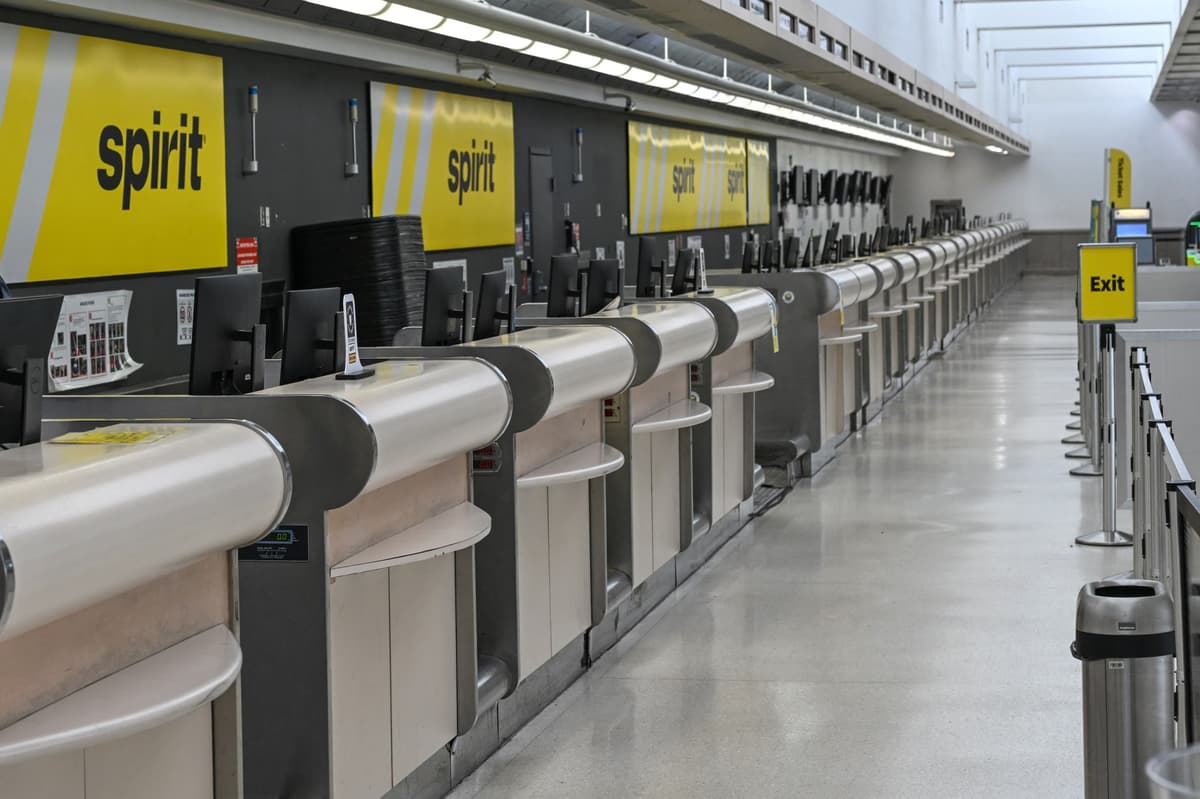
Spirit Airlines’ Shutdown Is a Case Study in What Happens when a Turnaround Plan Breaks
Companies Mentioned
Why It Matters
The collapse illustrates the peril for heavily leveraged, fuel‑sensitive businesses when market conditions shift, prompting CFOs to rethink scenario planning and liquidity buffers. It also signals heightened risk for other ultra‑low‑cost carriers operating on thin margins.
Key Takeaways
- •Spirit filed bankruptcy twice within two years
- •Jet fuel price doubled to $4.51 per gallon
- •Failed Frontier merger and blocked JetBlue deal
- •Brand perception limited revenue upside
- •No Trump‑admin rescue materialized
Pulse Analysis
Spirit Airlines’ abrupt shutdown serves as a cautionary tale for capital‑intensive firms that base turnarounds on optimistic cost assumptions. The carrier’s 2025 restructuring hinged on jet fuel averaging roughly $2.20 per gallon, a figure that evaporated as prices surged to $4.51 per gallon in May 2026. This cost shock not only eroded projected cash flows but also exposed a lack of robust stress‑testing in Spirit’s financial model, a flaw that CFOs across industries cannot afford to repeat.
Beyond fuel volatility, Spirit’s strategic missteps amplified its vulnerability. A failed acquisition of Frontier, a rejected $3.7 billion JetBlue offer, and a prolonged merger blockage left the airline without a clear growth path. Coupled with a longstanding reputation for mediocre service, the brand deficit prevented the carrier from extracting premium revenue, even when low‑fare demand rebounded post‑COVID. The dual bankruptcies within two years highlight how operational weaknesses can compound financial distress when external support—such as a potential Trump‑administration rescue—fails to materialize.
For executives, the Spirit case underscores three actionable lessons: first, embed multi‑scenario fuel price forecasts into turnaround plans; second, maintain ample liquidity reserves to weather sudden cost spikes; and third, invest in brand equity to avoid revenue ceilings inherent to ultra‑low‑cost models. As airlines and other asset‑heavy sectors grapple with inflationary pressures, Spirit’s demise reinforces the imperative of disciplined capital management and realistic assumption‑setting to sustain long‑term viability.
Spirit Airlines’ shutdown is a case study in what happens when a turnaround plan breaks
Comments
Want to join the conversation?
Loading comments...