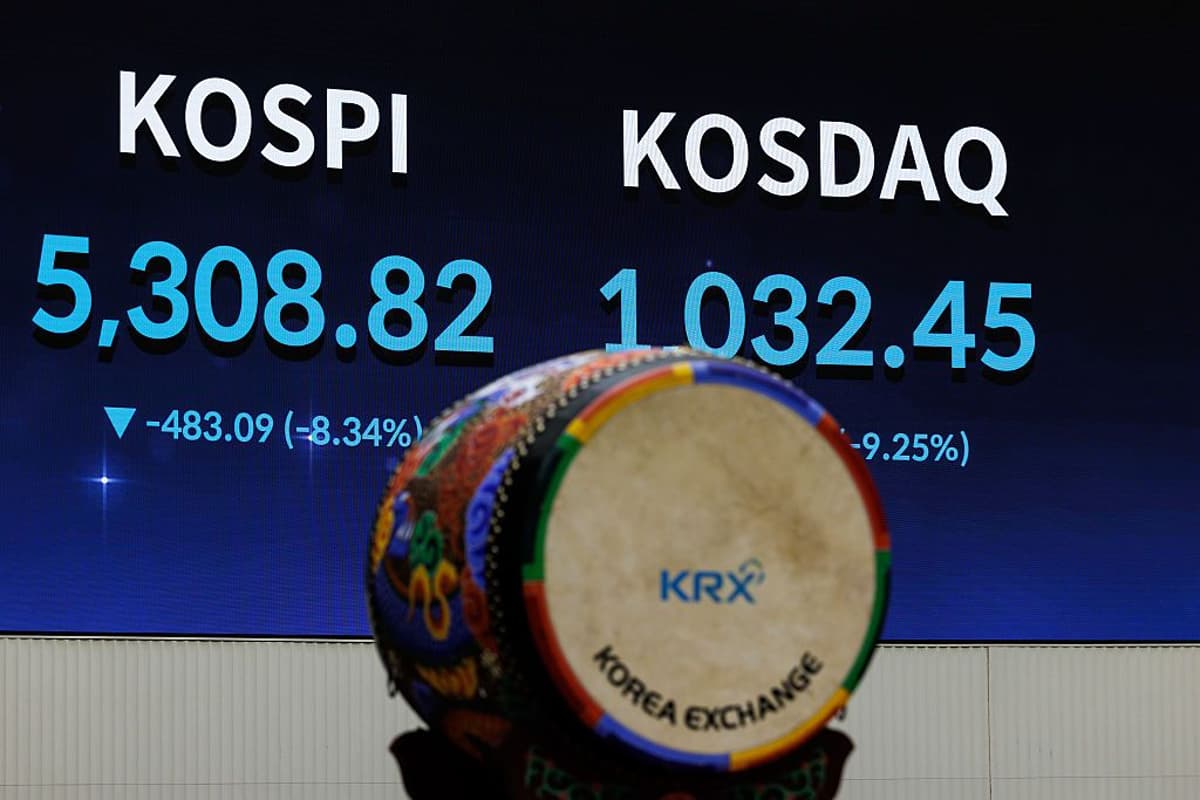
Stock Market Circuit Breaker: Why Did Korean Shares Pause Trading?
•March 4, 2026
0
Why It Matters
The pause highlights how geopolitical shocks can rapidly trigger market safeguards, affecting liquidity and investor confidence across Asia. Understanding circuit‑breaker dynamics is crucial for risk‑managed portfolio strategies.
Key Takeaways
- •KRX halted KOSPI and KOSDAQ after 8.1% drop
- •Middle East tensions spurred global Asian market sell‑offs
- •Circuit breakers aim to curb panic selling, stabilize prices
- •KOSPI’s historic 12% fall follows 20% decline since Feb 27
- •Future recovery hinges on Strait of Hormuz security
Pulse Analysis
Circuit breakers, first introduced after the 1987 Black Monday crash, serve as a market’s emergency brake, temporarily halting trading when indices tumble sharply. In South Korea, the twenty‑minute pause on March 4 was activated to temper a rapid 8.1% slide in the KOSPI, a move designed to give investors time to assess information and prevent algorithmic cascades. While such mechanisms are common in major exchanges, their deployment underscores the fragility of markets when external shocks—like geopolitical tensions—suddenly amplify risk perceptions.
The broader Asian sell‑off that accompanied Korea’s plunge illustrates the interconnectedness of regional equity markets. Japan’s Nikkei and Taiwan’s Taiex both recorded double‑digit percentage losses, reflecting investors’ appetite for safety amid rising oil prices and concerns over the Strait of Hormuz, a vital oil transit corridor. For multinational firms and fund managers, this episode reinforces the need for diversified exposure and real‑time monitoring of geopolitical developments that can trigger correlated market moves across borders.
Looking ahead, the trajectory of Korean equities will likely mirror the resolution of Middle East volatility. Analysts anticipate that once the Strait of Hormuz stabilizes, confidence could rebound, restoring the KOSPI’s upward momentum that has delivered over 100% gains in the past year. Investors should therefore factor scenario‑based stress testing into their strategies, balancing short‑term volatility protection with the long‑term growth potential of Korea’s export‑driven economy.
Stock market circuit breaker: Why did Korean shares pause trading?
0
Comments
Want to join the conversation?
Loading comments...