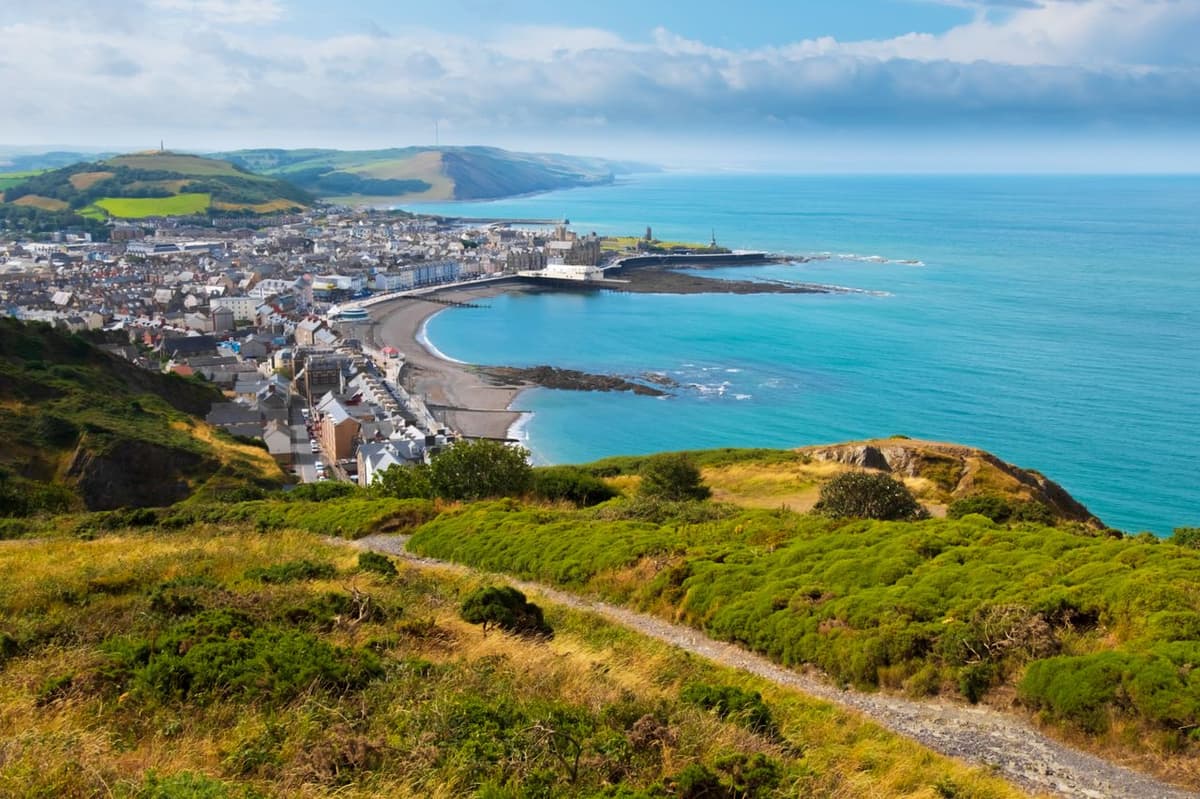
The cooling of coastal markets reshapes investment returns and retirement plans, while inland price growth reinforces the shift of demand toward urban and rural hubs.
The 2025 coastal correction reflects the end of a pandemic‑fuelled surge that pushed seaside homes into the premium segment. Property DriveBuy’s analysis of 20 seaside towns shows an average 1% price dip, but the outliers—Aberystwyth and Tenby—signal deeper market stress. This trend aligns with a broader UK housing cycle where supply constraints on the coast meet tightening credit conditions, prompting a modest but measurable price pullback.
Several forces converged to accelerate the decline. Rising Bank of England rates lifted mortgage costs, eroding affordability for the “second‑stepper” retirees who traditionally buoyed coastal demand. At the same time, employers are re‑centralising workforces, drawing former city‑escapees back to urban job markets. Investor activity has also shifted, with many properties converting to short‑term holiday lets, reducing turnover and dampening price momentum. These dynamics illustrate how macro‑economic policy and lifestyle shifts can quickly reverse localized booms.
For investors and developers, the data suggests a strategic pivot. Coastal assets may now offer value‑add opportunities through refurbishment or conversion to alternative uses, but long‑term appreciation appears limited without a broader economic rebound. Conversely, inland cities such as Liverpool, Glasgow and emerging rural hubs are delivering double‑digit growth, making them attractive for capital allocation. Monitoring mortgage rate trajectories and urban employment trends will be crucial as the market seeks a new equilibrium between coastal appeal and inland resilience.
Coastal house prices fell in 2025
Coastal properties are often popular with retirees or those who want to escape the hustle and bustle of cities, but high house prices have been a deterrent for many. However, this could be changing as fresh data reveals house prices dropped in some of the most popular seaside towns by as much as 6.9 % in 2025.
Aberystwyth saw the biggest drop of 6.9 %, with average prices sliding from £245,933 to £228,854. This was followed by a drop in Tenby of 5.2 %, with average prices falling from £220,673 to £209,122.
In fact, prices in 20 UK seaside spots fell by an average of 1 % from £276,615 to £273,921 between November 2024 and November 2025, according to the analysis by property portal Property DriveBuy.
Average house prices in Bournemouth and Brighton fell by 3.8 % (£323,774 to £311,416) and 2.4 % (£417,876 to £407,919), respectively.
“Seaside prices appear to have cooled following several years of exceptional demand starting during the coronavirus pandemic in 2020.
However, these price drops do appear to be more of a correction than a long‑term shift.
As buyer confidence improves and mortgage rates continue to stabilise, we expect demand for seaside homes to stabilise.”
— Steve Foreman, founder and chief executive officer of Property DriveBuy
| Location | Price Nov 2024 | Price Nov 2025 | % change |
|---------------|----------------|----------------|----------|
| Aberystwyth | £245,933 | £228,854 | -6.9 % |
| Tenby | £220,673 | £209,122 | -5.2 % |
| Hastings | £253,440 | £242,112 | -4.5 % |
| Bournemouth | £323,774 | £311,416 | -3.8 % |
| Torquay | £235,846 | £229,350 | -2.8 % |
| Brighton | £417,876 | £407,919 | -2.4 % |
| Whitstable | £338,016 | £331,118 | -2.0 % |
| Margate | £271,205 | £265,877 | -2.0 % |
| St Ives | £285,686 | £281,461 | -1.5 % |
| Weymouth | £332,240 | £331,911 | -0.1 % |
Credit: Property DriveBuy
House prices in coastal areas tend to stay resilient because geographic constraints limit expansion, and good transport links can prop up prices. However, several factors contributed to the 2025 slide:
Renewed pull towards city living – After the pandemic, many buyers who fled urban centres for the coast are now returning as employers encourage office work and job opportunities remain city‑centric.
Cautious older buyers – “Second‑stepper” buyers, who traditionally underpin coastal demand, have been more cautious.
Higher mortgage costs and economic uncertainty – Rising interest rates and broader economic concerns have dampened appetite for coastal homes.
Changing makeup of coastal communities – Long‑time residents are being priced out, leading to increased investor activity and conversion of homes into short‑term holiday lets, which reduces turnover and weakens demand.
If lower property prices on the coast aren’t enough to persuade you to move, city and countryside spots have generally seen price increases over the same period.
Northern England & Scotland – Prices grew by up to 8.5 %: Liverpool (+8.5 %, £170,536 → £185,023), Sunderland (+7.4 %, £133,948 → £143,824), Bradford (+6.1 %, £176,550 → £187,242), Glasgow (+5.8 %, £181,424 → £191,884), Edinburgh (+5.7 %, £280,753 → £296,878).
London and Birmingham – The only major cities to fall, with London down 1.2 % and Birmingham down 0.6 %.
Countryside locations – Average rise of 2.3 %: Alnwick (+8.3 %, £195,519 → £211,838), Bangor (+7.7 %, £206,955 → £222,919).
Mixed performance – Lewes fell 2.5 % (£378,536 → £369,070) while Tetbury saw a sharp decline of 8.4 % (£469,121 → £429,773).
These trends highlight a divergence between coastal markets, which are correcting after a pandemic‑driven boom, and many inland urban and rural areas that continue to experience price growth.
Comments
Want to join the conversation?
Loading comments...