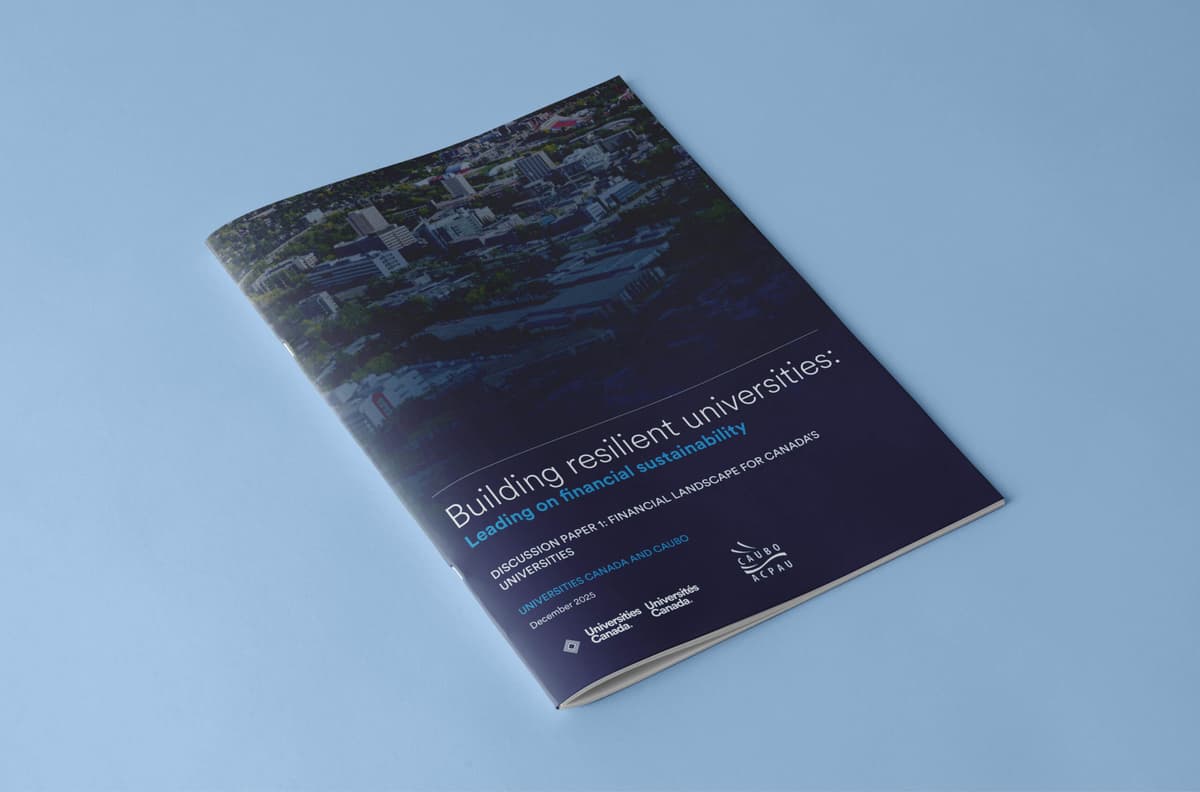
Universities Canada, CAUBO Warn Federal Action Is Needed as Canada’s Universities Face Worsening Financial Outlook
Why It Matters
Without swift federal action, universities risk larger class sizes, program cuts, and diminished research capacity, which could erode Canada’s talent pipeline and regional economies. Stabilizing funding and policy alignment is essential for maintaining the sector’s role in innovation and workforce development.
Key Takeaways
- •Federal GST/HST rebate increase could save universities ~$177 M USD annually
- •Declining per‑student funding and rising costs strain class sizes and research
- •Coordinated talent, skills, immigration policy needed to meet 8 M job openings
- •Bill C‑59 blocks university bankruptcy filings; sector seeks a safety‑net alternative
- •Projected 218‑488 k new students by 2040 will pressure infrastructure
Pulse Analysis
The newly published "Building resilient universities" report spotlights a fiscal cliff for Canada’s post‑secondary system. Decades of stagnant public funding per student have collided with soaring operational expenses, from utilities to technology upgrades, leaving institutions scrambling to maintain quality. By proposing a full GST/HST rebate for universities—matching the municipal rate—the report estimates an annual relief of roughly $177 million USD, a figure that could be redirected to hiring, research grants, or infrastructure upgrades. This tax adjustment, while modest in policy terms, addresses a structural inequity where universities effectively subsidize the federal treasury through sales tax on tuition‑derived purchases.
Beyond tax relief, the authors argue that fragmented federal‑provincial approaches to talent and immigration are hampering the sector’s ability to meet labor market demands. Canada faces an estimated eight million job openings between 2022 and 2031, two‑thirds of which require post‑secondary credentials. Aligning immigration caps, regional recruitment incentives, and research funding would create a cohesive pipeline that attracts international students and skilled workers to underserved provinces. Such coordination could also mitigate the demographic squeeze projected by Statistics Canada, which foresees up to half a million additional university enrolments by 2040, especially in rural and aging‑population regions.
Finally, the report flags the need for a federal safety‑net to replace the limited protection offered by Bill C‑59, which bars universities from filing for bankruptcy protection under the CCAA. A sector‑specific restructuring framework would preserve academic missions while ensuring transparent, court‑supervised financial recovery. Policymakers who act now can prevent campus closures, protect research ecosystems, and sustain the economic contributions of universities to local communities across Canada.
Universities Canada, CAUBO warn federal action is needed as Canada’s universities face worsening financial outlook
Comments
Want to join the conversation?
Loading comments...