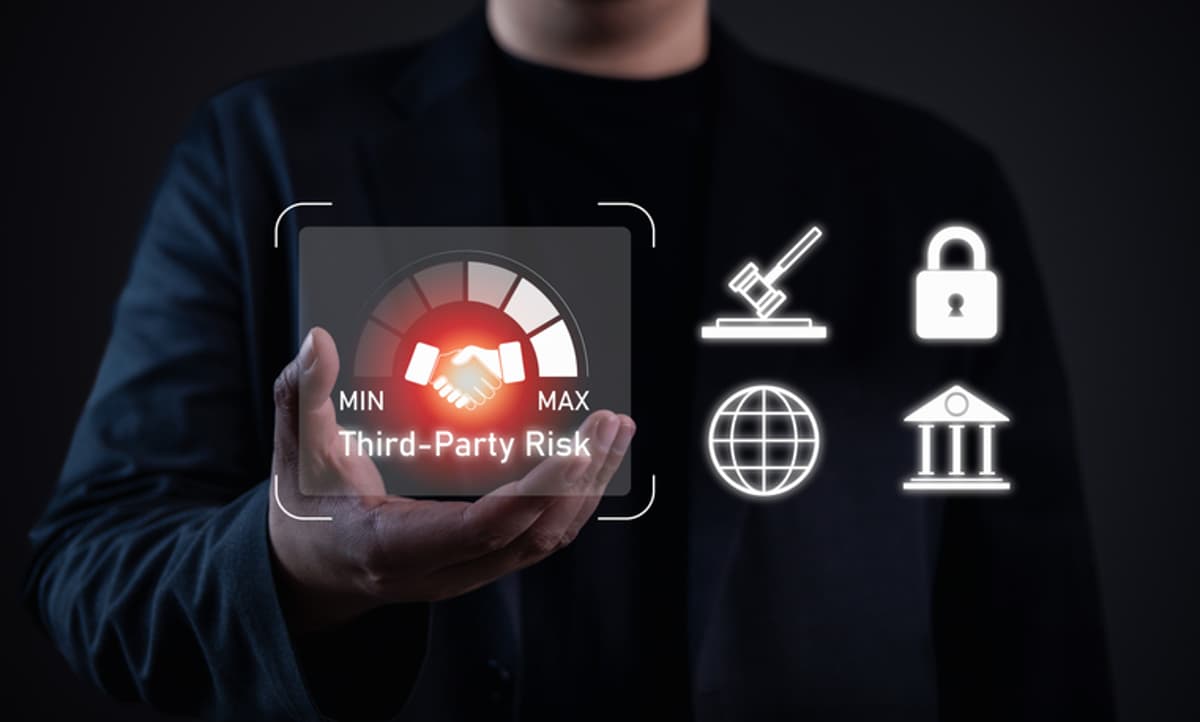
Why No Enterprise Can Afford a Static Approach to Third-Party Risk
Why It Matters
Outdated risk data leaves firms exposed to breaches, regulatory penalties, and missed strategic opportunities, making continuous oversight a competitive and compliance imperative.
Key Takeaways
- •Point‑in‑time assessments miss rapid vendor changes.
- •EU NIS2 and DORA demand ongoing supply‑chain risk oversight.
- •AI enables real‑time monitoring of thousands of third‑party connections.
- •Continuous risk data transforms compliance into strategic decision‑making.
- •US CCPA adds recurring privacy audits for high‑risk vendors.
Pulse Analysis
Modern enterprises operate within sprawling, API‑driven ecosystems where vendors, cloud services, and subcontractors constantly evolve. A risk profile that was accurate yesterday can become obsolete within weeks, rendering traditional questionnaire‑based reviews ineffective. Continuous monitoring captures configuration drift, new data flows, and emerging threats as they happen, ensuring that risk visibility keeps pace with the speed of digital transformation. This shift reflects a broader industry trend: risk management is moving from a static compliance checkpoint to an operational discipline embedded in daily workflows.
Regulators have taken notice. The EU’s NIS2 Directive and Digital Operational Resilience Act (DORA) now require essential and financial entities to maintain real‑time oversight of supply‑chain cybersecurity, with explicit expectations for contractual safeguards and incident reporting. The EU AI Act adds lifecycle monitoring for high‑risk AI tools, while California’s updated CCPA mandates recurring privacy risk assessments for high‑risk processors. Failure to provide continuous evidence can trigger supervisory scrutiny, hefty fines, and reputational damage, turning what was once a paperwork exercise into a governance cornerstone.
Artificial intelligence is the catalyst that makes perpetual risk management scalable. AI engines ingest logs, configuration changes, audit findings, and third‑party security signals, applying consistent scoring models to flag anomalies across thousands of relationships. Human experts still define risk appetite and validate high‑impact alerts, but the technology accelerates detection and reduces manual effort. The result is a strategic asset: risk telemetry feeds directly into financial planning, market entry decisions, and resilience testing, turning compliance data into actionable insight and giving firms a measurable edge in a hyper‑connected world.
Why No Enterprise Can Afford a Static Approach to Third-Party Risk
Comments
Want to join the conversation?
Loading comments...