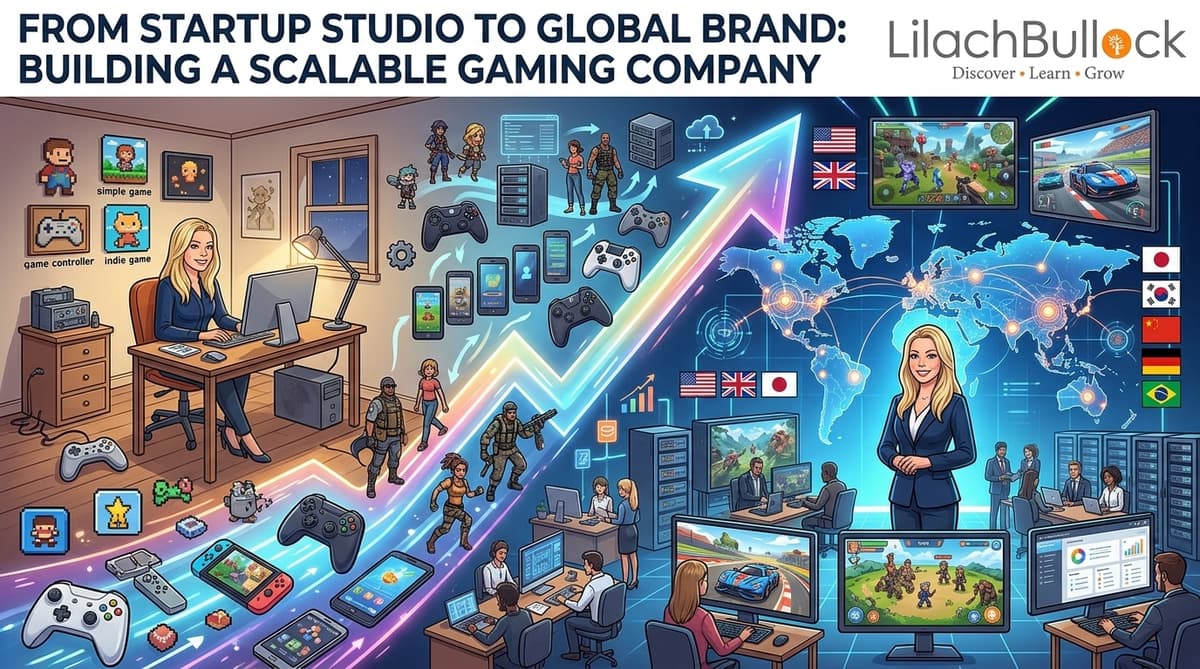
From Startup Studio To Global Brand: Building A Scalable Gaming Company
•March 10, 2026

0
Key Takeaways
- •Clear brand identity drives player loyalty.
- •Cloud‑based architecture enables global player growth.
- •Early regulatory compliance avoids costly market entry delays.
- •Data analytics inform feature prioritization and retention.
- •Specialized leadership teams sustain operational scalability.
Summary
The article outlines how gaming studios evolve from niche startups into global brands by cementing a distinct brand identity, investing in scalable cloud‑based technology, and navigating complex regulatory landscapes. Early decisions around leadership, product focus, and distribution channels set the foundation for international expansion. Robust data analytics and modular infrastructure enable rapid player growth while maintaining performance. Structured organizational hierarchies and clear communication become essential as teams multiply and markets diversify.
Pulse Analysis
The gaming sector’s compound annual growth rate now exceeds 10%, driven by mobile adoption and esports popularity. In such a fast‑moving environment, a studio’s brand narrative functions as its most valuable asset; it differentiates titles in crowded app stores and builds community trust. Companies that articulate a consistent visual style, gameplay philosophy, and target audience early on can leverage that identity across sequels and cross‑platform releases, turning casual players into lifelong fans.
Technical scalability is equally critical. Cloud platforms and modular codebases allow developers to spin up additional servers instantly as player counts surge, preventing latency spikes that erode user experience. Integrated analytics pipelines provide real‑time insight into engagement metrics, enabling rapid iteration on monetization features and content updates. By treating infrastructure as a service rather than a fixed asset, studios reduce capital expenditures while staying agile enough to experiment with emerging technologies such as live‑ops and AI‑driven personalization.
Beyond product and technology, regulatory compliance and organizational design dictate long‑term viability. International markets impose divergent licensing, data‑privacy, and payment‑processing rules; early legal advisory structures mitigate the risk of costly shutdowns or fines. Localization—adapting language, cultural references, and marketing tactics—ensures relevance across regions. As teams expand, delineating roles in product management, community engagement, and customer support creates clear accountability, fostering the disciplined execution needed to transition from a scrappy startup to a sustainable global gaming brand.
Comments
Want to join the conversation?