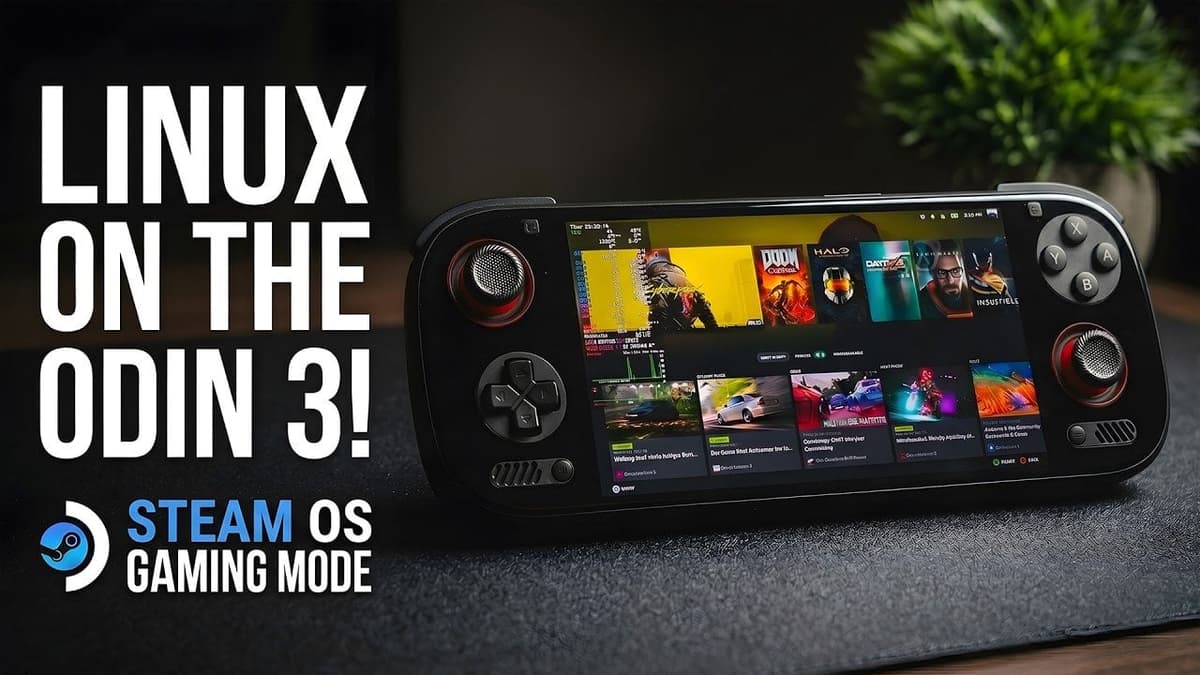
How to Turn the Odin 3 Into an ARM-Based Steam Deck Alternative
Key Takeaways
- •Odin 3 runs Rocknix Linux, delivering native ARM64 Steam support.
- •Snapdragon 8 Elite + Adreno 830 gives 16 GB RAM, throttles under load.
- •Gamecope offers real‑time overlays, yet lacks TDP and GPU tuning.
- •Less demanding games run smoothly; AAA titles suffer frame‑rate drops.
- •Device serves as enthusiast‑focused proof of concept for ARM gaming.
Pulse Analysis
The emergence of ARM‑based handhelds marks a shift in portable gaming, and the Odin 3 is at the forefront of this movement. Equipped with Qualcomm’s Snapdragon 8 Elite processor and an Adreno 830 GPU, the device offers a powerful 8‑core CPU and 16 GB of RAM, rivaling many traditional laptops. By installing Rocknix Linux, users unlock native ARM64 Steam functionality and Proton compatibility, allowing a library of PC titles to run on a device originally designed for Android. This flexibility, combined with the option to install the OS on a microSD card, makes the Odin 3 a versatile platform for developers and power users experimenting with Linux gaming on ARM.
Performance, however, remains a mixed bag. While lighter games such as Hades 2 run smoothly, demanding AAA titles like Doom Eternal experience frame‑rate drops and thermal throttling. The built‑in fan mitigates heat but introduces audible noise, and the lack of advanced power‑management features—such as TDP adjustment and GPU tuning—limits fine‑grained optimization. Gamecope, a Steam Deck‑inspired overlay, provides real‑time metrics and system controls, yet its effectiveness is constrained by the hardware’s thermal ceiling. These challenges highlight the growing pains of adapting PC gaming workloads to ARM architecture, where software optimization is still catching up.
Despite its shortcomings, the Odin 3 serves as a compelling proof of concept for the future of ARM gaming. Its ability to run a sizable portion of the Steam catalog demonstrates that ARM64 can handle mainstream PC titles, encouraging developers to consider native ARM ports. As Qualcomm and other chipmakers continue to improve performance‑per‑watt and thermal designs, handhelds like the Odin 3 could narrow the gap with x86 competitors, potentially reshaping the portable gaming market. For enthusiasts willing to navigate its experimental nature, the Odin 3 offers a glimpse into a more diverse and open handheld ecosystem.
How to Turn the Odin 3 Into an ARM-Based Steam Deck Alternative
Comments
Want to join the conversation?