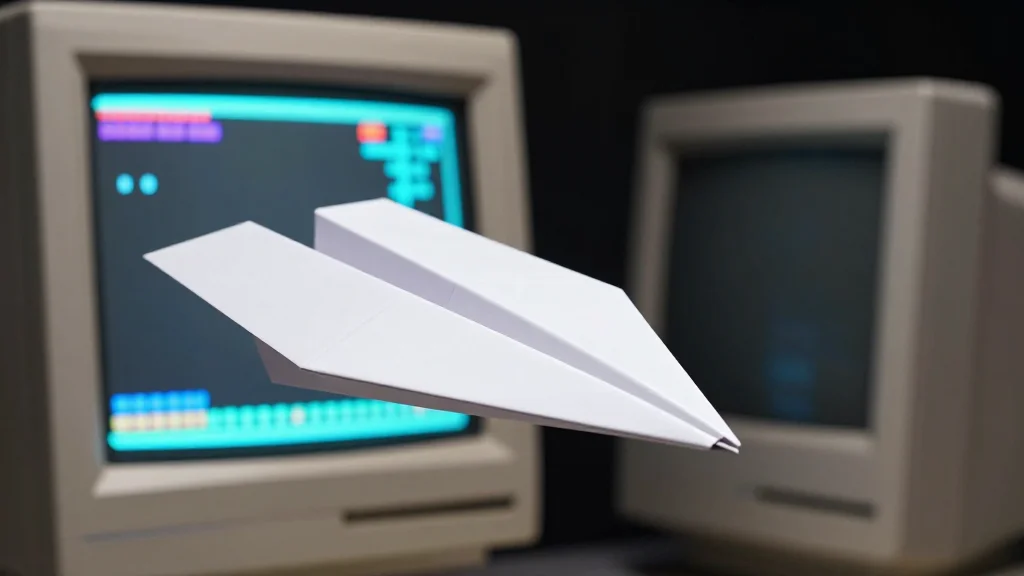
Richard Moss’s 2010 Interview With John Calhoun on the Origins of Glider
Key Takeaways
- •Glider began as a paper‑airplane experiment on a VIC‑20.
- •John Calhoun used MacPaint to prototype the first Mac version.
- •Shareware distribution via university FTP sites drove rapid community spread.
- •A publishing deal with Casady & Green turned Glider into a color commercial.
- •The game’s physics and level design evolved iteratively, object by object.
Pulse Analysis
Glider occupies a unique spot in the history of Macintosh gaming, emerging at a time when the platform lacked a robust library of native titles. Developed by John Calhoun in the late 1980s, the game grew out of simple experiments on a Commodore VIC‑20 and later a Mac Plus, where redefining character bitmap tables turned a paper‑airplane concept into a playable physics puzzle. Its share‑ware distribution through university FTP sites and early BBS networks allowed it to spread quickly among Mac enthusiasts, establishing a devoted fan base that would sustain the title for years.
Calhoun’s development approach was decidedly iterative. After sketching the airplane and vent in MacPaint, he programmed lift and gravity mechanics, then added obstacles one at a time—tables, candles, electrical outlets, and power‑ups—testing each element before moving on. This object‑by‑object refinement gave the game a consistent feel and made level design feel like a puzzle rather than a forced sequence. When the share‑ware version attracted attention, Calhoun secured a publishing deal with Casady & Green, which supplied a color Macintosh and enabled a commercial color release, expanding Glider’s reach beyond the hobbyist crowd.
Beyond its immediate success, Glider set a template for indie developers on the Mac platform. Its simple yet deep physics inspired countless fan‑made levels, mods, and even an NES port that required extensive reverse‑engineering. The game demonstrated that a small team—or a single programmer—could create a memorable experience without a large budget, a lesson echoed in today’s app‑centric ecosystem. Moreover, Glider’s community‑driven distribution foreshadowed modern digital storefronts and open‑source sharing models. As a cultural artifact, it remains a reminder of the creativity that flourished in the early days of personal computing.
Richard Moss’s 2010 Interview With John Calhoun on the Origins of Glider
Comments
Want to join the conversation?