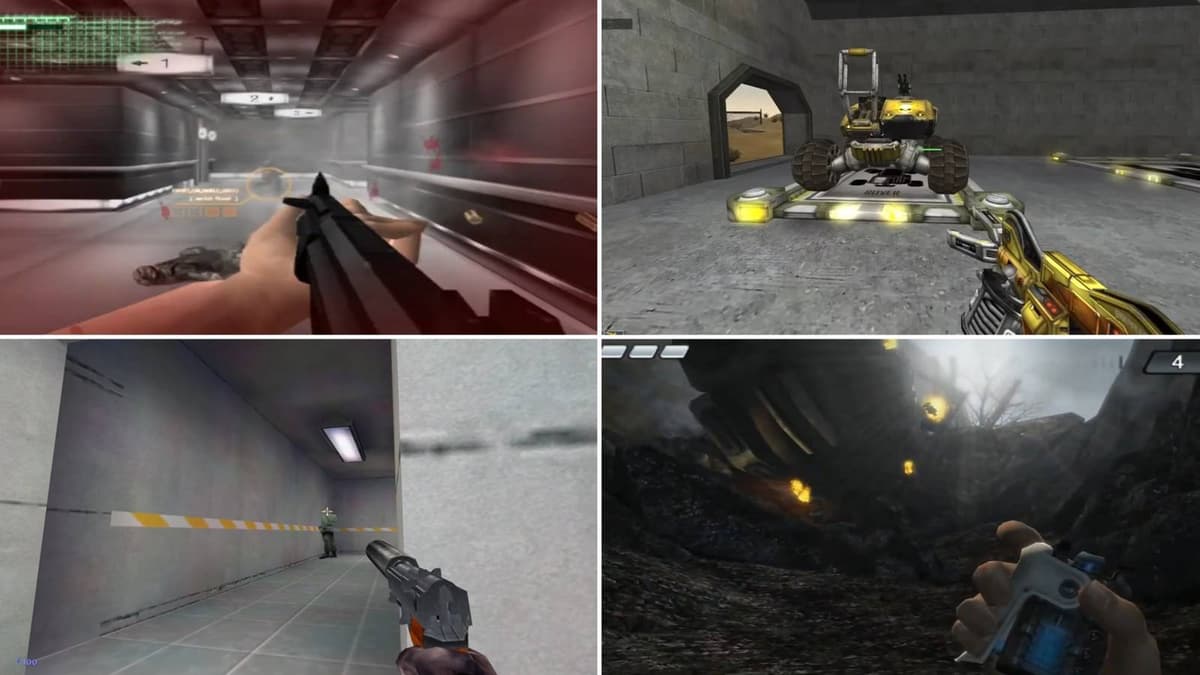
Why It Matters
Unearthing these overlooked titles reveals hidden innovation in the FPS genre and offers gamers and developers fresh perspectives on past design choices that still influence today’s shooters.
Key Takeaways
- •Digital Extremes' Pariah attempted Halo-style combat in 2005
- •Namco's Breakdown blended FPS with brawler and magic mechanics
- •Ubisoft Montpellier delivered atmospheric King Kong FPS despite short length
- •Rocksteady's Urban Chaos showcased early FPS before Batman dominance
- •Valve's Ricochet introduced bouncing-disc combat, a quirky LAN favorite
Pulse Analysis
During the early 2000s, major studios often dabbled in first‑person shooters as a proving ground for new technology and design talent. While titles like Halo and Half‑Life dominated headlines, many developers released experimental FPS projects that never achieved commercial success. These games—often built on the same engines that powered later hits—served as sandbox environments for mechanics that would later be refined in blockbuster franchises. Understanding this era of cross‑genre experimentation helps explain why certain design philosophies persist across seemingly unrelated series.
Several of the highlighted games introduced concepts that were ahead of their time. "Singularity" blended time‑shift mechanics with physics‑based puzzles, foreshadowing later narrative experiments in titles such as "Control." "Black" offered fully destructible environments, a feature now standard in modern shooters like "Battlefield" and "Destiny 2." Even "Ricochet," with its bouncing‑disc combat, anticipated the rise of arena‑style multiplayer experiences that thrive in esports today. These innovations, though buried under obscurity, contributed subtle yet lasting influences on the genre’s evolution.
For contemporary gamers and indie developers, revisiting these underrated FPSes provides both nostalgic value and practical insight. Remastering or reimagining titles like "The Operative: No One Lives Forever" could tap into a market hungry for retro‑styled experiences with modern polish. Moreover, the creative risks taken by studios such as Rocksteady and Irrational Games illustrate the benefits of genre‑crossing experimentation—a lesson that can inspire current teams to push beyond their established IPs. By studying these hidden gems, the industry gains a richer understanding of its own history and a roadmap for future innovation.
10 Underrated FPS Games from Famous Developers
Comments
Want to join the conversation?
Loading comments...