Why It Matters
The guide shows how modern JavaScript frameworks can accelerate indie game production, cutting time‑to‑market for seasonal titles. It also models best‑practice patterns that boost code maintainability and scalability.
Key Takeaways
- •Krampus Asteroids built with Phaser.js in one month
- •Event‑driven architecture manages game states efficiently
- •Base classes enable reusable Ship and Missile logic
- •Physics groups simplify collision detection for multiple entities
- •Controller‑based input separates concerns for clean code
Pulse Analysis
Indie developers increasingly turn to JavaScript game engines like Phaser.js to create lightweight, browser‑based experiences that can be launched quickly and updated frequently. Seasonal concepts, such as a Krampus‑themed twist on the classic Asteroids formula, tap into holiday buzz and offer fresh branding opportunities without requiring extensive art pipelines. By leveraging Phaser’s modular architecture, creators can focus on gameplay loops and community engagement, positioning their titles for rapid viral spread on social platforms.
Smith’s tutorial underscores the power of event‑driven architecture for managing complex game states, allowing developers to decouple logic for spawning enemies, handling collisions, and tracking scores. The use of base classes for Ship and Missile entities illustrates object‑oriented design principles that promote code reuse across multiple game objects, while Phaser’s physics groups streamline collision detection and response. Additionally, a controller‑based input system isolates user interaction from core mechanics, making the codebase easier to test and extend for future features or platform ports.
From a business perspective, the ability to prototype a polished, themed game in roughly a month translates to lower development costs and faster time‑to‑revenue. Seasonal releases can capitalize on heightened consumer attention, driving ad impressions, in‑app purchases, or sponsorship deals. Moreover, detailed tutorials like this serve as educational assets that attract aspiring developers, fostering a community around the engine and potentially expanding the market for related tools and services. The combination of technical rigor and market relevance makes the Crepeoid case study a valuable reference for both creators and investors.
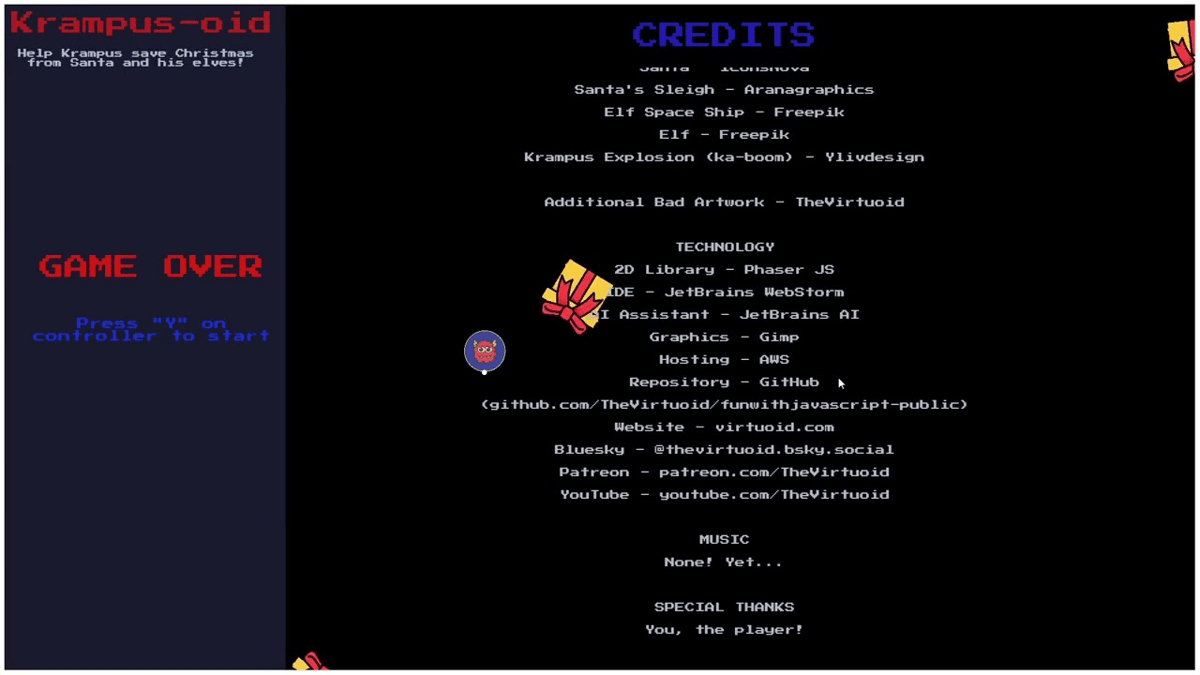
A Krampus version of Asteroids
0
Comments
Want to join the conversation?
Loading comments...