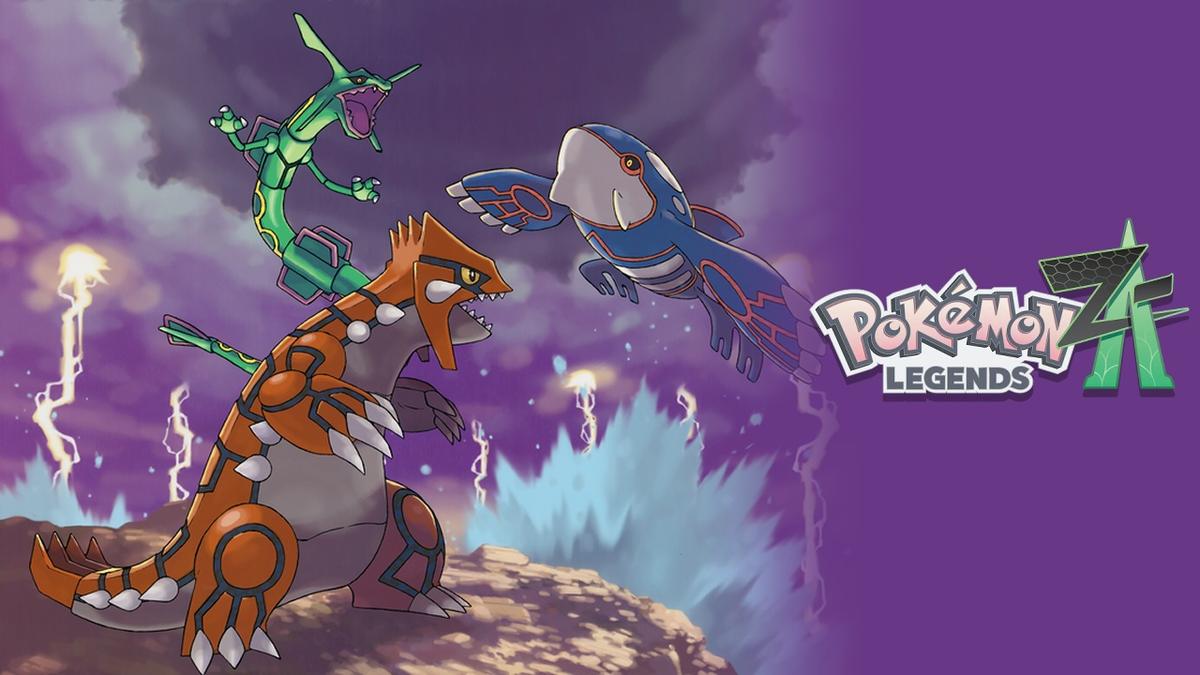
Best Pokemon in Legends Z-A’s Season 7 Ranked Battles
•February 27, 2026
0
Why It Matters
The shift to dual‑legendary lineups reshapes competitive strategies, forcing players to prioritize high‑power legendaries and reducing team variety, which could affect player retention and future balance decisions.
Key Takeaways
- •Two legendaries per team dominate Season 7 meta.
- •Rayquaza tops due to Mega Evolution and Focus Sash.
- •Kyogre remains strong with Calm Mind and Origin Pulse.
- •Groudon stays threatening despite loss of Desolate Land.
- •Mewtwo offers versatile coverage as both physical and special.
Pulse Analysis
The introduction of two restricted Legendary slots in Season 7 has fundamentally altered the Legends Z‑A ranked landscape. Where earlier seasons revolved around a rock‑paper‑scissors triangle of Garchomp, Glaceon, and Steel‑types, the current environment rewards raw power and survivability. Teams now stack Rayquaza, Kyogre, and Groudon, creating matchups where a single hit can decide outcomes. This concentration of firepower not only raises the overall damage ceiling but also narrows viable team compositions, leading many players to describe the season as “boring” and overly centralized.
Rayquaza’s dominance stems from its unique ability to Mega‑Evolve while equipped with a Focus Sash, granting both offensive burst and guaranteed survival against common threats. A standard EV spread of 252 HP/252 Attack maximizes its sweeping potential with Swords Dance, Dragon Rush, Dragon Ascent, and Earthquake. Kyogre, whether in its Primal form or standard version with a Life Orb, leverages Calm Mind and a diverse movepool—including Origin Pulse and Thunderbolt—to control the battlefield. Groudon, despite losing its Desolate Land ability, remains a menace with Primal’s 4× Water weakness offset by Swords Dance and heavy Ground‑type STABs. Meanwhile, Xerneas provides a non‑legendary alternative, but Yveltal and Zygarde struggle to find relevance against the dominant trio.
Looking ahead to Season 8, the community anticipates a possible ban on Legendary Pokémon to restore balance and strategic depth. In the interim, players can mitigate the meta’s rigidity by pairing legendaries with supportive options like Reflect, Light Screen, or priority moves that exploit type weaknesses. Experimenting with less conventional picks—such as high‑speed Fairy or Ice types—may uncover niche counters. Ultimately, the season’s trajectory underscores the importance of adaptive team building and the ongoing dialogue between developers and the competitive community.
Best Pokemon in Legends Z-A’s Season 7 Ranked Battles
0
Comments
Want to join the conversation?
Loading comments...