Why It Matters
The course gives developers a rapid, low‑overhead way to prototype and ship grid‑based HTML5 games, shortening time‑to‑market. Mastering Phaser’s scene and tilemap systems expands skill sets for broader web‑based game development.
Key Takeaways
- •Phaser Editor enables visual level design.
- •Course covers reusable prefab architecture.
- •No bundlers required, simplifying setup.
- •Teaches grid‑based state management for puzzles.
- •Includes three complete Sokoban levels.
Pulse Analysis
Sokoban remains a benchmark for puzzle‑game design, and its simple yet challenging mechanics make it an ideal teaching tool for developers entering HTML5 gaming. Phaser, a leading open‑source framework, provides a robust canvas for such projects, offering scene management, tilemaps, and a vibrant plugin ecosystem. By pairing Phaser with the visual capabilities of Phaser Editor, creators can iterate on level layouts without deep code changes, accelerating the creative loop and reducing development friction.
Westover’s tutorial leverages this synergy, guiding students from project scaffolding to polished gameplay. The curriculum focuses on reusable prefab patterns, ensuring that objects like player avatars and movable blocks can be instantiated across multiple scenes with minimal duplication. Grid‑based logic is abstracted into a state‑management layer, separating core mechanics from rendering concerns. This architectural discipline not only streamlines the three‑level Sokoban build but also equips developers with transferable techniques for other tile‑based genres such as roguelikes or turn‑based strategy games.
Beyond the immediate project, the course’s no‑bundler approach lowers the entry barrier for indie studios and hobbyists who may lack extensive build pipelines. By using VS Code alongside Phaser Editor, creators can prototype, test, and deploy directly to browsers, shortening the feedback cycle. Mastery of these tools positions developers to capitalize on the growing demand for lightweight, cross‑platform games that run seamlessly on mobile and desktop, reinforcing Phaser’s relevance in the competitive web‑gaming market.
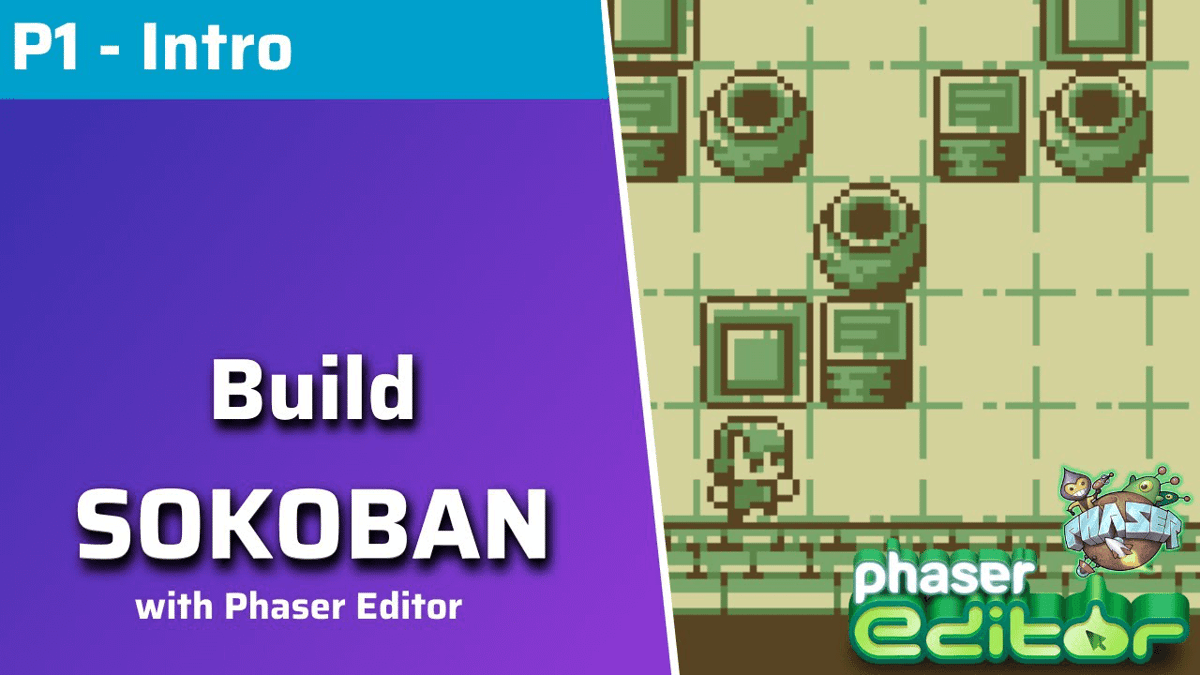
Build a Sokoban Puzzle Game in Phaser
0
Comments
Want to join the conversation?
Loading comments...