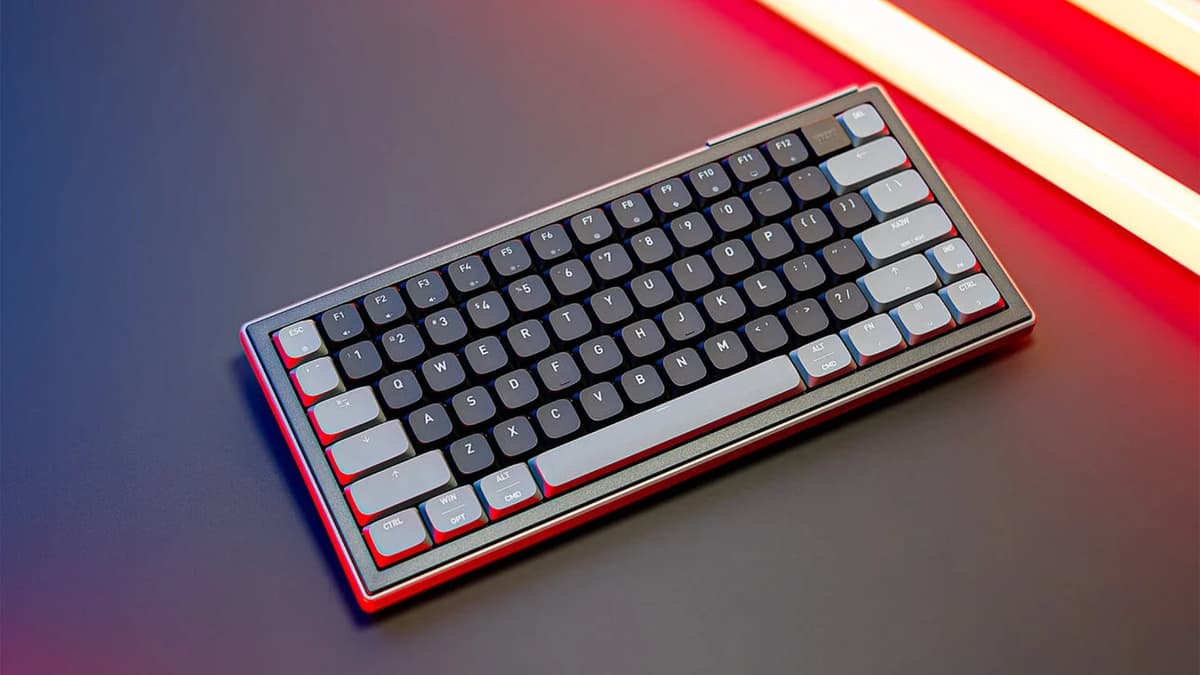
Cherry Reveals 8k Gaming Keyboard with World-First Tech that Could Make Controllers Obsolete
Companies Mentioned
Why It Matters
Ultra‑Wideband latency reduction could make high‑performance keyboards viable alternatives to traditional game controllers, reshaping peripheral choices for esports and serious gamers. The affordable pricing broadens access to cutting‑edge wireless tech, pressuring rivals to innovate faster.
Key Takeaways
- •8,000 Hz Ultra‑Wideband reduces keyboard latency to near‑zero.
- •6,000 mAh battery delivers ~1,100 hours of use, charges while active.
- •70% compact layout retains F‑row and arrows, frees mouse space.
- •Priced at €179.99 (~$196) EU, $169.99 US, targets budget gamers.
- •Ultra‑Wideband ensures interference‑free connectivity amid crowded wireless devices.
Pulse Analysis
Cherry’s XTRFY K63W Pro leverages Ultra‑Wideband (UWB) radio, a technology more common in precise location tracking than in consumer peripherals. By spreading data packets across a broader frequency spectrum, UWB sidesteps the congestion that plagues Bluetooth and traditional 2.4 GHz links, delivering a true 8,000 Hz polling rate. For competitive gamers, this translates to sub‑millisecond input lag, a metric that can decide outcomes in fast‑paced shooters and fighting games. The shift from Bluetooth’s typical 100‑200 ms latency to near‑zero positions the keyboard as a serious contender for performance‑critical scenarios.
Beyond speed, the K63W Pro addresses endurance with a 6,000 mAh lithium‑polymer cell, promising roughly 1,100 hours of continuous use—equivalent to over a month of daily gaming. The battery’s ability to charge while the device operates eliminates downtime, a convenience rarely seen in high‑end keyboards. Its 70% compact form factor preserves essential navigation keys while trimming the footprint, giving players more desk real‑estate for mouse movement. At €179.99 (≈$196) in Europe and $169.99 in the U.S., Cherry positions the unit as a mid‑range offering that undercuts premium competitors without sacrificing core features.
The introduction of UWB in a mainstream gaming keyboard could ripple through the peripheral market. If latency claims hold up under real‑world conditions, developers may design games that assume keyboard input parity with controllers, potentially diminishing the latter’s dominance in certain genres. Competitors like Logitech and Razer are likely to explore similar radio technologies or accelerate their own low‑latency solutions. For consumers, the K63W Pro signals that high‑performance wireless keyboards are no longer a niche luxury but an emerging standard, prompting retailers and OEMs to reassess product roadmaps and pricing strategies.
Cherry reveals 8k gaming keyboard with world-first tech that could make controllers obsolete
Comments
Want to join the conversation?
Loading comments...